


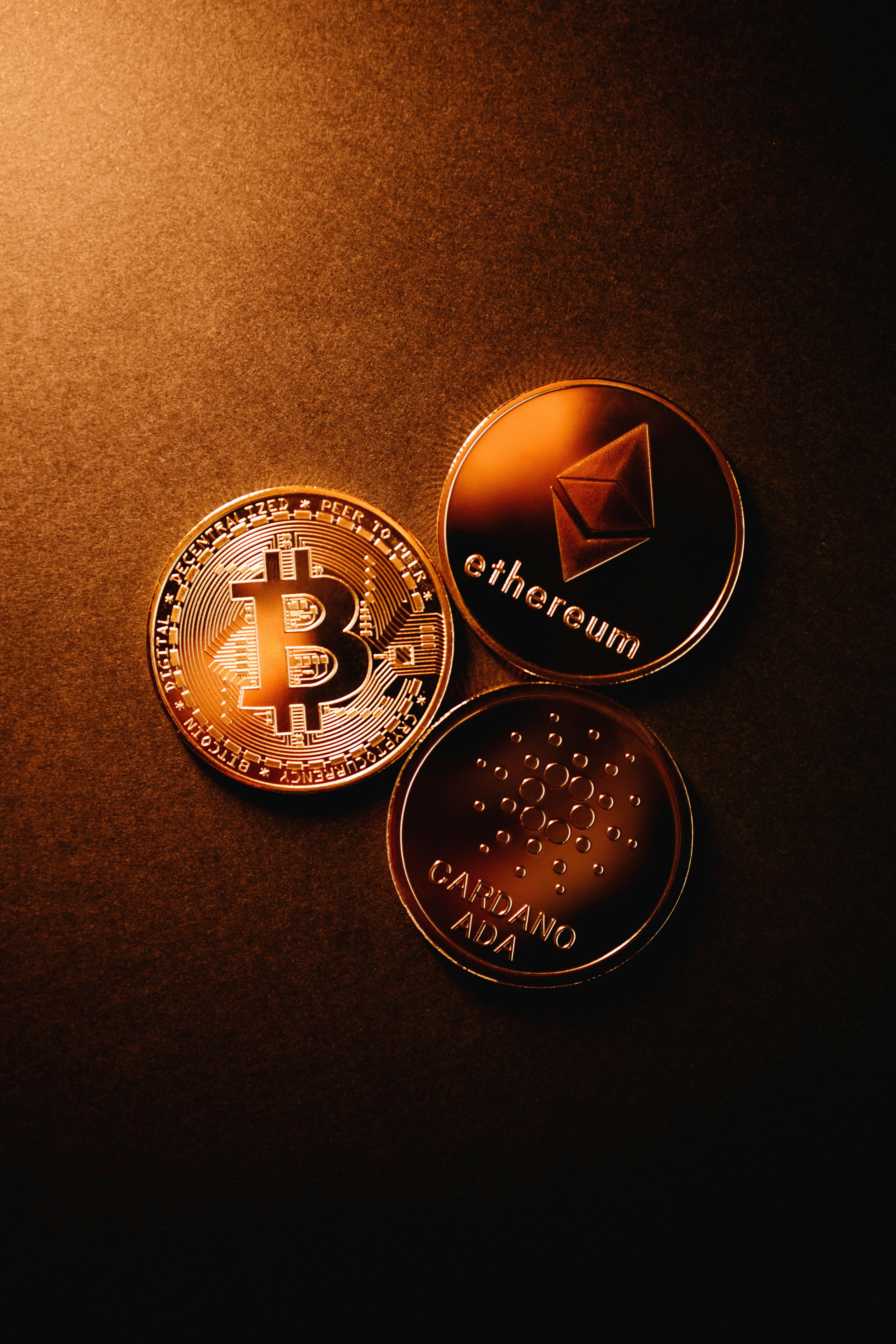
Imagine sending value, verifying identity, sharing data and building applications without asking for permission. For a generation raised on open-source and peer-to-peer dev tools, providing such possibilities can really be handy. Younger generations want participation, transparency and control. Since blockchain offers these features, it makes sense that these individuals welcome it.
And even data from Gartner agree. The institution recently projected that blockchain could generate over $3 trillion business value by 2030, with blockchain-based systems governing over 10% of the global economic infrastructure.
Looking at the prices of the top cryptocurrency tokens, you’ll clearly see that beyond volatility lies a growing belief in decentralised technologies. Take Bitcoin, for instance. What was worth just a few cents during its launch now (20/10/2025) trades at more than $110,000, according to Binance’s estimations.
As demand increases, it puts pressure on supply, raising the prices of crypto tokens. That explains why tokens like Bitcoin have been making significant strides. So, why is this technology drawing the attention of the tech-savvy population?
Catering to the growing need for trust and transparency
Commenting on the growing adoption of blockchain-based technologies, Binance Report says, “The launch of ESK marks a milestone for institutional crypto access in the U.S., combining Ethereum exposure with staking rewards in a regulated ETF format. This product simplifies yield generation and signals rising mainstream demand for crypto-integrated financial products.” One reason for this increased demand is blockchain’s improved transparency.
At its core, blockchain is a distributed ledger in which all network members have an identical copy of the transaction records. This decentralisation ensures all network participants can see the same, verifiable information in real-time. The technology is also immutable, making altering or deleting a transaction almost impossible once it is validated and added to a block. As a result, you have a tamper-proof audit trail that permanently documents every event in its history. Any attempts to modify a record would require changing all subsequent blocks, which is computationally unfeasible.
Remember, fraudulent activities have become rampant, especially in sectors like finance. According to the 2025 AFP Payments Fraud and Control Survey, almost eight in ten (79%) organisations faced fraud attacks in 2024 alone. If that’s not enough, alloy.com says 25% of financial organisations lost about $1 million to fraud while customers lost $10 billion that same year. As such, modern consumers have become more security-conscious and want companies to prove their systems’ safety and transparency, not just claim it.
And such needs are precisely what give blockchain an edge. But as much as the technology is secure, it has associated risks. In fact, Chainalysis recently reported a 21% increase in stolen crypto funds. That’s why you must apply secure coding practices and use strong encryption algorithms to get ahead of cybercriminals and ensure users are safe.
Catering to the popular need for community
If you’re comfortable navigating online communities and ecosystems like GitHub, you know how important collaboration is when it comes to innovation. Victor M. Gonzalez and other researchers published a report on ResearchGate, claiming that software developers spend about 45% of their time collaborating. This collaboration helps improve code quality and creativity. A lack of it can be problematic, leading to issues like confusion and communication gaps. According to ProofHub, almost nine in ten (86%) business leaders cite this absence as the reason for workplace failures.
To help address such challenges, blockchain allows for the development of decentralised autonomous organisations (DAOs). Remember, tech-savvy users belong to fluid communities and are usually connected across borders. DAOs are handy for such populations because of their permissionless nature; they allow you to interact with other programmers worldwide without worrying about bureaucratic barriers or centralised control.
Instead of relying on traditional hierarchies, DAOs operate through self-executing agreements that automatically enforce rules and distribute rewards. Because of such structures, users can vote, propose ideas or even collectively steer projects in ways that mirror the open-source ethos the tech community values most.
Sahara AI is an example of a blockchain-based infrastructure where you can enjoy such improved collaboration. This AI-native blockchain ecosystem combines an EVM-compatible layer-1 blockchain with off-chain AI execution, allowing anyone to contribute to AI development. According to crypto exchange Binance, the ecosystem has already attracted the attention of more than 1.4 million daily active users. Regarding investment, Sahara AI has raised over $43 million since its launch in 2023, further highlighting blockchain’s growing appeal.
What about meeting the need for fast transactions?
Just recently, Exploding Topic reported that 46% of Gen Zs want quick and easy checkout experiences when shopping. And mark you: The report also says Gen Z accounts for about 40% of the global consumers. So, if you don’t implement fast transaction methods, you risk missing out on a significant population that could help improve your business performance.
However, the need for instant payments is not just limited to Gen Z alone. Looking at global statistics, Fortune Business Insights expects the instant payments market to jump from $34.16 billion in 2025 to $284.49 billion by 2032. Another study by Juniper Research expects instant payments to exceed $110 trillion by 2029. Considering these statistics, you would want to adopt fast transaction methods to maintain relevance.
Thankfully, blockchain-based methods can come in handy. These options help to cater to the growing need for faster payments by eliminating the need for intermediaries. As such, transactions that once took days to process can now be completed within seconds, regardless of borders or banking hours. A good number of organisations have already implemented blockchain in a bid to eliminate payment delays. According to CoinLaw, more than 75% of Fortune 100 companies use the technology to process and track payments.
In addition to improving speed, blockchain can help cut transaction costs. ScienceSoft says it can, surprisingly, reduce cross-border remittance costs by up to 80%, further explaining the technology’s appeal to a generation that values speed and convenience.
The technology aligns with popular preferences
Modern consumers, whether young or old, know precisely what they want. For instance, they do not want payment delays or lack transparency. Consider a sector like the food industry. The Food Institute says over seven in ten shoppers consider transparency crucial when choosing a business to buy from.
These shoppers not only want to eat nutritious food but also want to transact with shops that promote a healthier world. Since blockchain is decentralised and immutable, it allows users to view every transaction in real time, ensuring transparency at every step. Its immutability also makes it more secure than traditional infrastructures.
Transparency and safety are non-negotiables in today’s world, which is a big part of why blockchain has not stopped appealing to tech enthusiasts. The technology’s decentralised nature also improves transaction speed, further positioning it as an ideal foundation for the digital future.