



Commercial Snow Removal White Rock: Why “Light Snow” Can Still Disrupt a Property
White Rock does not need a major snowstorm to create serious winter problems.
That is what makes it deceptive.
Commercial Snow Removal White Rock is often less about deep accumulation and more about coastal moisture, steep streets, and quick refreeze. A parking area may look usable at closing time, then feel completely different by opening time once damp pavement hardens overnight.
That matters on commercial and strata-style properties where movement never really stops. Staff still need safe access. Visitors still expect clear walkways. Deliveries still need room to operate. In White Rock, a lightly treated site can still become risky quickly if moisture is allowed to freeze in the wrong places.
This is one of the biggest opportunities competitors often miss. Many pages focus on snow volume, but not enough explain that in White Rock, ice control is often the real issue.
What Commercial Snow Removal White Rock Actually Needs to Cover

A lot of winter service pages make the job sound simple: plow, salt, clear sidewalks, done.
That is not how real commercial properties work.
Commercial Snow Removal White Rock has to cover more than open pavement. A proper winter plan should account for entrances, sidewalks, curb edges, loading areas, sloped access lanes, shared parking zones, and the smaller surfaces where people are most likely to lose traction.
A lot can look acceptable from the street while still being unsafe where people actually walk.
That is where stronger content can outperform generic competitor pages. Instead of only listing services, it should explain how winter risk forms on a real site. Walkways near building entrances stay wet longer. Sloped drive lanes become slick faster. Curbs and edges refreeze after runoff settles. Those are the details property managers actually care about because those are the details that create complaints, near-misses, and liability pressure.
Snow Removal UBC: Why High-Traffic Sites Need a Smarter Winter Plan
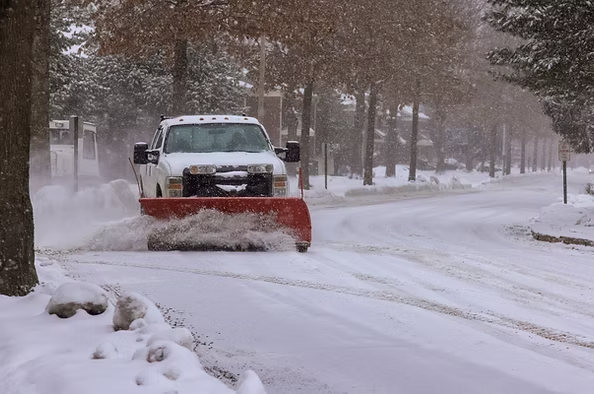
UBC is a useful comparison because it shows how winter service changes when pedestrian traffic and operational pressure increase.
Snow Removal UBC is not just about removing accumulation. It is about keeping a dense, fast-moving environment functional. On a site like that, pathways, key access routes, and high-traffic areas need repeated attention, early treatment, and a clear priority structure. One clearing pass is rarely enough.
That same principle applies to commercial and strata-heavy sites in White Rock.
If a property has constant movement, multiple entry points, and shared pedestrian areas, winter planning has to focus on function, not just appearance. A site stays safer when the service plan reflects how people actually move through it.
This is another place where many competitor pages stay too broad. They mention snow and ice control, but they do not explain that high-density properties require repeated, priority-based response. Using Snow Removal UBC as a comparison helps show why organized winter service matters more on active, people-heavy sites.
The Hidden Risk: Why Ice Forms Before Most Sites React
The biggest winter hazard in White Rock is often not the snow people can see. It is the ice they do not notice until it is already a problem.
That is what makes Commercial Snow Removal White Rock so timing-sensitive.
Coastal conditions create a pattern that catches many properties off guard. Moisture sits on the surface. Temperatures dip overnight. A path or ramp that looked harmless a few hours earlier turns slick before the first employee, resident, or visitor arrives.
By then, the site is already behind.
This is where weak winter response usually shows itself. A provider may wait until the property looks visibly worse or until someone calls in a complaint. But at that point, the easy prevention window is gone. What could have been controlled with early salting or brining now takes heavier follow-up, more material, and more labor.
That is why Commercial Snow Removal White Rock should be judged by prevention, not just reaction. The strongest winter systems reduce the chance that dangerous conditions form in the first place.
Why Most Competitor Pages Sound the Same — and Why That Helps
Most ranking pages on this topic do a few things well. They localize the content, mention plowing and salting, and reassure readers that response is available when winter hits.
That works, but it also creates sameness.
Too many pages sound like interchangeable service templates. They promise reliability without explaining what reliable winter service actually looks like. They mention White Rock by name, but they do not go deep on why coastal moisture, steep terrain, and frequent refreeze create a different type of winter problem than inland locations. They also skip the most useful details: repeated visits, priority surfaces, proactive dispatch, documentation, and the need to stay ahead of changing conditions.
That creates a clear opportunity.
Better content should not just repeat winter keywords. It should explain why Commercial Snow Removal White Rock depends heavily on moisture control, why Snow Removal UBC highlights the value of repeat service on high-traffic sites, and why winter success usually comes from treating surfaces before the risk looks obvious.
Why Only Strata Snow Removal Has the Better Fit
Only Strata Snow Removal has a stronger fit for this topic because the company is built around strata and multi-unit residential properties rather than trying to serve every possible site type.
That matters in White Rock.
The hardest winter issues on these properties are usually not giant snow piles in open lots. They are shared walkways, entry zones, ramps, internal lanes, parking areas, and the smaller surfaces where changing conditions are felt immediately. Those spaces need consistency more than marketing promises.
Only Strata Snow Removal’s strengths line up clearly with that need: strata-only focus, strict capacity limits, GPS and photo service logs, proactive dispatch, large salt reserves, damage repair guarantee, cancellation flexibility, and reliable winter response.
In practical terms, that means a property is not just paying for snow clearing. It is getting a more controlled winter system. Capacity matters because overloaded routes create delays. Documentation matters because managers want proof of service. Proactive dispatch matters because the property should be treated before it falls behind, not after the first complaint arrives.
Commercial Snow Removal White Rock Starts Before the Property Feels Unsafe
The biggest winter mistake is thinking the danger starts only when snow looks serious.
In White Rock, it often starts earlier. On high-traffic sites like UBC, it can also last longer than one service window.
That is why smart winter planning begins before the first complaint, before the first slippery entrance photo, and before the property starts reacting instead of controlling conditions. Commercial Snow Removal White Rock works best when ice prevention, repeat attention, and site-specific planning are already in place.
Because once winter turns awkward, the right provider should already be ahead of it.