


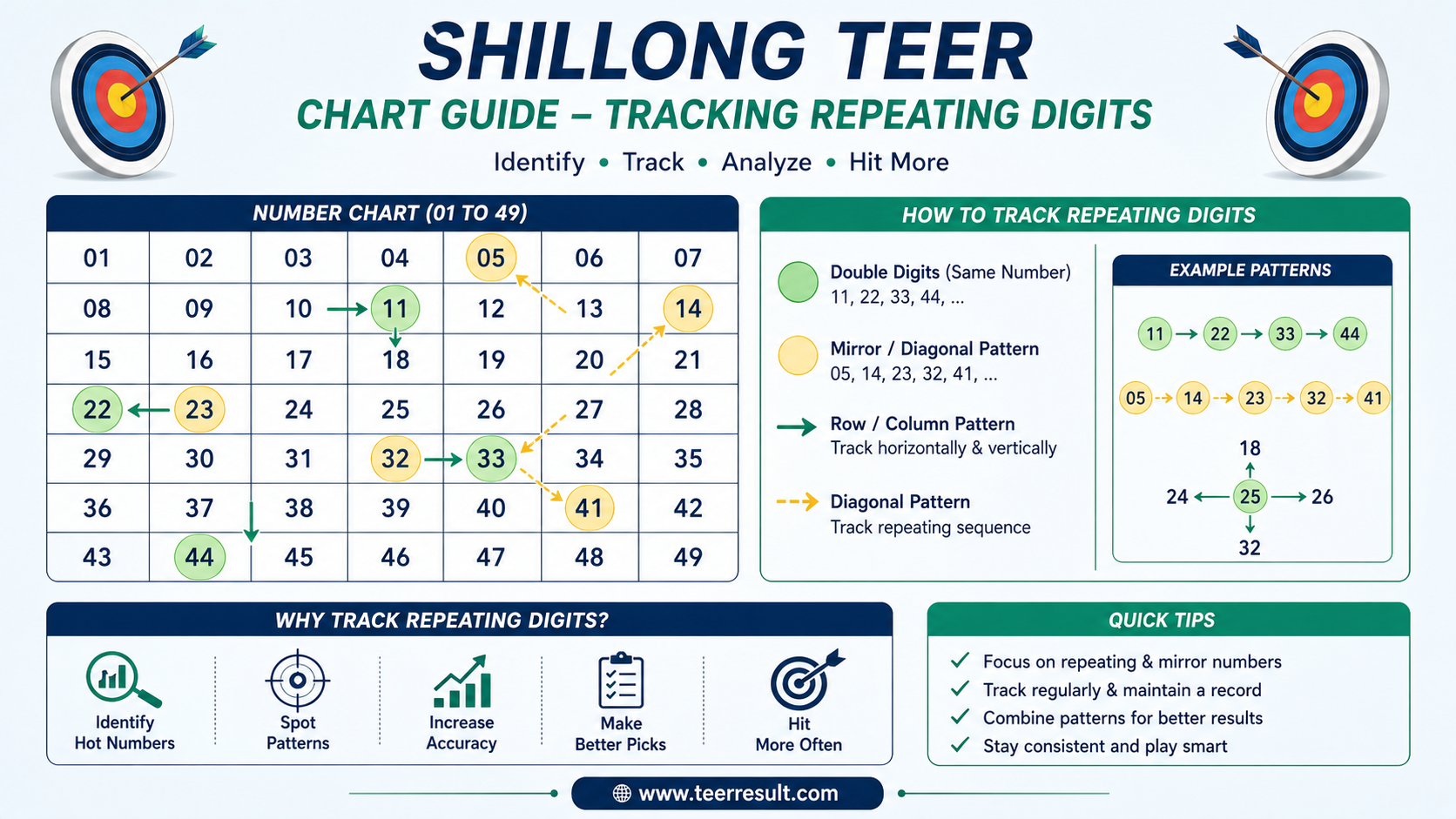
Shillong Teer has emerged as the most talked about quantity-based total video games due to its precise size and buzz around the results every day. Many accomplished athletes and followers spend time looking beyond the numbers to pick up patterns that may repeat themselves over time. An effective way to analyze these patterns is with the help of using a properly grounded Shillong tear map. By carefully reading repetition rates and variation development, lovers can gain a greater understanding of how the results behave throughout certain rounds. In this booklet, we will provide an explanation of how to use the Shillong Tear Chart effectively, how to track recurring figures, and why reading historical influences can increase your general knowledge of different styles .
Understanding the Importance of Shillong Teer Charts
Shillong Teer Chart is a valuable tool that helps clients to prepare past results in a readable manner. Instead of randomly checking numbers from one type of date, the cards allow players to check the results page with the help of the site and take repeat combinations quickly .
While checking Shillong Tear Pre-Result, many customers try to see repetitive digits that appear many times in short intervals. These repetitive styles often grow into learning beliefs of individuals who experience the study of statistical attributes in Shillongtir.
The charts also help keep customers away from confusion as all the numbers are systematically arranged. This makes pattern tracking much faster and extra efficient.
How Repeating Digits Appear in Shillong Teer Results
Repeating digits are numbers or combinations that appear frequently over a certain period. For example, if numbers ending in “5” or “7” continue showing up across multiple rounds, many players consider them recurring digits.
When reviewing the Shillong Teer Result List users often notice that certain number endings repeat several times in a week or month. While results are never guaranteed, tracking these trends helps enthusiasts create their own analysis strategies.
Some common repeating patterns include:
- Double digits appearing multiple times
- Numbers ending with the same last digit
- Mirror combinations repeating frequently
- Similar number sequences appearing across consecutive days
A proper chart makes these trends easier to identify without manually checking every result.
Best Method for Tracking Repeating Digits
Effectively tracking iteration levels requires consistency and organization. Here are some powerful ways to use cards the right way.
1. Record daily results
The first step is to collect the daily results in an organized table. This allows users to check current numbers with older results.
Using an in-depth Shillong tear map can help simplify this process as the results are already in chronological order.
2. Highlight frequently overlooked digits
Identify numbers that seem to repeat themselves over a short period of time. This allows them to quickly become aware of the training process.
For example:
The numbers 2, 5, 8 and so on are played over and over
Same ends show across specific regions
Gradually repeated combinations
Highlighting those numbers visually makes estimation much easier.
3. Compare weekly and monthly trends
Sometimes styles just don’t show up in effects every day. Comparing a weekly and monthly chart can reveal recurring sequences over a longer period of time.Therefore, experienced trackers usually examine the long-term results history before making observations.
4. Pay attention to the voice messages .
Many Shillong Teer fanatics pay close attention to the final results as they are regularly repeated more often than predicted.
Subsequent completions include:
01, eleven,
05, 15, Kl.
07., 17.
It can help customers become aware of repeat scoring systems more effectively.
Why Historical Analysis Matters
The study of vintage influence is one of the most important elements of the Shillong Teer analysis. Historical data provides insight into how certain individuals have behaved over the years. By reviewing the previous Shillong Teer results, users can explore contemporary trends with previous styles. While no strategy can guarantee results, historical observation allows clients to take a more informed view. Maps make this system faster because all effects are stored in one place rather than scattered across individual pages.
Benefits of Using Shillong Teer Charts
Using charts regularly offers several advantages:
- Faster pattern recognition
- Easier comparison of old and new results
- Better organization of number trends
- Improved understanding of repeating digits
- More efficient analysis methods
For dedicated followers of Shillong Teer, charts become an essential tool for daily observation and research.
Final Thoughts
Keeping track of repeating numbers through organized charts has become a popular technique among Shillong Teer lovers. By carefully reading trends, reviewing historical results, and reading iterative styles, clients can better understand how numbers have behaved over time .
The basic Shillong Teer result list mixed with detailed chart can make the sample analysis somewhat far extra green. Whether you are new to Shillong Teer or someone who studies numerical properties extensively, using maps effectively can improve your typical assessment process.
Consistency is key. The more additional information you observe and compare, the easier it is to be aware of repetition rates and important features within Shillong tier results.
