


The at-home skincare aisle has never been bigger. Sheet masks stacked three-for-ten-dollars at Target, glycolic acid toners from the Ordinary for $8, microcurrent wands under fifty bucks, LED panels under two hundred, dermaplaning razors at CVS, and every TikTok esthetician of the month pushing a twelve-step routine. The promise is simple: save the cost of a salon visit, do it yourself at home, and get the same results. For most people chasing real skin changes (not just feeling pampered for an hour), that promise doesn’t hold up.
The gap between a DIY skincare routine and a professional facial appointment isn’t about luxury. It’s about what an esthetician can actually see, diagnose, and do that someone standing in front of a bathroom mirror simply cannot. Extraction technique, product depth of penetration, on-the-fly customization, and access to clinical-grade products that aren’t sold to consumers for good reasons: these are the levers that separate real results from expensive-feeling maintenance. Dayton and Centerville-area clients who have tried both usually figure this out after a few months of DIY and a couple of breakouts that didn’t go away on their own.
Residents of the Dayton area have choices when it comes to facial providers, including salons like AltaRd Salon LLC, a Centerville hair salon and skincare provider that offers facials alongside its hair and waxing services. What follows is an honest look at where professional facials genuinely outperform at-home routines, where the DIY approach can be enough, and how to think about the trade-offs.
Esthetician Observation
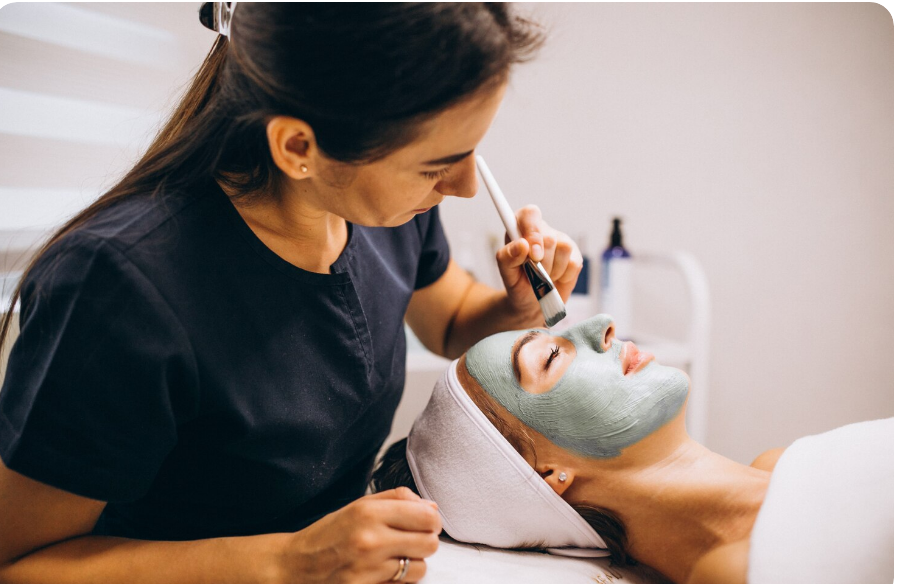
Skin analysis under magnification and clinical lighting is the first thing most DIY routines miss. A licensed esthetician looks at your skin under a magnifying lamp and a Wood’s lamp, sees the clogged pores you didn’t know were there, spots the early hyperpigmentation before it surfaces, identifies dehydration hiding under oil, and catches conditions (perioral dermatitis, rosacea, folliculitis) that people routinely self-diagnose as acne and then treat incorrectly for months.
Bathroom-mirror self-analysis misses all of this. The light is wrong, the angle is wrong, and most people don’t know what they’re looking at even when they see it. This matters because skincare done on the wrong diagnosis is worse than no skincare at all. Treating rosacea with benzoyl peroxide makes it worse. Treating dehydrated skin with more exfoliants makes it worse. Treating fungal acne with bacterial acne products makes it worse. An esthetician reading the skin correctly is the difference between products that work and products that actively harm.
Extractions Done Right
The comedone extraction, which a trained esthetician performs in thirty seconds, is one of the most valuable and most misunderstood parts of a facial. Done correctly, it empties a clogged pore cleanly, with minimal skin trauma, and with appropriate pre-treatment (steam, enzymes, or a chemical exfoliant) to soften the debris first.
DIY extractions, by contrast, cause scarring. Squeezing a pimple with bare fingers in front of a mirror breaks the follicle wall, pushes debris deeper into the skin, spreads bacteria to surrounding pores, traumatizes the surface capillaries (hello, broken blood vessels), and reliably produces post-inflammatory hyperpigmentation that takes months to fade. The dark marks that linger on many DIY acne sufferers’ faces aren’t from the original breakouts. They’re from the picking.
A gentle skincare routine can also extend beyond professional treatments, particularly when choosing everyday cleansing products. Natural bath products made with plant-derived oils, botanical extracts, and other mild ingredients can help support the skin without unnecessary harshness. For those looking to simplify their daily routine, organic soap can be a suitable option when its ingredients are well matched to the skin’s needs. Paying attention to how the skin responds to different products can make it easier to maintain a comfortable and balanced routine.
Chemical Peel Depth
The strongest argument for seeing a professional for anything involving acids on the skin comes straight from the federal government. In July 2024, the FDA issued a consumer warning about chemical peel products, advising people not to purchase or use them without professional supervision. The warning specifically cited risks including chemical burns, infection, skin color changes, and disfiguring scars from products containing trichloroacetic acid, glycolic acid, salicylic acid, and lactic acid at concentrations too high to use safely at home.
The products being sold online and in beauty stores routinely go up to 70%, 90%, and even 100% concentrations. These are not hobbyist strengths. These are clinical concentrations designed for trained practitioners who know how to neutralize them, read skin frost patterns, time applications correctly, and manage aftercare. Used at home without that training, they cause the exact injuries the FDA describes.
A professional chemical peel administered by a licensed esthetician uses the same active ingredients. Still, it applies them at the right concentration for the skin type, for the right duration, with proper neutralization, and with aftercare instructions that actually protect the skin during recovery. The difference is the margin between real results and an emergency room visit.
Dermaplaning
Dermaplaning tools sold at drugstores suggest that anyone can do it. The technique and the tool are not the same thing. A professional dermaplane uses a sterile, surgical-grade 10R blade at a precise 45-degree angle, applied with practiced pressure over taut skin in single passes without retracing. The result is even, smooth, uniform exfoliation and the removal of peach fuzz.
A drugstore dermaplaning razor used in a bathroom mirror drags across curved facial contours at inconsistent angles and pressures, often on un-prepped skin, with a blade that isn’t sterile after first use. Cuts, nicks, uneven results, and micro-tears in the skin barrier are routine outcomes. Done wrong, it also stimulates terminal hair growth in some areas, the opposite of the promised smooth effect.
The professional version also combines dermaplaning with enzyme treatments or light exfoliants in the same session to compound the results. The home version is a single-tool job at best.
Products
Consumer skincare in the United States is regulated as cosmetics, which means product strengths and active ingredients are capped well below those allowed for professionals. Clinical-grade retinoids, professional-strength vitamin C serums, certain hydroquinone concentrations, trichloroacetic acid, phenol, Jessner’s solution, and most professional-strength enzyme treatments either aren’t sold to consumers at all or are sold at significantly reduced concentrations.
The American Academy of Dermatology’s chemical peels patient FAQ notes that results largely depend on the skill of the person performing the peel and that patients should see a trained professional to protect their health and achieve the results they want. This applies more broadly than just peels. Many products that produce real, visible changes on the skin are, by regulatory design, not available for home use. An esthetician’s toolkit is simply different from a consumer’s toolkit.
Pick the Provider Carefully
Not all facial providers are the same. Ohio requires estheticians to hold a state license (a minimum of 1,500 hours of training for a standard license, or 450 hours for a limited managing esthetician), pass written and practical exams, and complete continuing education. The licensing requirement is real. Someone offering facials from a home salon without a license is operating outside state law, and the liability falls on the client if something goes wrong.
When picking a Centerville- or Dayton-area provider, ask about state licensing, what continuing education they’ve completed, which products they use and why, and what their process is for first-time clients (a proper intake and skin analysis should happen before any treatment). A provider who starts applying products without that conversation is skipping steps that matter.
The case for professional facials isn’t that at-home skincare is useless. It’s that the things a trained esthetician can see and do are genuinely different from what a person can accomplish in a bathroom mirror, and for real skin changes, that difference compounds over time.