


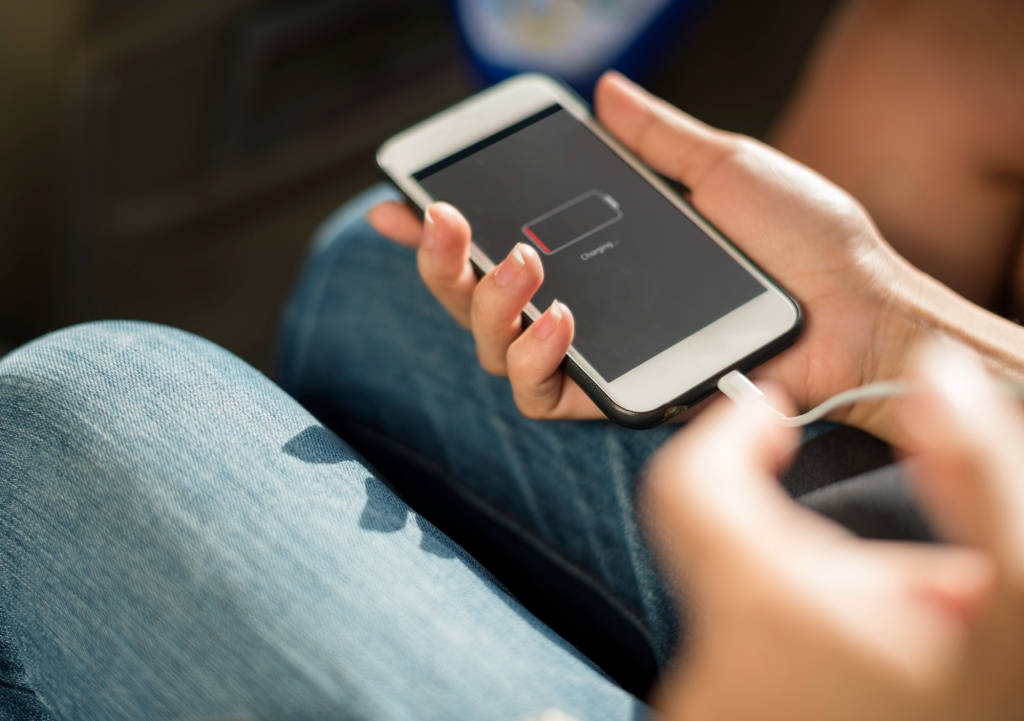
Here’s something worth knowing about the German smartphone market: the devices with the longest real-world battery life aren’t necessarily the ones with the biggest cells. A 5,000mAh battery in an unoptimized phone can drain in under eight hours of mixed use. A 4,300mAh cell in a well-optimized device running efficient software can last a full day and then some. German consumers – who skew toward deliberate, research-driven purchasing decisions – have been quietly exploiting this gap for years, and it’s producing usage patterns that the rest of Europe is now catching up to.
Germany has one of the highest rates of mobile digital engagement in Europe, much of it in long-session formats: extended gaming, continuous streaming, live entertainment. Services built for this audience – from video platforms to sankra casino online environments – depend on the device staying alive. When a session ends because the battery died, that’s a platform failure as much as a hardware one. What keeps German users on their screens involves hardware, software, and platform design in equal measure.
The Myth of the Bigger Battery
Battery capacity is visible on a spec sheet. Efficiency is not. And efficiency is what actually determines how many hours a German commuter gets out of a device between charges. The variables that matter more than raw milliampere-hour ratings break down into four areas:
- Display power management – screen-on time is the single largest drain in typical usage. LTPO displays that drop to 1Hz refresh rate during static content and rise to 120Hz only during active scrolling can save 20-30% of battery consumption compared to fixed high-refresh panels, with zero perceptible quality difference in most use cases.
- Processor architecture efficiency – the gap between a current-generation efficient chip and an older power-hungry one is significant under sustained loads. Running a live streaming session on a Snapdragon 865-class chip versus a current Snapdragon 8 Gen 2 produces dramatically different thermal and battery profiles.
- Background process management – the OS approach to background apps is often more consequential than hardware specs. Aggressive background limits, enforced by Android manufacturers and iOS alike, keep standby drain low. Platforms that circumvent these through persistent wake locks drain batteries at rates users notice and blame on the device.
- Network efficiency during active sessions – Wi-Fi 6 and 5G Sub-6GHz are significantly more battery-efficient than 4G LTE at comparable data rates. Live content over Wi-Fi 6 consumes meaningfully less radio power than an equivalent session over congested 4G.
How German Devices Compare on Real-World Battery Performance
| Device Class | Average Screen-On Time | Typical Digital Session Length | Common German User Verdict |
| Flagship Android (current gen) | 7-9 hours | 4-5 hours continuous | Excellent, charges once daily |
| Flagship iPhone (current gen) | 6-8 hours | 3.5-4.5 hours continuous | Good, consistent |
| Mid-range Android (efficient chip) | 8-11 hours | 5-6 hours continuous | Outstanding value |
| Older flagship (2-3 years) | 4-6 hours | 2.5-3.5 hours continuous | Noticeable degradation |
| Budget Android (low-efficiency chip) | 5-7 hours | Varies widely | Unpredictable |
German consumers are disproportionately represented in the mid-range Android column. Samsung’s A-series, Motorola’s Edge line, and Google’s Pixel a-series – all prioritizing efficiency over peak benchmark scores – consistently outsell pricier alternatives in Germany. The purchasing logic is applied battery science.
What Platform Design Has to Do With It
Battery life isn’t purely a device problem. How a platform behaves on a device directly affects drain rate, and German users are observant enough to notice when an app is pulling more than its share.
The Wake Lock Problem
Live platforms – streaming services, real-time gaming environments, interactive entertainment applications – require persistent connections that can conflict with the operating system’s battery optimization logic. A platform that holds a wake lock during active sessions is doing the right thing. A platform that holds wake locks during idle states, between sessions, or during background operation is burning user battery for no user benefit. German users notice this. The battery usage screen on both Android and iOS is frequently checked, and apps that consistently appear at the top of battery consumption rankings without a corresponding amount of on-screen use get deleted. This is not an edge case behavior. It’s routine.
Adaptive Bitrate as a Battery Feature
Most users understand adaptive bitrate streaming as a video quality mechanism – the stream drops to lower quality on a slow connection. Fewer users understand that it’s also a battery mechanism. Processing lower-bitrate video requires less decoder workload, which means less CPU and GPU activity, which means measurably lower power draw.
Platforms that implement aggressive adaptive bitrate logic – defaulting to the lowest quality that still looks good on the specific display in use, rather than the highest quality the connection allows – can meaningfully reduce their battery footprint during long sessions. For a German user in a two-hour evening gaming or streaming session, that difference can be 15-20% of total session drain. Over the lifetime of engagement with that platform, it’s the kind of detail that builds quiet loyalty. Battery life, in other words, is a product feature. The platforms treating it that way are the ones German users keep coming back to.
