


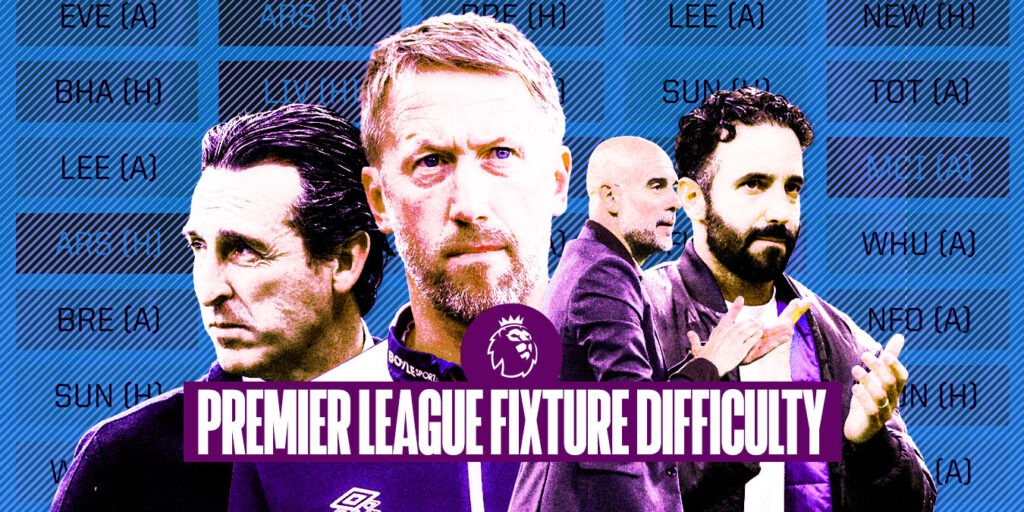
The 2017/2018 Premier League season demonstrated that fixture difficulty was not just a scheduling detail—it directly influenced team selection, performance stability, and ultimately betting outcomes. Teams navigating congested or uneven schedules were forced to rotate players, introducing variability that traditional analysis often overlooked.
Why Fixture Difficulty Alters Team Consistency
Fixture difficulty operates on two levels: opponent quality and match frequency. Facing stronger teams reduces expected performance, while playing multiple matches in short periods increases fatigue.
The combined effect is instability. Teams rarely maintain consistent lineups or performance levels under these conditions, leading to unpredictable results even when underlying quality remains unchanged.
How Rotation Becomes Inevitable
Managers respond to fixture pressure by rotating squads to preserve player fitness. This decision is not optional—it is a structural necessity during demanding periods.
- Key players are rested to avoid injury.
- Squad depth determines how performance is affected.
- Tactical adjustments compensate for missing personnel.
- Youth or fringe players gain unexpected minutes.
These changes alter team dynamics. Even small adjustments in lineup composition can disrupt established patterns, affecting both attacking and defensive cohesion.
The implication is that team strength becomes fluid rather than fixed, especially during congested schedules.
Identifying High-Risk Rotation Periods
Not all parts of the season carry equal rotation risk. Certain periods consistently increase the likelihood of lineup changes.
- Holiday fixtures with short recovery time between matches.
- Weeks involving domestic cup competitions.
- Periods following European matches.
- End-of-season phases with congested rescheduled games.
These windows introduce uncertainty. Teams may prioritize specific competitions, leading to uneven squad selection across matches.
Recognizing these periods allows for better anticipation of when rotation will influence outcomes.
Mechanisms Linking Rotation to Performance Drops
Rotation affects more than individual player quality. It disrupts team structure in ways that are not immediately visible.
Core performance impacts
- Reduced chemistry between players affects passing and positioning.
- Defensive coordination weakens with unfamiliar partnerships.
- Attacking patterns lose efficiency without key contributors.
These effects compound during matches. A rotated team may start competitively but lose cohesion over time, increasing the likelihood of conceding goals or failing to convert chances.
Understanding these mechanisms explains why rotated teams often underperform relative to expectations.
Translating Fixture Pressure Into Betting Decisions
Fixture analysis becomes actionable when connected to market interpretation. When evaluating matches through a sports betting service such as ufa168, odds may not fully reflect the impact of rotation, particularly when team reputation remains strong. This creates situations where favored teams are priced based on full-strength expectations despite fielding altered lineups.
When Rotation Does Not Reduce Performance
Rotation is not always negative. Teams with deep squads can maintain performance levels despite lineup changes.
- Strong bench quality offsets the absence of starters.
- Tactical systems remain consistent regardless of personnel.
- Opponent weakness reduces the impact of rotation.
These conditions create resilience. Teams capable of rotating without losing structure present fewer opportunities for exploiting fixture-related weaknesses.
Comparing Teams With Strong vs Weak Depth
Squad depth determines how effectively teams handle fixture difficulty.
Team type | Characteristics | Impact
Deep squads | Multiple high-quality options per position | Stable performance despite rotation
Shallow squads | Limited alternatives for key roles | Significant performance drops
This comparison highlights why top teams often navigate congested schedules more effectively than mid-table or relegation-threatened sides.
Market Behavior and Scheduling Blind Spots
Markets tend to prioritize recent results and overall team strength. However, fixture context is not always fully integrated into pricing.
Within a casino online environment, where football betting is part of a broader system, scheduling nuances may be simplified. This can lead to underestimation of rotation effects, particularly in less prominent matches where lineup changes receive less attention.
Integrating Fixture Analysis With Other Factors
Fixture difficulty should be evaluated alongside other variables such as injuries, tactical adjustments, and opponent style. This combined approach provides a more accurate assessment of match conditions.
For example, a rotated team facing a high-intensity opponent may struggle more than one facing a passive defensive side.
Limitations of Fixture-Based Predictions
While fixture analysis provides valuable insight, it does not guarantee outcomes. Several factors introduce uncertainty.
- Unexpected lineup decisions alter pre-match expectations.
- Individual performances can override structural weaknesses.
- Match events such as early goals change tactical approaches.
These limitations emphasize the need for flexibility. Fixture difficulty is a guiding factor, not a definitive predictor.
Summary
Fixture difficulty during the 2017/2018 Premier League season influenced squad rotation, which in turn affected team performance and betting outcomes. By understanding how scheduling pressures disrupt consistency, it becomes possible to identify situations where market expectations diverge from actual match conditions.