


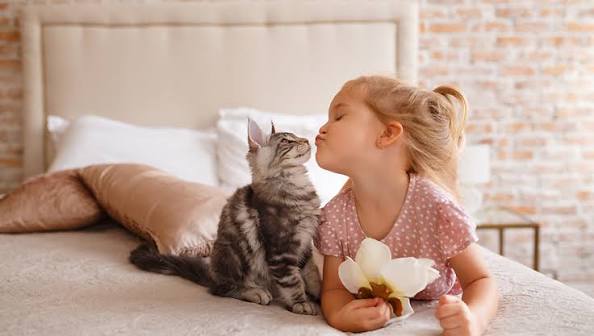
A family pet is often described as a companion, but for children it can also become an early lesson in care, boundaries and routine. Feeding, grooming, walking and giving an animal space all show that another living creature has needs that cannot be paused because a child is bored or distracted.
That does not mean children should be handed full responsibility for an animal. Adults remain responsible for welfare, safety and veterinary care. The value for children comes from supervised involvement, where small tasks help them understand consistency without making the pet dependent on a child’s memory alone.
Responsibility Starts With Repetition
Children learn responsibility through repeated actions more than one-off promises. Filling a water bowl, checking that a gate is shut or putting a lead back in the same place teaches reliability in a way that feels visible and immediate.
A pet’s needs also make cause and effect easier to understand. If a dog needs a walk, the task cannot be ignored until tomorrow. If a rabbit’s bedding needs changing, someone has to do it before the animal becomes uncomfortable. The social bond people often form with companion animals and everyday connection helps explain why these routines can matter emotionally as well as practically.
Children Need Age-Appropriate Tasks
A young child might help scoop food with an adult, brush a gentle dog or place a toy back in a basket. Older children can take on more structured jobs, such as feeding at set times, helping clean an enclosure or joining an adult on walks.
Adult oversight is essential because enthusiasm is not the same as reliability. Clear, specific tasks are easier for children to manage than vague instructions to “look after the pet”. Pet care also needs to fit the animal’s temperament, because a nervous cat, an elderly dog or a small animal may not suit rough handling or constant attention.
In a home where fostering in Birmingham is part of family life, a pet routine can give a child a clear, shared task before bigger responsibilities are expected.
Boundaries Matter as Much as Affection
Children often show love through closeness, but animals need rest, space and the right to move away. Teaching a child to read signs of discomfort, such as a tucked tail, flattened ears or a pet retreating to its bed, protects both the child and the animal.
This is where pet care becomes a lesson in respect, not just kindness. A child can learn that affection should be invited, not forced, and that a pet’s quiet place is not a play area. Advice on children interacting safely with pets reinforces the need for boundaries, clear examples and supervision.
Pets Can Build Empathy Without Becoming a Lesson Plan
The best learning usually happens during ordinary care. A child noticing that a dog is tired after a long walk, that a cat dislikes noise or that a guinea pig needs gentler handling is beginning to think beyond their own wishes.
Adults can support that by narrating what they see. “She has gone to her bed, so we’ll leave her alone” teaches more than a lecture about empathy. Over time, those small observations can help children understand that care is not only about wanting something close. It is about noticing what another living being needs and responding well.