


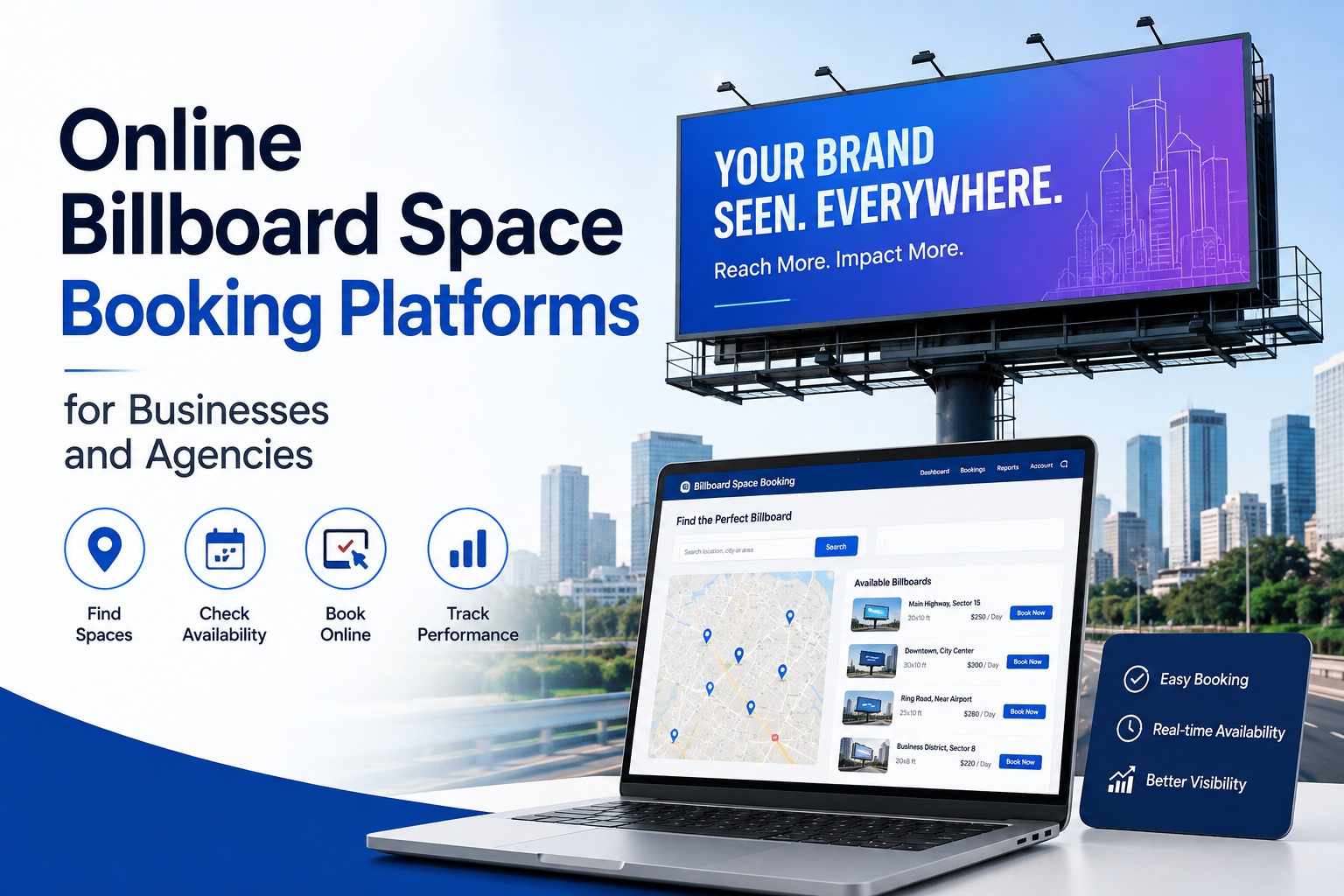
Outdoor advertising remains one of the most effective ways to reach local audiences, but finding and reserving billboard inventory has traditionally been a slow and manual process. Businesses often have to contact multiple media owners, compare availability, negotiate pricing, and manage paperwork before a campaign can even begin. Today, digital booking platforms have streamlined this workflow, making it easier to book billboard space while comparing available locations, campaign durations, and advertising options in a single place. Instead of replacing professional planning, these platforms help businesses make informed decisions more efficiently.
For marketing agencies managing multiple client campaigns, online billboard booking platforms also improve transparency and campaign organization. Teams can evaluate different locations, estimate budgets, coordinate schedules, and maintain centralized records without relying on lengthy email chains or spreadsheets. This improves operational efficiency while reducing the risk of booking conflicts and missed deadlines.
Understanding Online Billboard Space Booking Platforms
An online billboard space booking platform is a digital marketplace or management system that allows advertisers to search, compare, reserve, and sometimes manage outdoor advertising inventory through a web-based interface. Rather than contacting individual billboard owners separately, users gain access to available advertising spaces through a centralized platform.
Modern platforms often include features such as:
- Interactive location searches
- Billboard availability calendars
- Campaign duration selection
- Digital contract management
- Cost estimation
- Campaign tracking
- Geographic targeting tools
- Inventory filtering by size, format, and audience
Some platforms focus exclusively on traditional static billboards, while others include digital billboards, transit advertising, street furniture, shopping malls, airports, and other outdoor media.
Businesses of all sizes benefit because the booking process becomes more transparent, allowing marketers to compare options before making a decision.
A Practical Strategy for Booking Billboard Space Effectively
Successful outdoor advertising begins long before selecting a billboard. A structured planning process helps maximize campaign performance while avoiding unnecessary costs.
1. Define Your Campaign Objective
Start by identifying exactly what you want the billboard to accomplish.
Common objectives include:
- Brand awareness
- Product launches
- Local store promotions
- Event marketing
- Political campaigns
- Public awareness initiatives
A campaign designed for brand recognition requires different placement than one focused on driving foot traffic to a nearby retail location.
2. Understand Your Target Audience
Effective billboard advertising depends heavily on location.
Consider factors such as:
- Daily commuting routes
- Population demographics
- Nearby businesses
- Shopping districts
- Traffic volume
- Vehicle versus pedestrian visibility
For example, a luxury automobile dealership will likely benefit more from premium highway placements than neighborhood streets with limited traffic.
3. Compare Available Inventory
Online platforms make comparing billboard inventory significantly easier.
Evaluate:
- Visibility
- Viewing distance
- Traffic counts
- Illumination
- Billboard orientation
- Digital versus static displays
- Rental duration
- Installation requirements
Instead of choosing the cheapest option, compare expected audience exposure with campaign objectives.
4. Review Campaign Timing
Seasonality influences billboard effectiveness.
Retail campaigns often perform better before major shopping seasons, while tourism businesses benefit from increased travel periods.
Booking platforms allow advertisers to reserve inventory well in advance, helping secure premium locations during high-demand periods.
5. Coordinate Creative Production
The booking process is only one part of a successful campaign.
Before confirming dates, ensure artwork production, approvals, and installation schedules align with campaign launch timelines.
Agencies frequently create production checklists that include:
- Creative approval
- Print specifications
- Installation deadlines
- Removal dates
- Client sign-off
Organizing these tasks early prevents unnecessary delays.
Common Challenges Businesses Should Avoid
Although online booking simplifies billboard advertising, several mistakes still reduce campaign effectiveness.
Choosing Locations Based Only on Price
Lower-priced inventory is not always a better investment.
A billboard with significantly higher daily impressions may generate stronger brand awareness despite costing more.
Evaluating cost alongside audience exposure produces better long-term value.
Ignoring Local Audience Behavior
Traffic volume alone does not guarantee success.
Understanding who travels through an area—and why—is equally important.
A billboard near office districts reaches a different audience than one near entertainment venues or universities.
Booking Too Late
Premium billboard locations often become unavailable weeks or months before major advertising seasons.
Planning campaigns early provides greater flexibility and more location choices.
Failing to Measure Campaign Performance
Outdoor advertising should not operate independently from other marketing channels.
Businesses often combine billboard campaigns with:
- Landing pages
- QR codes
- Dedicated phone numbers
- Location-specific promotions
- Branded search monitoring
These methods provide additional insights into campaign performance.
Expert Recommendations for Businesses and Agencies
Experienced media planners generally approach billboard advertising as one component of a broader marketing strategy rather than an isolated campaign.
Begin by establishing measurable objectives before selecting locations. Instead of focusing exclusively on traffic counts, consider how billboard placements complement digital advertising, social media campaigns, and local search visibility.
For agencies managing multiple clients, maintaining standardized workflows can significantly improve campaign efficiency. Creating repeatable processes for budgeting, artwork approval, scheduling, and reporting reduces administrative overhead while minimizing errors.
Campaign reporting also deserves attention. Clients increasingly expect measurable outcomes, making documentation essential. Recording booking details, campaign dates, locations, audience estimates, and creative versions helps agencies evaluate performance over time and refine future campaigns.
Another overlooked factor is website readiness. Outdoor advertising often drives people to search for a brand online after seeing a billboard. If the destination website loads slowly, has technical SEO issues, or lacks clear calls to action, valuable traffic may be lost before conversions occur. Reviewing website health before launching major advertising initiatives ensures offline marketing efforts are supported by a positive online experience. Tools such as AudEsto can help marketing teams audit website performance, generate white-label SEO reports, and identify technical improvements before campaigns begin.
Finally, maintain flexibility throughout the campaign. Market conditions, local events, weather, and traffic patterns can influence advertising performance. Regular campaign reviews allow businesses to adjust future bookings based on real-world results instead of assumptions.
Conclusion
Online billboard space booking platforms have transformed outdoor advertising by making inventory discovery, comparison, scheduling, and campaign management far more efficient. Businesses gain better visibility into available locations, while agencies can coordinate multiple campaigns through centralized workflows that improve organization and reporting.
The most successful billboard campaigns combine thoughtful planning, audience research, strategic location selection, timely execution, and ongoing performance evaluation. By using digital booking platforms as part of a broader marketing strategy, organizations can simplify campaign management while making more informed advertising decisions that support long-term brand growth.
