


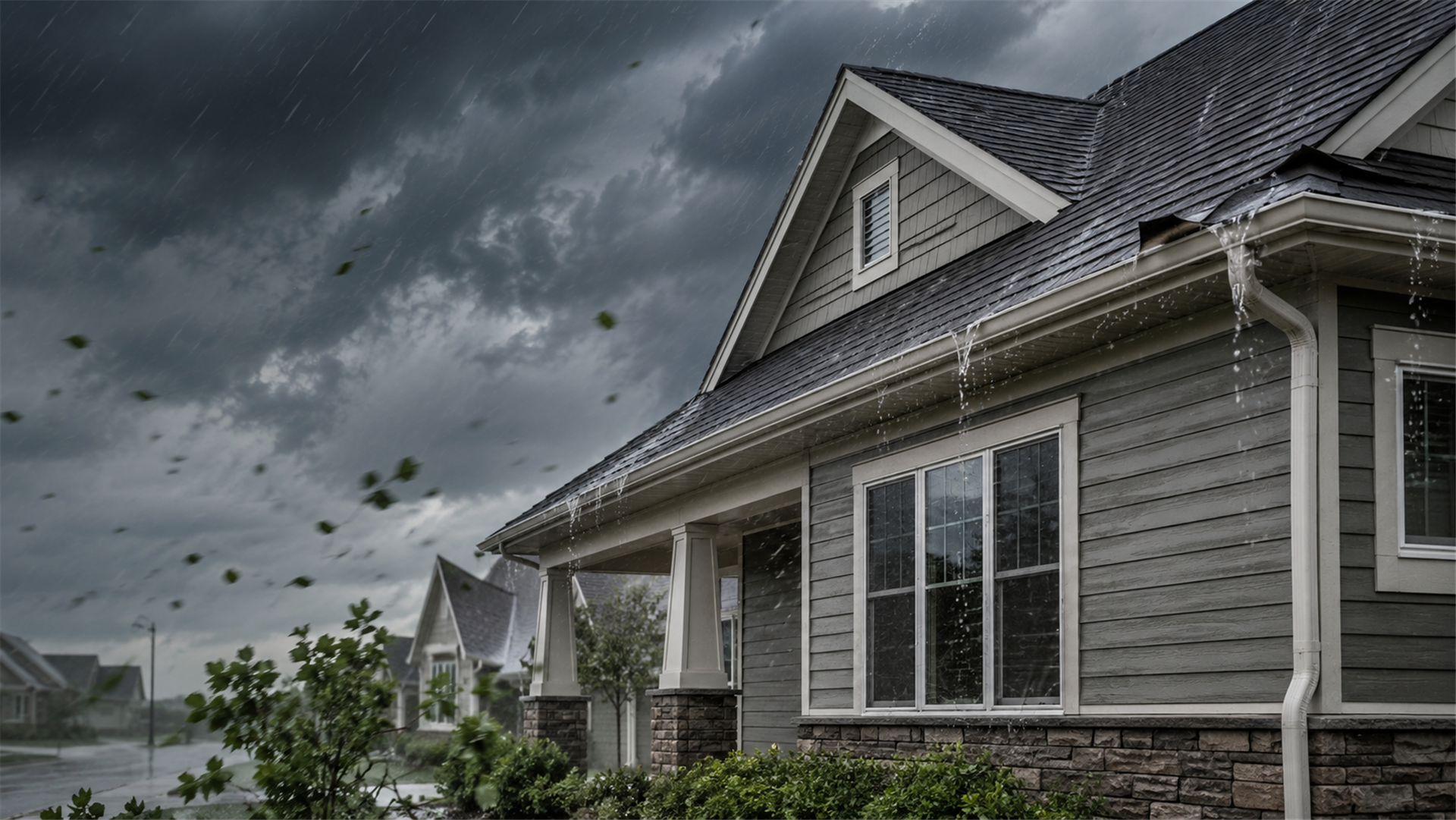
Storms can place significant stress on a home’s exterior, especially when heavy rain, strong winds, hail, and rapid temperature changes occur in a short period of time. Even well built homes are vulnerable to sudden impacts that weaken protective materials and expose structural components to moisture or debris. Understanding how storm damage affects exterior surfaces helps property owners respond quickly, schedule repairs, and maintain long term durability. When these issues are identified early, homeowners can prevent more extensive deterioration and preserve the safety and appearance of their property.
Roof Damage That Weakens Structural Protection
The roof is one of the most exposed parts of any home during a storm, making it highly susceptible to damage. Concepts like roof vulnerability and weather resilience reinforce how storms impact roofing materials.
High winds can lift shingles, hail can crack or dent surfaces, and heavy rain can expose weak points that allow moisture to seep into the attic. When roofing materials begin to fail, the home loses its primary barrier against water intrusion and structural strain. Many homeowners rely on Austin roofing contractors to assess storm related roof damage and complete repairs that restore long term protection. Addressing roof issues promptly helps prevent leaks, mold growth, and deeper structural deterioration.
Siding Damage That Reduces Exterior Durability
Siding plays a major role in shielding the home from moisture, wind, and debris. Concepts like exterior protection and material durability highlight how siding supports long term stability.
Storms can cause siding panels to crack, warp, or detach, especially when exposed to flying debris or prolonged moisture. Damaged siding allows water to reach the underlying structure, increasing the risk of rot, mold, and insulation damage. Even small cracks can widen over time, making early repairs essential. Maintaining strong siding ensures that the home remains visually appealing and structurally secure.
Gutter Damage That Disrupts Water Flow
Gutters are designed to direct water away from the home, but storms often overwhelm or damage these systems. Concepts like drainage efficiency and water management reinforce how gutters influence exterior protection.
Heavy rain can cause gutters to overflow, while strong winds may bend or detach sections. When gutters fail, water can pool near the foundation, seep under roofing materials, or damage exterior walls. Proper drainage is essential for preventing erosion and moisture intrusion. Repairing storm damaged gutters helps maintain consistent water flow and reduces the risk of long term structural issues.
Window and Door Damage That Compromises Weather Resistance
Windows and doors are vulnerable during storms, especially when exposed to high winds or flying debris. Concepts like impact resistance and structural sealing highlight how these components protect the home.
Cracked glass, damaged frames, or weakened seals allow moisture and drafts to enter the home, reducing comfort and increasing energy use. When seals fail, water can accumulate around interior surfaces, leading to stains, mold, or warped materials. Reinforcing or repairing windows and doors after a storm helps restore weather resistance and maintain indoor comfort.
Foundation Stress That Develops from Poor Drainage
Storms can indirectly affect the foundation by altering how water moves around the home. Concepts like foundation protection and soil stability reinforce how drainage influences structural health.
Excessive rain can saturate soil, causing it to shift or erode. When water pools near the foundation due to damaged gutters or improper grading, it increases pressure on the structure and may lead to cracks or settling. Addressing drainage issues promptly helps maintain foundation stability and prevents long term structural concerns.
Conclusion
Storm damage can affect a home’s exterior in many ways, including weakened roofing, compromised siding, damaged gutters, vulnerable windows and doors, and increased foundation stress. When homeowners understand these risks and respond quickly, they protect their property from long term deterioration and maintain a safe, durable exterior.
