


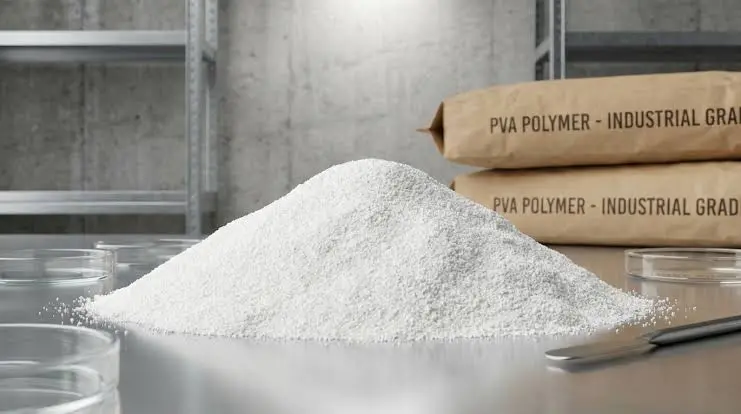
Polyvinyl alcohol, commonly known as PVOH or PVA, is a versatile synthetic polymer used across many industrial sectors. It is valued for its excellent water solubility, film-forming ability, adhesive strength, and compatibility with different materials. Today, ポリビニルアルコール製品 are widely used in construction, paper manufacturing, textiles, packaging, ceramics, adhesives, and many other applications. In the building industry, PVOH helps manufacturers improve product strength, flexibility, durability, and processing performance.
What Are Polyvinyl Alcohol Products?
Polyvinyl alcohol products are available in different grades based on their molecular weight, viscosity, and degree of hydrolysis. These properties determine how the material behaves during production and in the final application. Some grades dissolve easily in cold water, while others require warm or hot water. Manufacturers can select the appropriate grade according to their processing conditions and desired product performance.
The versatility of ポリビニルアルコール製品 allows businesses to use them as binders, protective films, stabilizers, coating materials, and adhesion-enhancing agents. Their ability to create strong and uniform films makes them particularly useful for applications that require surface protection or improved mechanical performance.
Importance of PVOH in Construction Materials
The demand for PVOH 建材 solutions is growing as construction manufacturers look for materials that can improve the performance of cement-based and mineral-based products. PVOH may be added to dry-mix mortars, cement formulations, tile adhesives, joint compounds, putties, and surface coatings. It supports adhesion between different components and can help the finished product maintain its strength during application and curing.
In construction formulations, even a carefully controlled amount of PVOH can influence workability, cohesion, and surface quality. It can help keep the ingredients evenly distributed and reduce unwanted separation. However, the exact result depends on the selected grade, dosage, and complete formulation. For this reason, laboratory testing is essential before using PVOH in commercial building products.
Better Adhesion and Binding Performance
One of the primary advantages of PVOH 建材 is its strong binding ability. Construction materials must often adhere to surfaces such as concrete, plaster, bricks, wood, and tiles. If the adhesion is weak, the material may crack, peel, or separate from the surface. PVOH can support internal cohesion and strengthen the bond between the formulation and the substrate.
This characteristic makes ポリビニルアルコール製品 useful in wall putties, repair mortars, cementitious coatings, and tile-related formulations. Better binding performance can also reduce material loss during handling and application. When properly formulated, the finished product becomes easier to spread and creates a more consistent surface.
Film-Forming and Surface Protection
PVOH has excellent film-forming properties. Once water evaporates, it can form a clear and continuous film. In PVOH 建材 applications, this film may help improve surface uniformity and provide additional protection. It can also support the performance of coatings designed for interior or controlled construction environments.
The film properties depend on factors such as molecular weight, hydrolysis level, plasticizer selection, humidity, and temperature. Manufacturers should consider these conditions when developing a PVOH-based construction product. A technical supplier can recommend suitable grades and help determine whether any additional modifiers are required.
Improved Flexibility and Crack Resistance
Construction products are frequently exposed to movement, vibration, temperature changes, and mechanical pressure. Materials that are too rigid may develop small cracks over time. The use of PVOH 建材 formulations may support flexibility and toughness, helping the product handle minor movement more effectively.
PVOH can also be used in fibre production. PVOH-based fibres are known for their strength and compatibility with certain cementitious systems. When incorporated correctly, they may support crack control and improve the mechanical performance of specialised concrete or mortar products. The exact benefits depend on fibre type, dimensions, dosage, and the overall construction mixture.
Selecting the Right PVOH Grade
Choosing the correct grade is an important step when working with ポリビニルアルコール製品. A manufacturer should evaluate viscosity, solubility, degree of hydrolysis, particle size, and expected processing temperature. Fully hydrolysed grades generally provide strong water resistance after film formation but often require higher dissolution temperatures. Partially hydrolysed grades may dissolve more easily and offer different surface and adhesion properties.
A suitable PVOH 建材 grade should match both the production process and the final performance requirements. Before large-scale use, manufacturers should conduct compatibility, storage stability, workability, adhesion, water exposure, and mechanical strength tests.
Storage and Processing Considerations
Polyvinyl alcohol should normally be stored in a cool, dry place and protected from moisture. Bags should remain securely closed until the product is required. During solution preparation, the powder should be added gradually to water with proper mixing to prevent lump formation. Temperature should then be adjusted according to the technical instructions for the selected grade.
Safe handling procedures and the supplier’s safety data sheet should always be followed. Although ポリビニルアルコール製品 are used in many established industrial applications, their safe and effective use depends on correct handling, processing, and formulation.
Conclusion
PVOH is a valuable polymer for manufacturers seeking stronger adhesion, reliable binding, uniform films, and improved formulation stability. In the construction sector, Pvoh 建材 can support the development of mortars, putties, adhesives, coatings, and specialised cement-based products. By selecting the appropriate grade and testing it under real production conditions, companies can use PVOH to create consistent, durable, and high-performing building materials.
