


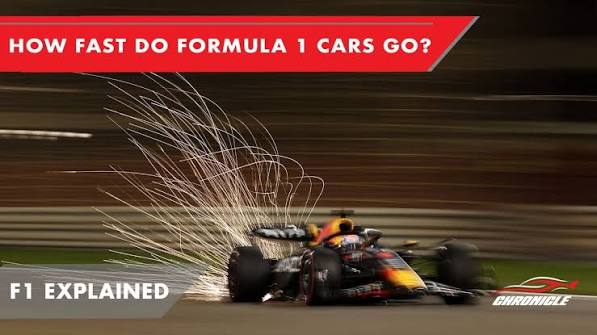
Watch a Grand Prix on a laptop screen and the cars look quick but manageable. Stand at a fence three rows back at Spa or Monza and the same car goes past like it’s been fired from something, and the noise arrives about half a second after the car already has. That gap between how fast do F1 cars go on Dbbet paper and what it feels like trackside is where most of the confusion starts.
Straight-line speed, qualifying pace, and race pace get used almost interchangeably by drivers, teams, and broadcasters, which is part of why the topic trips people up. This piece sorts out which number means what, and why F1 qualifying laps land nowhere close to what happens once the actual race starts.
Top speed versus what a lap actually feels like
Everyone quotes the same number: 350 km/h, give or take. That’s roughly what a Formula 1 car hits on the longest straights, in race trim, with a driver carrying enough fuel to finish the Grand Prix. Monza gets there most reliably, mostly because the whole circuit is built around bleeding off as little drag as possible. Baku and Spa aren’t far behind it. Valtteri Bottas still holds one of the higher marks on record, 378 km/h at Baku in 2016, in a car stripped down almost to bare metal for the occasion.
None of that resembles what a lap actually looks like. Factor in every braking zone and hairpin on the circuit and the average speed drops hard, sometimes by more than half. Monaco barely creeps past 160 km/h across a lap because there’s nowhere to build real speed before the next wall shows up. Monza averages closer to 260. Two very different answers to how fast do F1 cars go, and both of them are correct, which is exactly the problem with quoting a single number.
Where all that performance comes from
Big engine, light shell. That’s most of the story people already know, and it’s not wrong, just incomplete.
The hybrid power units under the current regulations pair a 1.6-litre turbo V6 with electric motors for a combined output somewhere around 1,000 horsepower. The car itself weighs about 800 kg with the driver strapped in. That ratio is why 0-100 km/h takes roughly 2.6 seconds. The more interesting number, honestly, is how fast these cars stop. Carbon-carbon brakes and downforce pressing the car into the track let an F1 car decelerate even quicker than it accelerates, which is not how most fast cars work.
Downforce is the real separator here, more than the engine ever is. At speed, the wings and floor generate enough aerodynamic load that the car could, in theory, drive upside down through a tunnel without falling out of it. That’s what lets a driver carry corner speed that would put a normal car into a barrier without much drama. Cornering forces above 5G through a fast sweeper aren’t unusual. There’s a cost, though: more downforce drags more, and more drag caps top speed on the straights. So a team’s wing setup shifts from Monza to Monaco to Silverstone, and nobody runs the same configuration twice in a season. There isn’t a single “fastest” setup. There’s just whatever compromise fits that weekend’s track.
Qualifying pace tells a different story than race pace
The fastest lap of a race weekend almost never happens during the race. New fans usually assume otherwise, and it’s a fair assumption, just a wrong one.
F1 qualifying runs in three stages. Q1 puts all 20 cars on track, and the slowest five drop out and start from the back of the grid. Fifteen cars move into Q2, another five get cut, and the remaining ten fight for pole in Q3. Each session gets shorter, the field gets smaller, and the closing minutes of Q3 are usually where the outright fastest lap of the whole weekend gets set, sometimes by a margin of a tenth of a second or less.
Fuel load is most of the answer for why. A qualifying lap doesn’t need to carry fuel for 60-plus race laps, so the car is lighter, and the tyres are softer and fresher than anything used once the race actually starts. That’s why the “lap record” quoted for a given circuit almost always traces back to a qualifying session rather than the Grand Prix itself. Comparing a Q3 time straight to a race lap isn’t really a fair fight. One is built for a single perfect lap. The other has to survive an hour and a half without falling apart.
What the numbers actually add up to
A car that touches 350 km/h down a straight and can’t turn or stop is worthless on a real circuit, which is the part top-speed headlines tend to skip entirely. Teams spend far more of their development budget on cornering grip and braking stability than on shaving another few km/h off terminal speed, because a car that can’t brake into Turn 1 finishes nowhere regardless of what it did on the straight before it. Formula 1 rewards the whole package, not any one piece of it: enough straight-line pace to avoid getting swallowed on the run to a corner, enough downforce to hold a line through a bend most road cars couldn’t survive, and a qualifying setup sharp enough to start near the front before a single racing lap has happened. The honest answer to how fast do F1 cars go was never really about the top-speed number. It’s about how quickly one of these cars can stop being fast and become something else entirely, a braking, cornering machine, and then flip back a second later.
