


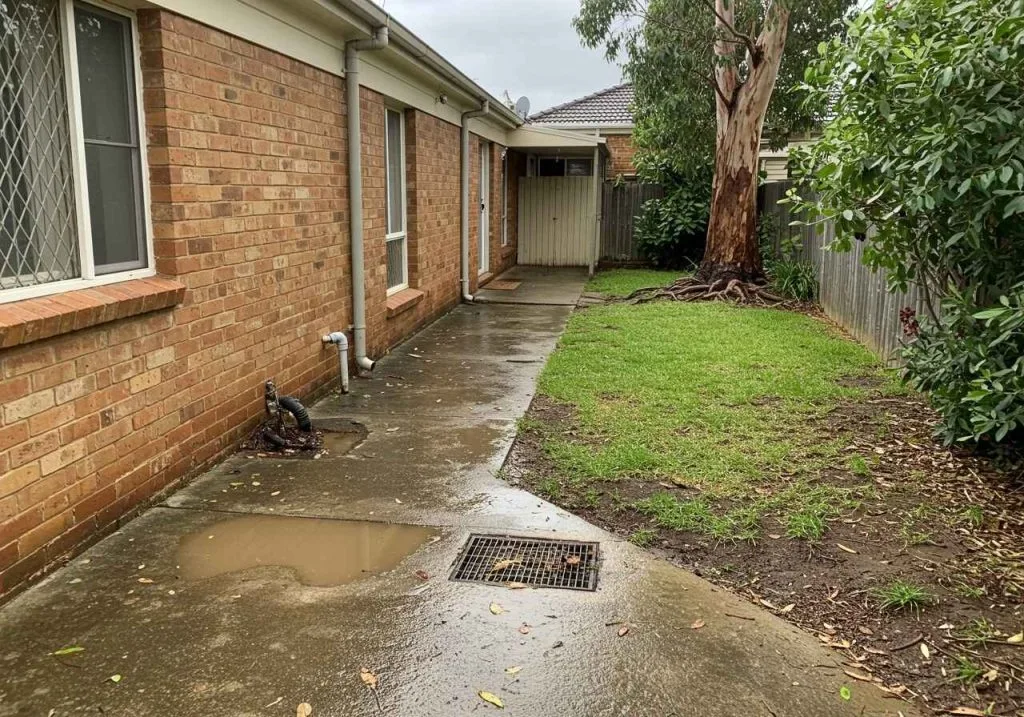
The first sign is usually small. A patch near the shed that stays soft for a week longer than the rest of the paddock after rain. A section of driveway that develops a puddle every winter, right where you always have to slow down. Most rural landowners notice these small signs for years before they actually do anything about them, partly because the problem seems minor and partly because it is genuinely hard to know, without proper experience, whether you are looking at a quick fix or the early warning sign of something considerably more serious.
Stormwater and drainage issues on rural and acreage properties behave very differently to the kind of drainage problems you see on a standard suburban block. The volume of water involved is larger, the distances water needs to travel across the property are longer, and the consequences of getting it wrong, from eroded driveways to waterlogged paddocks to genuine structural risk near sheds and dams, tend to be more serious and more expensive to fix once they have been left unaddressed for years. This guide walks through what landowners actually need to understand about how water moves across a rural property, and what to look for before a small wet patch turns into a genuine problem.
How Water Actually Moves Across a Rural Property
Before you can fix a drainage problem, it helps to understand why it is happening in the first place, and that starts with understanding how water naturally wants to move across your land. Water follows the path of least resistance downhill, which sounds obvious, but most rural landowners have never actually mapped out where that natural path runs across their own property, let alone whether anything built on the land since has interrupted or redirected it.
Driveways, sheds, dams and even fence lines can all unintentionally change how water moves across a block compared with how it moved before any of that infrastructure existed. A driveway built without adequate culverts can act like a dam wall during heavy rain, backing water up on one side while starving the other side of water it previously received naturally. Understanding this bigger picture, rather than treating each wet patch as an isolated problem, is the real starting point for fixing rural drainage properly rather than just patching symptoms as they appear.
The Most Common Rural Drainage Problems We SeeWater Pooling Around Driveways, Sheds and Building Pads
This is probably the most frequently reported drainage issue on rural properties, and it almost always comes back to inadequate planning at the time the driveway, shed or building pad was originally constructed. When these structures are built without proper consideration of the natural water flow across the property, water that used to pass through that area unimpeded suddenly has nowhere to go, and it pools against the nearest obstruction instead. Over time, this standing water softens the ground, can undermine the structural integrity of nearby footings or driveway edges, and creates a breeding ground for mosquitoes and other pests that nobody wants closer to the house.
Erosion Along Natural Water Courses and Constructed Channels
Erosion tends to show up gradually, which is exactly why it often goes unaddressed until it has become a genuinely significant problem. A small channel that carries runoff during heavy rain can widen and deepen year after year if the water flow through it is not managed properly, eventually carving out a gully that is expensive and difficult to repair. This is particularly common on sloped sections of rural properties across the Perth Hills, where the combination of gradient and seasonal heavy rainfall creates ideal conditions for erosion to accelerate once it has started.
Dams, Sumps and Ponds That No Longer Function as Intended
Many rural properties have an existing dam, sump or pond that was constructed years, sometimes decades, earlier, and these structures require ongoing maintenance to continue functioning as intended. Silt build up gradually reduces a dam’s effective capacity, overflow points can become blocked or eroded, and the surrounding earthworks can shift over time in ways that affect how water enters and exits the structure. A dam that worked perfectly well when it was built can become a genuine liability years later if these changes are never addressed, sometimes failing entirely during a particularly heavy rain event when it is relied upon most.
Why Culverts and Stormwater Planning Matter More Than People Expect
A culvert, in simple terms, is a structure that allows water to pass underneath a driveway, access track or other constructed surface rather than being blocked by it. On rural properties, culverts are often underengineered relative to the actual volume of water they need to handle during heavy rainfall, either because the original installation used an undersized pipe, or because changes to the property over time, such as additional cleared land upstream, have increased the volume of water the culvert now needs to manage compared with when it was first installed.
An undersized or poorly positioned culvert tends to fail in one of two ways. Either water backs up on the upstream side, creating exactly the kind of pooling problem discussed earlier, or the culvert becomes overwhelmed during a significant rain event and water finds an alternative path, often straight across the driveway surface itself, accelerating erosion and surface damage considerably faster than normal traffic wear would. Properly sized and positioned culverts, installed as part of a broader understanding of how water moves across the whole property, prevent both of these outcomes and tend to require far less ongoing maintenance than a culvert that was undersized from the outset.
Your Obligations as a Rural LandownerKeeping Stormwater Within Your Own Boundary
It is worth understanding that managing stormwater on your property is not simply a matter of convenience, it is generally a legal obligation. Property owners across Western Australia typically have a statutory obligation, under common law precedents and the Local Government Act 1995, to confine stormwater within their own property boundaries rather than allowing it to flow uncontrolled onto neighbouring land. This matters particularly for rural properties, where larger areas of cleared land and longer natural water courses mean the volume of water involved, and therefore the potential for genuine disputes with neighbours, tends to be considerably larger than on a standard suburban block.
This obligation is worth keeping in mind before undertaking any significant earthworks, driveway construction or clearing on your property, since changes that redirect water onto a neighbour’s land, even unintentionally, can create a genuine legal and practical problem down the track. If you are planning significant changes to your property that could affect water flow, it is worth discussing the broader drainage picture with a contractor who understands these obligations, rather than focusing purely on solving the immediate problem in front of you without considering where the water will actually end up afterward.
How Clearing and Development Changes Your Property’s Water Behaviour
Every time land on a rural property is cleared, built on or otherwise developed, the way water moves across that section changes, often more significantly than people expect. Vegetation, particularly established trees and deep rooted groundcover, plays a genuine role in slowing water movement and allowing it to soak into the ground gradually rather than running off quickly across the surface. When that vegetation is removed, whether for a new building pad, a paddock expansion or general land clearing, the same rainfall event that previously soaked in gradually can suddenly generate much faster, higher volume runoff than the property’s existing drainage infrastructure was ever designed to handle.
This matters enormously for landowners planning any kind of development or clearing work, because a drainage system that worked perfectly well for years can become inadequate almost overnight once upstream land use changes. It is worth thinking about drainage capacity not as a fixed, one time calculation but as something that needs to be revisited whenever significant changes are made anywhere upstream on the property, even in sections that feel unrelated to where the drainage problem eventually shows up.
Why Staged Development Needs Staged Drainage Planning
Many rural properties are developed in stages over several years rather than all at once, with a shed built one year, a dam constructed the next, and further clearing undertaken sometime after that. The risk with this staged approach is that drainage planning often only considers the immediate project in front of the landowner at the time, without stepping back to reassess how the cumulative effect of several separate projects has changed the property’s overall water behaviour. A culvert sized appropriately for the property as it existed five years ago may simply no longer be adequate once several additional changes have taken place since, even though no single change seemed significant enough on its own to warrant revisiting the drainage plan.
This is exactly why periodically reassessing your property’s drainage as a whole, rather than only reacting to the most recent visible problem, tends to produce a far more resilient outcome over the long term. A contractor who understands this and asks about your property’s development history, not just the current symptom, is generally better positioned to recommend a solution that will actually hold up as the property continues to change.
The Cost of Delaying a Drainage Fix
It is tempting to leave a minor drainage issue alone, particularly when it only becomes visible for a few weeks each year during the wettest part of the season. The problem with this approach is that most drainage issues do not stay the same size over time, they tend to gradually worsen as erosion deepens channels, silt continues to build up in dams and sumps, and structures weakened by repeated wetting and drying cycles become more vulnerable to failure during an unusually heavy rain event.
Addressing a drainage issue while it is still relatively minor, such as a culvert that is beginning to show signs of being undersized but has not yet failed outright, is almost always considerably cheaper and less disruptive than waiting until that same culvert fails completely during a major storm, potentially taking out a section of driveway or access track along with it. This is one of the clearer cases in property maintenance where early action genuinely saves money, rather than simply being a more cautious approach for its own sake.
Planning a Drainage Solution the Right Way
A proper drainage solution for a rural property starts with understanding the whole picture, not just the specific spot where water is currently causing a problem. This generally means walking the full property, ideally during or shortly after a significant rain event when the actual water flow is visible, rather than relying purely on assumptions about where water should theoretically travel based on the property’s general slope. Water does not always behave the way a quick glance at a contour map would suggest, and the only reliable way to understand your specific property’s drainage behaviour is to actually observe it in action.
From there, a sensible drainage plan typically addresses the problem at its source where practical, rather than simply managing the symptom closest to the house or shed. If water pooling near a building pad is actually caused by an undersized culvert three hundred metres upstream, fixing the pooling without addressing the culvert will likely only shift the problem to wherever the water goes next, rather than genuinely resolving it.
Working With a Contractor Who Understands Rural Drainage Specifically
Not every earthworks or construction contractor has genuine experience with the specific challenges rural drainage presents, and it is worth asking direct questions before committing to any significant drainage work on your property. A contractor experienced in rural drainage should be comfortable discussing how they assess water flow across a whole property, how they size culverts and other drainage infrastructure relative to catchment area rather than guesswork, and how they approach dams, sumps and ponds that may need more than a simple surface clean out to genuinely restore proper function.
It is also reasonable to ask how a contractor accounts for future changes to your property when designing a drainage solution today, since a solution built only for current conditions may need revisiting sooner than one that has been designed with some reasonable allowance for further development down the track. A contractor who asks thoughtful questions about your property’s history and future plans before proposing a fix is generally a stronger sign of genuine expertise than one who offers a solution based purely on a brief look at the immediate problem area.
Checklist for Assessing Drainage on Your Rural Property
- Walk the full property during or shortly after heavy rain to observe actual water flow, not just assumed flow based on slope
- Check existing culverts for size, blockages and whether they still suit the current volume of water on the property
- Inspect any dams, sumps or ponds for silt build up, overflow function and structural condition
- Look for early signs of erosion along natural water courses, particularly on sloped sections of the property
- Consider whether any recent changes, such as new sheds, driveways or cleared land, have altered natural water flow
- Confirm that your property’s drainage keeps stormwater within your own boundary rather than affecting neighbouring land
Final Word
If you live in Perth and are dealing with water pooling, erosion or a dam that no longer performs the way it should, our team works as a drainage contractor Perth landowners across the Peel region and Perth Hills call when they need the whole property properly assessed, not just the obvious wet patch patched over.
Get in touch with our team to talk through what is actually happening with water on your property and what a genuine, lasting fix would involve.
Frequently Asked Questions
1. How do I know if my rural property has a genuine drainage problem or just normal seasonal wetness?
A good indicator is whether the wet or pooling area persists well beyond typical rainfall events, or whether it appears to be getting worse year on year rather than remaining consistent. Occasional, short lived dampness after heavy rain is often normal, while persistent pooling, erosion or a dam that is visibly struggling to function are signs of a genuine issue worth addressing.
2. Am I legally responsible if stormwater from my property affects my neighbour’s land?
Generally yes. Property owners in Western Australia typically have an obligation to confine stormwater within their own boundary under common law and the Local Government Act 1995, which means changes that redirect water onto a neighbouring property can create real legal exposure, even if unintentional.
3. How often should existing dams and sumps be checked for drainage issues?
An annual check, ideally before the wetter months, is a sensible minimum for most rural properties, looking specifically at silt build up, overflow function and the condition of surrounding earthworks. Properties with older or larger dams may benefit from more frequent inspection.
4. Can a drainage problem in one part of my property actually be caused by something happening elsewhere on the block?
Yes, this is extremely common on rural properties. Water flow issues often originate well upstream of where the visible problem appears, which is why a proper assessment needs to consider the whole property rather than just the specific spot where pooling or erosion has become obvious.
5. Is it expensive to fix rural drainage problems properly?
It depends heavily on the scale of the issue and how long it has been left unaddressed. Generally, addressing a drainage problem early, before erosion or structural damage has had time to develop, costs considerably less than waiting until the problem has escalated into a larger repair.
This article is general information only and does not constitute professional engineering or legal advice. Drainage requirements, obligations and local by-laws vary by location. Always confirm current requirements with your local council and seek independent advice specific to your property.
