


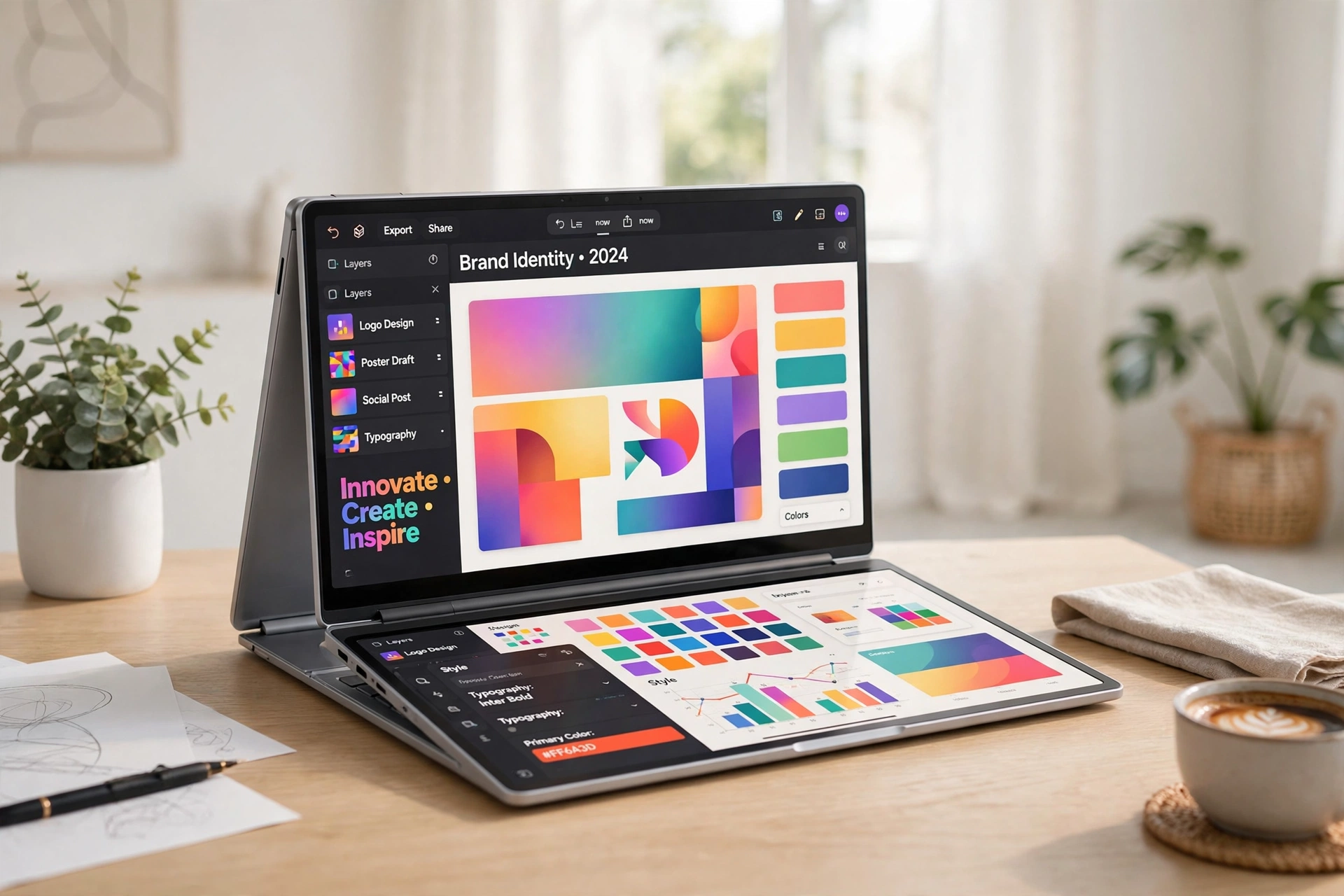
Fold it like a book, carry it like a notebook, open it into a screen taller than most desktop monitors. Foldable laptops have been promising this trick for years, and in 2026 the machines on sale are finally good enough to argue about seriously. The question for buyers is no longer whether the technology works, but whether it works well enough to justify prices that still start well above a conventional premium laptop.
At Lapzoo we test laptops of every shape, and foldables divide opinion like nothing else. Here is the honest state of the category.
What You Actually Get
A foldable laptop replaces the usual screen-plus-keyboard layout with one large flexible OLED panel. Folded, it works like a small clamshell with an on-screen keyboard or a magnetically attached physical one. Opened flat and propped on its stand, it becomes a 17- to 18-inch display that towers over a regular notebook, superb for documents, spreadsheets and split-screen research.
The portability math is real. A device that slips into a bag like a hardback book but unfolds into a dual-monitor workspace is genuinely useful for consultants, writers and analysts who work from trains, client offices and kitchen tables, and it is the closest thing yet to carrying a spare monitor in your bag. Reviewers at PCMag have praised the newest models for turning any small desk into a two-screen setup in under a minute.
The Crease, the Cost and the Compromises
Three issues follow foldables everywhere. The first is the crease: far less visible than on early models, and largely forgotten while you work, but still detectable at glancing angles and to the fingertip. The second is durability. Flexible screens have improved enormously and are now rated for hundreds of thousands of folds, yet they remain softer and more scratch-prone than glass, and repairs are expensive.
The third is price. Expect to pay a significant premium over a similarly powerful conventional laptop, and to accept mid-range performance, modest battery life and a keyboard that, however clever, is not as comfortable as a proper deck for all-day typing. Teardowns covered by Tom’s Hardware show how much engineering budget goes into the hinge and panel, money that cannot also go into the processor and cooling.
Who Should Buy One in 2026
Buy a foldable if your work is screen-hungry and location-fluid: researchers juggling sources, finance professionals living in spreadsheets, presenters who demo on the move. The tall unfolded display is not a gimmick for these users; it changes how the working day feels.
Wait if you type all day on your lap, game seriously, or need maximum performance per rupee, dollar or pound. Conventional ultrabooks and dual-screen laptops without folding panels deliver more power and better keyboards for less money, and a portable USB-C monitor solves the second-screen problem for a fraction of the foldable premium.
Software Is Quietly Catching Up
Early foldables were let down by software that treated the big screen as a stretched phone display. That has changed. Window managers now snap apps into halves and quarters of the unfolded panel, remember layouts per posture, and hand documents smoothly between folded and flat modes. Video calls use the fold as a built-in stand, documents get genuine two-page spreads, and several creative apps have added dual-pane editing designed for the tall canvas. The gap between the hardware idea and the software reality, once the strongest argument against foldables, has narrowed to the point where reviewers increasingly judge these machines as laptops first and novelties second.
The Verdict
Foldable laptops in 2026 are neither the revolution their makers promise nor the gimmick sceptics describe. They are a specialised tool that is excellent for a specific kind of mobile, document-heavy work, and an expensive indulgence for everyone else. The technology will keep improving and prices will keep falling. For most buyers, the smart move is to admire this generation, and let the next one make the decision easier.
