


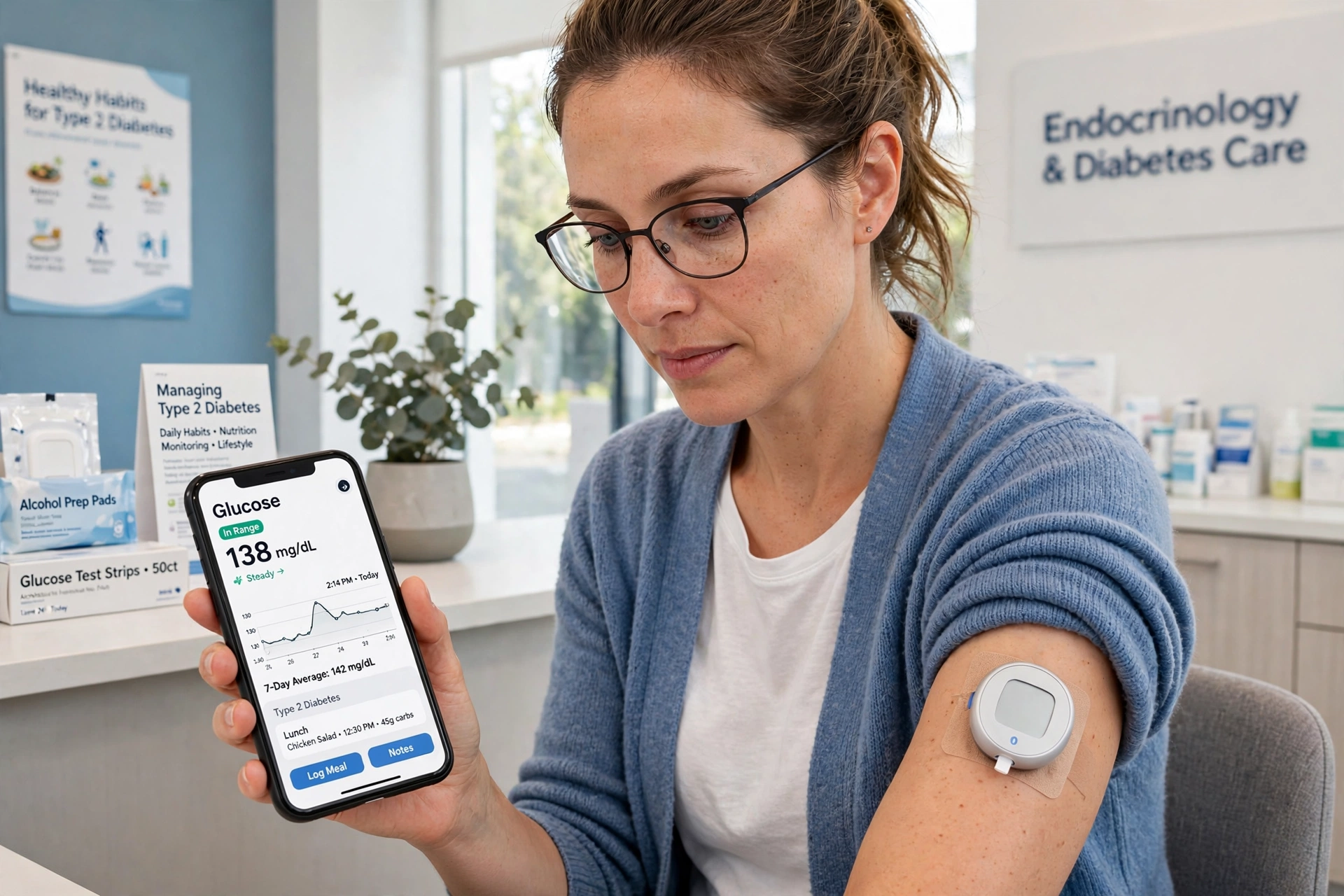
Continuous glucose monitors could help far more people with type 2 diabetes than currently use them, according to the largest clinical trial of its kind, published in the New England Journal of Medicine. The study found that adults with type 2 diabetes who do not use insulin spent roughly five more hours a day within their target blood sugar range when they used a continuous glucose monitor, known as a CGM.
What the Trial Found
CGMs are small wearable sensors that track glucose levels around the clock and send readings to a phone or receiver. They have long been common among people who use insulin, but their benefit for the much larger group of people managing type 2 diabetes with other medicines, diet and activity has been less clear. This trial, reported via The New England Journal of Medicine, provides some of the strongest evidence yet that the devices help that wider group too.
Spending more time in the target range is not a cosmetic metric. Clinicians use time-in-range because it is linked to a lower risk of complications over the long term, and because it shows patients, in near real time, how meals, movement, sleep and medication affect their bodies.
Why Real-Time Feedback Changes Behaviour
A traditional finger-prick test gives a single number at a single moment. A CGM shows a trend. Users can see a rise beginning after a meal, watch the effect of a short walk, and learn which breakfasts keep them steady and which send levels sharply upward. That feedback loop turns abstract advice about carbohydrates and activity into personal, visible evidence.
The pattern fits what we have covered before on the value of daily rhythms. In our article on why a consistent wake time matters for sleep, the theme was similar: small, repeatable habits, measured honestly, tend to beat occasional bursts of effort. Glucose data gives people with diabetes the same kind of steady, usable signal.
Who Stands to Benefit Most
The findings are especially relevant for adults whose diabetes is managed without insulin and who may have assumed CGMs were not meant for them. If a sensor helps someone spend five additional hours a day in range, that is a meaningful daily improvement, achieved largely through awareness and adjustment rather than a new drug.
There are still practical questions. Cost and coverage vary widely, sensors must be replaced regularly, and not everyone wants a device attached to their body. Clinicians also caution that data helps most when patients are supported in interpreting it, rather than being left alone with a stream of numbers and alarms.
What Patients Should Ask Their Doctor
Anyone considering a CGM should discuss whether their insurance covers it, what target range is appropriate for their situation, and how to respond to highs and lows without overcorrecting. It also helps to agree on a review rhythm: looking at weekly patterns together is usually more productive than reacting to every single reading.
People should also ask how a CGM fits alongside existing treatment, including medicines, meal planning and activity goals. The device is a tool for understanding, not a treatment by itself, and the trial’s results suggest its value grows when the information it provides leads to concrete, sustainable changes.
A Shift in How Diabetes Care Is Delivered
The trial also points to a broader shift in chronic disease care, where continuous data replaces occasional snapshots. Instead of reviewing a handful of readings every few months, care teams can spot patterns early, adjust advice sooner, and focus appointments on decisions rather than detective work. For health systems, that model promises fewer surprises and, potentially, fewer costly complications over time.
The Bottom Line
This landmark trial strengthens the case that continuous glucose monitoring is not only for people who use insulin. For adults with type 2 diabetes, roughly five extra hours a day in the target range is a significant gain, and it comes from seeing clearly what was previously invisible. Wider access will depend on cost and coverage decisions, but the clinical direction is now much harder to ignore.
