


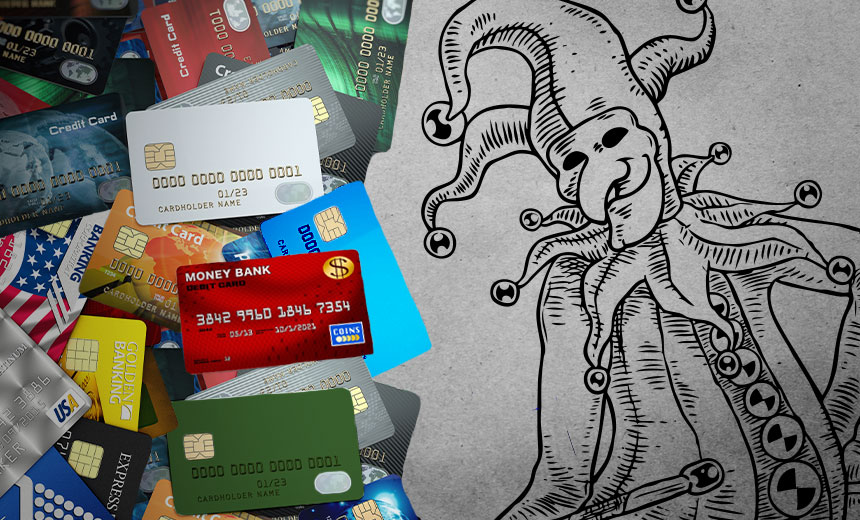
Digital payments have become a routine part of everyday life. People use cards, mobile wallets, online banking, and contactless systems for everything from household purchases to business expenses. Behind every apparently simple transaction is a complicated network of merchants, banks, payment processors, software platforms, authentication systems, and security controls.
That complexity creates opportunities as well as risks. When payment information is exposed, the consequences can extend beyond one unauthorized transaction. Compromised information can trigger investigations, account replacements, customer disputes, operational disruption, and broader concerns about data protection.
The historical cybersecurity discussion surrounding Jokersstash, also written as Jokerstash or Joker stash, provides a useful case for examining these challenges from a defensive perspective. Rather than focusing on the mechanics of illicit activity, cybersecurity research can use such historical subjects to understand how payment information becomes vulnerable and what organizations can do differently.
The most valuable lesson is simple: payment security is not one product or one security feature. It is a layered process involving technology, people, policies, monitoring, and continuous risk assessment.
Why Payment Security Requires Constant Attention
Payment systems are attractive targets because financial information can have consequences beyond the original transaction. A compromised credential may create opportunities for unauthorized purchases, account abuse, identity-related fraud, or additional attacks.
The difficulty is that payment systems are highly interconnected. A consumer may interact with dozens of merchants and online services, while a business may depend on numerous technology providers. Each connection introduces another environment that must be secured.
A bank can maintain strong internal controls while a customer becomes exposed through a compromised merchant. Similarly, a merchant can implement responsible security practices while a third-party provider introduces an unexpected vulnerability.
This interconnected structure is one of the most important lessons that researchers can draw from historical subjects such as Jokerstash. Security cannot stop at organizational boundaries.
Understanding the Difference Between a Stolen Card and Compromised Data
Physical card theft and digital payment-data exposure are different security problems.
When someone loses a physical card, the event is immediately visible. The cardholder can contact the issuer and take steps to prevent unauthorized use.
Digital compromise is less obvious. A person can continue carrying the same card while associated payment information has already been exposed somewhere in the digital ecosystem.
This creates a significant detection challenge. The original compromise might occur through a malicious website, phishing campaign, compromised account, malware infection, merchant breach, or another security incident. Fraudulent activity may appear later, and identifying the original source can require extensive investigation.
This is why modern payment security emphasizes monitoring and behavioral analysis rather than relying solely on physical-card protection.
How Payment Information Can Become Exposed
There are several broad pathways through which payment information can become vulnerable.
Phishing remains one of the most common because it exploits trust. A fraudulent message may imitate a financial institution, retailer, delivery service, or another organization. The recipient may then be persuaded to enter sensitive information into a deceptive website.
Malware creates another threat. Compromised devices can potentially expose credentials and other information used during online transactions.
Data breaches can affect large numbers of customers simultaneously. An organization that stores or processes sensitive information may become a target, and customers can face consequences even if they personally followed good security practices.
Third-party services create additional complexity. Businesses increasingly rely on cloud platforms, payment providers, software vendors, analytics systems, and external infrastructure. Weaknesses in one provider can sometimes affect many organizations.
The historical discussion around Joker stash is useful in this context because it encourages security professionals to examine the entire payment ecosystem rather than treating payment fraud as a problem isolated to one transaction.
What Historical Cybersecurity Research Can Teach Us
Historical cybercrime research has value when it helps defenders identify recurring weaknesses.
Security teams can examine publicly documented incidents to understand how information was exposed, how organizations detected suspicious activity, what consequences followed, and which defensive measures were introduced afterward.
Research involving Jokersstash should therefore be approached as a cybersecurity case study rather than as an opportunity to reproduce criminal activity.
One of the strongest lessons from historical incidents is that attackers often benefit from weaknesses that appear unrelated to the payment transaction itself. Poor password security, inadequate access controls, vulnerable applications, insufficient monitoring, and social engineering can all contribute to a larger payment-security problem.
Studying these connections helps organizations build more complete defenses.
The Importance of Fraud Detection
Financial institutions process enormous numbers of transactions. It is impossible for security analysts to manually review every payment, so automated detection plays a major role.
Modern fraud systems can evaluate behavioral signals such as transaction patterns, unusual account activity, spending characteristics, device-related information, and other indicators.
Machine-learning systems can identify patterns across large datasets and help security teams prioritize potentially suspicious events.
However, automated detection is not perfect. Legitimate customers sometimes behave unusually, while sophisticated fraudulent activity can occasionally resemble normal behavior.
Effective payment security therefore requires a combination of automated systems, human analysis, customer verification, and well-designed response procedures.
Human Behavior Remains a Major Security Factor
Technology alone cannot solve every payment-security problem.
People remain central to both attacks and defense. A convincing phishing message can persuade a user to provide information even when the underlying financial institution has strong technical controls.
Security awareness should focus on practical decisions. Consumers and employees need to recognize when a request is unusual and know how to verify it through an independent channel.
Several warning signs deserve particular attention:
- Unexpected requests for payment or account information.
- Messages that create unnecessary pressure to act immediately.
- Unrecognized transactions or account notifications.
- Password-reset messages that the user did not request.
- Links leading to unfamiliar or suspicious websites.
- Requests for authentication codes through inappropriate channels.
These signs do not automatically prove malicious activity. They indicate that the recipient should pause, verify the communication, and avoid providing sensitive information until its legitimacy is established.
Safer Payment Practices for Consumers
Consumers can reduce their exposure through consistent security habits.
Transaction alerts are particularly useful because they provide rapid visibility into account activity. If a suspicious purchase occurs, an immediate notification can give the cardholder an opportunity to investigate quickly.
Unique passwords are also important. Reusing one password across banking, email, shopping, and other services creates unnecessary risk. If one account becomes compromised, attackers may attempt to reuse the same credentials elsewhere.
Multi-factor authentication adds another protective layer. Even if a password is exposed, an additional verification requirement can make unauthorized account access more difficult.
Consumers should also be cautious with unexpected financial messages. Instead of using a link contained in an unsolicited email or text, they can independently access the official application or website of the relevant organization.
Regular software updates provide another layer of protection by addressing known security weaknesses.
What Businesses Should Learn From Payment Security Incidents
Businesses have a greater responsibility because they often collect, process, or transmit sensitive information.
A strong security strategy begins with data minimization. Organizations should avoid collecting information they do not need and should carefully consider how long sensitive information needs to be retained.
Access controls are equally important. Employees, applications, and service accounts should receive only the permissions required for legitimate responsibilities.
Security monitoring should provide visibility into important systems and unusual activity. Organizations cannot respond effectively to threats they cannot see.
Incident-response planning is another critical component. Companies should know in advance how they will investigate suspicious activity, isolate affected systems, communicate with stakeholders, and restore secure operations.
Historical research into Jokerstash and similar payment-data incidents reinforces the importance of preparation. Waiting until an incident occurs to determine who is responsible for response decisions can increase confusion and delay containment.
Why Third-Party Risk Cannot Be Ignored
A business’s security posture is influenced by the organizations connected to it.
Cloud providers, payment processors, software vendors, customer-management platforms, analytics services, and other partners may have access to important systems or information.
This means vendor security should be evaluated as part of broader organizational risk.
Companies should understand what information vendors can access, why they need that access, how the information is protected, and what happens if the relationship is compromised.
Access should be limited whenever possible. If a provider does not require sensitive information to perform its role, unnecessary access should not be granted.
Third-party security is not simply a procurement issue. It is part of the organization’s overall cybersecurity strategy.
The Role of Layered Security
A mature payment-security program does not depend on one control.
Encryption can protect information in appropriate environments, but encryption alone does not prevent phishing. Multi-factor authentication can protect accounts, but it does not eliminate every type of fraud. Fraud detection can identify suspicious transactions, but it cannot guarantee that every fraudulent event will be stopped.
Layered security addresses this problem by combining different defenses.
Organizations can use authentication, access controls, encryption, tokenization, endpoint protection, network monitoring, fraud analytics, vulnerability management, employee education, and incident-response processes.
The purpose is straightforward: if one defense fails, another layer should reduce the chance that the incident becomes more serious.
This defense-in-depth approach remains one of the most important principles that historical payment-security research can reinforce.
Responsible Research Into Jokerstash
Cybersecurity research must distinguish evidence from speculation.
The names Jokerstash, Joker stash, and Jokersstash may appear in different forms across historical discussions. Researchers should establish whether individual references actually describe the same subject and should avoid assuming that repeated online claims are independently verified.
Search results can include reputable reporting, security research, recycled material, commentary, and unsupported claims. Frequency does not automatically equal credibility.
Responsible researchers should evaluate the origin of a claim, examine supporting evidence, and distinguish confirmed findings from allegations.
There is also an ethical responsibility to avoid publishing operational details that could facilitate financial crime. Defensive research can provide substantial value without explaining how stolen payment information can be obtained, validated, exchanged, or misused.
The objective should be understanding, prevention, and resilience.
Building Better Digital Payment Awareness
Security awareness is most effective when it becomes part of normal behavior rather than an occasional response to a major incident.
Consumers should become comfortable checking transaction notifications, reviewing account activity, using strong authentication, and questioning unexpected financial communications.
Organizations should make security education practical. Employees should know how to report suspicious messages, verify unusual requests, handle sensitive information, and respond when they suspect an account or device has been compromised.
Leadership also has an important role. Security cannot remain exclusively the responsibility of technical teams. Decisions about data retention, vendor relationships, software deployment, access privileges, and incident response can all influence cybersecurity risk.
A strong security culture develops when everyone understands that protecting sensitive information is part of their role.
The Future of Digital Payment Safety
Payment technology continues to evolve. Digital wallets, tokenization, biometric authentication, behavioral analytics, and stronger identity controls can reduce certain forms of exposure.
Tokenization can limit the need to repeatedly expose underlying payment credentials in some transaction environments. Digital wallets can add device-level protections and additional authentication mechanisms.
Artificial intelligence and machine learning can also help identify unusual transaction behavior across massive datasets.
Yet attackers adapt as technology improves. If one pathway becomes harder to exploit, attention may shift toward users, employees, applications, third-party services, or account credentials.
For that reason, the future of payment security will not be defined by one perfect technology. It will depend on continuous improvement across the entire ecosystem.
Key Lessons From Jokersstash for Digital Safety
The broader cybersecurity lessons associated with Jokersstash are ultimately about resilience.
Organizations need to reduce unnecessary data exposure, protect critical systems, monitor unusual activity, control access, assess third-party risk, and prepare for incidents before they happen. Consumers need to monitor their accounts, protect credentials, use multi-factor authentication, and question unexpected requests for financial information.
Historical incidents also demonstrate why rapid response matters. A security weakness becomes more dangerous when it remains undetected for an extended period. Early identification can limit exposure and give defenders more opportunities to contain the problem.
Perhaps the most important lesson is that cybersecurity is interconnected. A payment transaction may involve numerous systems and organizations, meaning security responsibilities extend far beyond the moment a customer presses a payment button.
Final Thoughts
The subject of Jokerstash and related historical payment-data research offers an opportunity to examine digital safety from a defensive perspective. The real value lies not in reproducing criminal behavior, but in understanding the weaknesses that allow payment information to become exposed. The variations Joker stash and Jokersstash also demonstrate why careful research matters. Online references need context, credible evidence, and responsible interpretation. A name appearing in search results is not enough to establish a particular claim.
Safer digital payments require multiple layers of protection. Consumers need practical security habits. Businesses need responsible data management, strong access controls, vendor oversight, monitoring, and tested response plans. Financial institutions need effective fraud detection and rapid communication.
No single measure can eliminate every threat. But when technology, awareness, responsible research, and sound security practices work together, the payment ecosystem becomes substantially more resilient.
The lasting lesson from historical payment-security incidents is therefore clear: digital safety is not achieved through one defensive barrier. It is built through many layers that work together, improve continuously, and remain focused on protecting people and their financial information.