


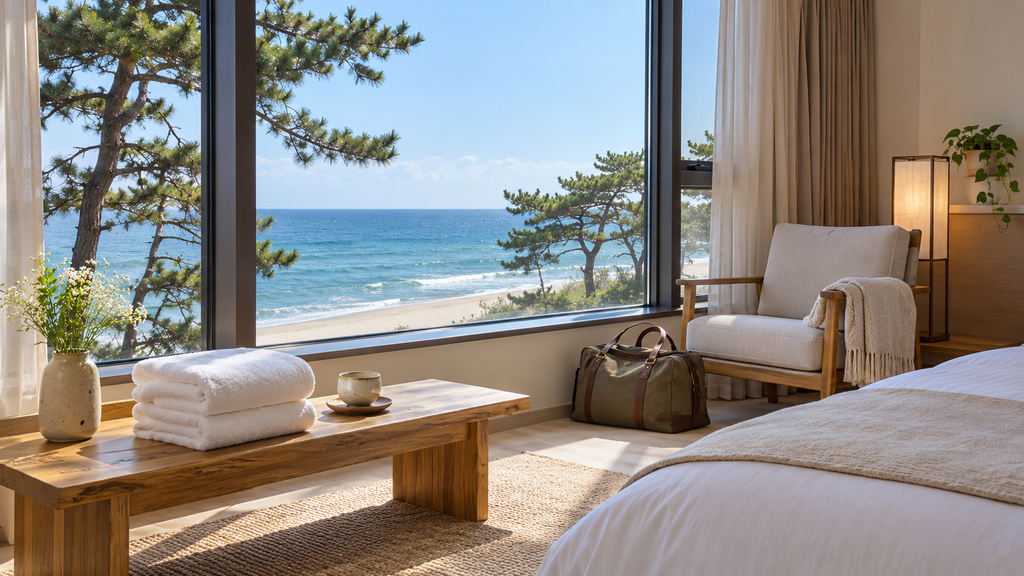
AI generated editorial illustration
A relaxed Gangneung trip begins with a few decisions made before the first beach photograph. Where you stay, how often you change locations and what you leave unscheduled can matter as much as the attractions themselves. A coffee overlooking the coast loses some of its appeal when you are already calculating the next transfer. The aim is to give each part of the day enough room, including the time spent back at your accommodation. With a manageable route and clear arrangements for any optional services, a short visit can feel pleasantly unhurried.
Choose your base around the evenings you want
Before comparing room photographs, decide where you would like to finish most days. Some travelers value being near their evening meal; others want straightforward transport or an easy return after a coastal outing. Place your accommodation and a few likely destinations on the same map. Look at the actual routes between them rather than assuming that everything within one city belongs in a single walk.
Read the room description with your ordinary habits in mind. A useful chair, somewhere to put luggage and a layout that suits your group can matter more than an elaborate lobby. Check arrival arrangements, luggage storage and the property’s visitor policy directly. If you expect to spend a quiet afternoon indoors, choose a room you will enjoy using during the day as well as overnight.
Give each outing one clear focus
Gangneung offers several ways to build a gentle sightseeing day. The Korea Tourism Organization identifies Gangneung Coffee Street with the Anmok area, while its Gyeongpo Beach listing describes a setting between the lake and the sea, with pine woodland beside the beach. These are different experiences to enjoy on their own terms. Choose the coffee stop or coastal walk that interests you most, then leave the surrounding time flexible.
For a change of pace, Ojukheon House provides a historical focus. The official tourism listing identifies it as the birthplace of the Joseon scholar Yi I. Pick a visit because the subject interests you, rather than adding it simply to fill a gap. Check current access arrangements before leaving, and resist combining every familiar place name into one afternoon.
Count the transitions as part of the day
An itinerary often looks comfortable because it counts only the activities. Walking to a pickup point, finding an entrance, waiting for food and returning to collect luggage also use time. Mark those transitions when planning. A lunch followed by a beach visit needs room for both the journey and the possibility that lunch takes longer than expected.
Keep one flexible block between sightseeing and anything with a fixed start. If the weather changes, that space can absorb a revised route without forcing every later arrangement to move. Carry the accommodation’s address in a form you can show a driver, and save essential booking details where they remain accessible. These small preparations reduce the number of decisions you have to make while standing outside.
Make returning to your room part of the plan
Time at the accommodation does not need an ambitious label. It might mean putting away shopping, changing out of outdoor clothes, reading a few pages or deciding where to eat later. Leave a clear place for bags so that the room remains comfortable to use. If you are traveling with someone else, agree whether this is quiet time or a chance to plan together.
Keep the next commitment light enough to suit the break. An evening with a nearby meal can be easier to manage than returning briefly and heading across the city again. A visiting wellness appointment is another optional use of this time, provided it fits the property’s rules and the traveler’s preferences. It should serve the schedule you want, rather than become another appointment to rush toward.
Check whether a visiting massage suits your arrangements
An in-room service requires coordination between the guest, the accommodation and the provider. Ask the property whether outside practitioners may visit and whether there are registration or access requirements. A provider accepting your location does not automatically establish that the property permits the visit. Shared accommodation may also require agreement from the people using the room.
When researching 강릉출장마사지, read the current service information and confirm who is eligible to book, which areas are covered and what the appointment includes. Do not assume that every member of a travel group can use the same service. Ask what communication options are available if you need help with language. Clear answers give you a better basis for deciding whether the arrangement belongs in your trip.
Get the practical details in one written confirmation
Before agreeing to a booking, request a concise confirmation of the date, expected arrival window, session duration and complete charge. Ask whether travel, equipment or other fees are included, what payment methods are accepted and what happens if either party needs to reschedule. An advertised description is useful background; the confirmation should make clear what applies to your particular booking.
Clarify how an arrival update will be sent and whom to contact if plans change. For example, a traveler returning from sightseeing may need to move an appointment if transport is delayed. Knowing the cancellation terms beforehand makes that conversation simpler. Keep the details together rather than scattered across screenshots, and resolve unclear answers before building the rest of the evening around the appointment.
Prepare the space and explain your preferences
Ask what equipment the provider brings and how much clear space is needed. A room can look generous in photographs while offering little usable floor space once luggage is open. Move your own belongings as appropriate, keep walkways clear and avoid rearranging hotel furniture without permission. Follow the agreed arrival procedure, including any reception check required by the property.
Discuss preferences such as pressure, fragrance and conversation before the session begins. Say what you are comfortable with and ask for an explanation when something is unclear. You can request an adjustment or ask to stop. Leave enough time afterward to dress and organise your belongings without hurrying toward a checkout deadline. The useful preparation is practical and personal, with no need to turn the visit into a complicated ritual.
Let travel companions enjoy different versions of downtime
A shared trip does not require everyone to spend every hour together. One person may want another coffee while another prefers to read at the accommodation. Agree on a meeting place and a realistic time to reconnect. If someone has booked an individual appointment, plan around the privacy and space it requires without treating the others as an audience.
A simple day might include one coastal outing, lunch, a break at the room and dinner chosen later. A history-focused traveler could substitute Ojukheon for the morning outing. Neither version needs a crowded checklist to feel complete. Give each person a say in the main activity and keep at least one part of the day open to how the group actually feels.
Protect the final morning from unnecessary pressure
Check departure arrangements the evening before, including checkout, luggage collection and the route to your onward transport. Pack the items you no longer need and decide whether breakfast fits comfortably before leaving. Avoid putting a flexible leisure activity immediately before a departure that cannot move.
The most useful measure of a relaxed Gangneung stay is whether the days matched your interests and left room to enjoy them. A memorable coffee, an absorbing visit and a comfortable evening can be enough. Choose a manageable base, ask precise booking questions and allow ordinary transitions to take their time. That creates space for the city itself, rather than making the trip a sequence of deadlines.
For more destination planning ideas, explore Lapzoo’s travel articles.