


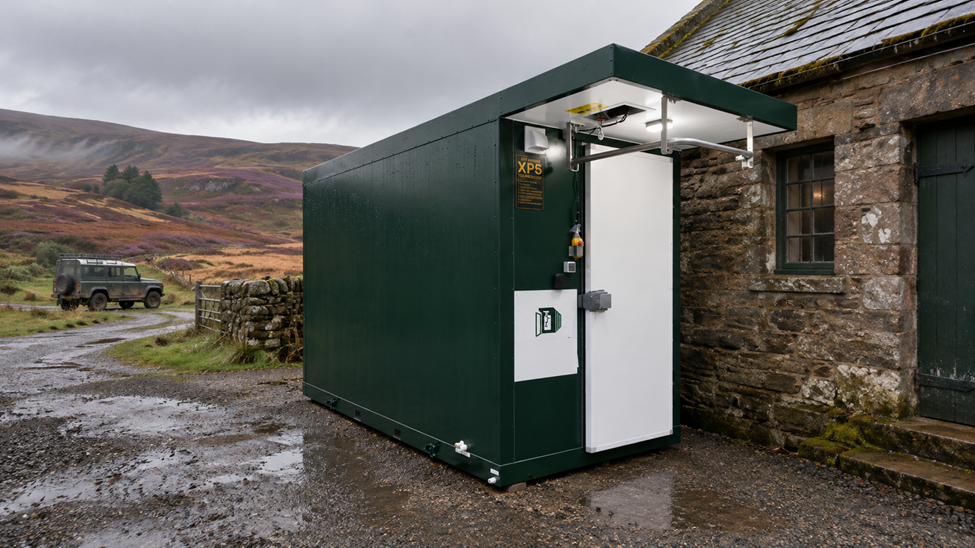
Ask a head stalker where the estate’s venison is actually processed, and the answer often comes with a slight hesitation. On a large share of UK sporting estates, game is still skinned and butchered in spaces that were never designed for it: an old stable block, a lean-to beside the larder, a garage with a hose and a drain. These setups have worked for decades, but the market around them has changed. Game dealers want traceability, restaurants want consistent quality, and environmental health officers want surfaces and temperatures they can actually check. For estates that sell what they shoot, the processing space has moved from a background detail to a central business decision.
Why the Old Way of Processing Game Is Under Pressure
Rising Expectations From Buyers
Licensed game dealers and premium restaurants have become far more selective. They look closely at carcass condition, how quickly the meat was cooled, and whether the estate can show a clear temperature record from field to delivery. An estate that can demonstrate a controlled, hygienic process gets better prices and more reliable buyers. One that cannot is competing on volume alone.
The Limits of Converted Buildings
Farm buildings converted into processing rooms tend to fail in the same three ways. Their surfaces are porous, so brick, concrete and timber absorb blood and moisture and are almost impossible to sanitise properly. Their temperature is uncontrolled, because without proper insulation the room warms up on a mild October afternoon, exactly when the workload is highest. And their layout is improvised: dirty work such as skinning happens a metre away from clean cutting, with no real separation between the two. Fixing all three in an old building usually means relining walls, laying new floors, adding refrigeration and rewiring, and the cost of that work quickly approaches that of a new facility. The upgraded building also stays permanently tied to one location.
What a Purpose-Built Processing Container Offers
A dedicated processing container is an insulated, refrigerated workspace designed from the start for skinning, butchering and preparing game. It arrives on site as a finished unit, is positioned on level ground and connected to power, and is ready for work the same day. There is no construction phase, no waiting for builders, and no compromise imposed by the shape of an existing building.
Stable Temperatures Through a Full Working Day
Meat should be processed in a cool environment, typically between 0°C and +4°C. The quality of the insulation decides whether that is achievable. Containers built with XPS panels at least 10 cm thick hold their temperature even with frequent door openings and warm weather outside, and they do it with lower energy consumption than poorly insulated alternatives. For estates that want to move cuts straight into deeper cooling, some layouts include a separate chiller section within the same unit, so product never leaves the controlled environment.
Surfaces That Can Actually Be Cleaned
Hygiene starts with materials. A well-built processing container has smooth, non-porous walls with no exposed silicone joints, visible screws or recesses where residue can build up. The floor can be chosen to suit the work: R13 anti-slip checker plate for wet, heavy-duty processing; seamless self-levelling resin with no joints at all; or stainless steel for the highest hygiene standard. Every surface can be washed down and disinfected at the end of the day, quickly and thoroughly.
A Layout Designed Around Your Workflow
No two estates process game in quite the same way. A red deer operation handling heavy carcasses needs strong overhead rails and plenty of hanging space; a lowland shoot processing hundreds of birds needs work surfaces and efficient flow. The best manufacturers start with a technical drawing that shows rails, hooks, tables, drainage, lighting and the position of the refrigeration unit, and the estate approves it before building begins. Practical details matter too: an electric winch fitted as standard lets one person lift a heavy carcass onto the rail safely, without waiting for help.
Choosing the Right Size
Size should follow the volume and type of game, not just the space available on the yard. Compact units suit smaller stalking estates processing a modest number of deer per season. Mid-sized containers, such as 4×2 or 5×2 metre layouts, give enough room for hanging, cutting and a clean workflow on most commercial estates. Larger configurations make sense for estates that also process for neighbouring shoots or run their own retail and butchery. It is worth planning for growth: an estate that starts selling direct to customers often finds its processing volume doubles within a few seasons.
Common Mistakes to Avoid
The most frequent mistake is treating the processing space as a standalone purchase rather than part of a wider system. A processing container works best with proper chilling before processing and adequate cold or frozen storage after it. Without those, the bottleneck simply moves elsewhere. Other common errors are choosing a floor that is too smooth for wet work, underestimating hanging capacity for peak days in the season, and skipping a conversation with the local authority’s environmental health team before ordering. That conversation costs nothing and helps make sure the specification matches local expectations from day one.
Processing as Part of the Estate Cold Chain
The processing room sits at the centre of the estate’s cold chain. Carcasses come in from the field and the larder chiller, are processed under controlled conditions, and leave as finished product, either chilled for immediate sale or frozen for longer storage. When every stage runs at a documented temperature, the estate can prove the quality of its product to any buyer or inspector. Planning the chain as a whole, rather than one building at a time, is what separates a professional game operation from an improvised one.
Building a Facility That Lasts
For estates ready to replace an improvised setup with something purpose-built, HH Cooling’s hunting lodge range and processing containers are designed specifically for British sporting estates. Every unit is built to order with XPS insulation, a choice of flooring, an electric winch as standard and a two-year warranty covering both the structure and the refrigeration. Because the container can be moved, the investment stays with the business rather than the building: if the estate reorganises, changes hands or expands, the processing facility goes with it.
