


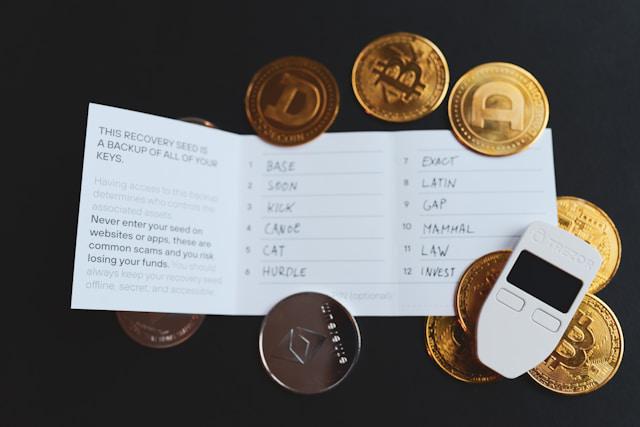
Crypto investors are used to thinking about security. Seed phrases, hardware wallets, multisig and cold storage are second nature. But the moment you buy gold with bitcoin or another cryptocurrency and a package of metal arrives at your door, the threat model changes completely. Gold cannot be backed up. It cannot be recovered with a passphrase. If it is stolen, lost in a fire or damaged, it is simply gone unless it was insured. This checklist walks through the decisions that keep physical gold as safe as your private keys.
Step 1: Decide Where the Gold Will Live
The first choice is between holding gold yourself and paying a professional to hold it for you. Both are legitimate; they suit different situations.
Home storage gives you immediate access, total privacy and no recurring fees. It also makes you personally responsible for security, and it concentrates risk in a single location that also happens to be where you sleep.
Private vault storage through a dealer or an independent operator such as Brink’s, Loomis or Malca-Amit means the metal sits in a purpose-built facility with armed security, insurance and regular audits. You lose immediate physical access and pay a small annual fee, but you gain professional protection and, importantly, no link between your home address and your gold.
A sensible rule of thumb: keep at home only what you could afford to lose and what fits comfortably in a properly rated safe. Everything beyond that belongs in a vault.
Step 2: If Storing at Home, Do It Properly
A cheap safe from a hardware store is a container, not security. A determined thief can carry it out or open it in minutes. For gold, look for these features:
- A burglary rating (TL-15 or TL-30 in the US, EN 1143-1 Grade I or higher in Europe) that indicates the safe has been tested against tools for a specified time.
- A fire rating of at least one hour. Gold melts at over 1,000 degrees Celsius and will survive most house fires, but assay cards, invoices and coins in packaging will not.
- Weight of at least 300 kg or, if lighter, proper bolting to a concrete floor or structural wall.
- A location that is not obvious. Bedroom closets are the first place burglars look. Basements, utility rooms and purpose-built cavities are better.
Just as important as the safe is discretion. The number of people who know you own gold should be as close to zero as possible. Do not discuss it on social media, do not show it to visitors, and think carefully before telling family members who may repeat it.
Step 3: Insure It, and Read the Policy
Standard home insurance policies typically cap coverage for precious metals at a very low figure, often a few thousand dollars, and some exclude bullion entirely. Do not assume you are covered. The options are:
A scheduled rider on your home policy. You declare the gold, provide invoices and possibly an appraisal, and pay an additional premium. This works but means your insurer now has a record of your holding.
Specialist precious metals insurance. A handful of insurers offer stand-alone policies for bullion stored at home or in private vaults, often with better terms and more discretion than a general home insurer.
Vault-included insurance. Professional vault storage almost always includes full insurance in the fee, underwritten by major insurers such as Lloyd’s syndicates. This is the simplest option and usually the cheapest per ounce for larger holdings.
Whichever route you choose, keep your purchase invoices in a separate location from the gold itself. If the safe is stolen, you still need to prove what was in it.
Step 4: Handle Delivery Securely
The delivery window is a moment of concentrated risk. A few practices reduce it:
Have the package sent to an address where an adult can sign for it, or use a courier hold-at-location service. Do not leave instructions to leave it unattended. Open the package in private, away from windows, and photograph the contents alongside the invoice before putting anything away. Check weights and dimensions against the refiner’s published specifications; a digital scale accurate to 0.01 g and a set of callipers cost very little and will catch most problems. Report any discrepancy to the dealer immediately while the shipment is still within its insurance claim window.
Reputable crypto-accepting dealers ship in plain packaging with no indication of contents and insure the shipment until it is signed for. If a dealer cannot confirm this in writing, choose another dealer.
Step 5: Keep Records the Way You Keep Keys
Crypto investors already understand the importance of a secure, redundant record. Apply the same logic to gold. Maintain an inventory listing each item, its refiner, serial number if any, weight, purchase date, price paid and the cryptocurrency used. Keep digital copies of invoices in encrypted storage and a paper copy somewhere separate from the metal. This inventory serves three purposes: insurance claims, tax reporting when you sell, and helping your heirs understand what exists and where.
Step 6: Plan for Access and Inheritance
The same feature that makes gold private, the fact that no institution knows about it, makes it easy to lose track of if something happens to you. Make sure at least one trusted person or a solicitor holding sealed instructions knows that the gold exists, where it is and how to access it. For vaulted gold, add a nominated beneficiary to the account. For home storage, include the safe combination in your estate documents.
Step 7: Review Annually
Once a year, check the safe is still properly anchored, verify the insurance limits still cover the current value (gold prices move, and your holding may have grown), confirm vault statements match your inventory, and re-evaluate whether your home holding has grown beyond what is sensible to keep there.
Why This Matters More for Crypto Buyers
People who move into gold from cryptocurrency often do so in larger, lumpier amounts than traditional buyers, converting a significant gain in one go. That means a first-time gold holder may suddenly have a substantial quantity of metal without the storage and insurance habits that lifelong collectors build up gradually. Getting the basics right on day one avoids the most common and most painful mistakes.
Conclusion
Gold is one of the safest assets to own and one of the easiest to lose through carelessness. Choose between home and vault storage deliberately, buy a properly rated safe if you keep metal at home, insure it with a policy that actually covers bullion, receive deliveries carefully and keep meticulous records. Buying through a dealer that offers allocated storage as well as delivery, such as BitGolder, lets you build this structure from the start, so the gold you converted from crypto stays exactly as secure as the keys you used to buy it.
