


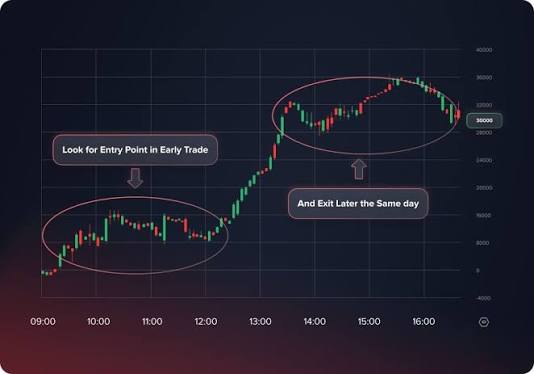
Scalping and day trading work in the short term and involve traders in making decisions within comparatively short time frames. They both are aimed at capturing the price action within a trading session but their method of doing so is slightly different, as well as information requirements. A professional trading system can be beneficial for participants to take care of price movement, charts, indicators, and orders without the distraction. These variations can be useful for traders to understand and develop a trading scenario that suits their strategy and risk profile.
What is scalping?
Scalping involves making quick trades that seek to profiting from minor price movements. The positions may be kept for a few seconds or minutes based on the market conditions and the trader’s strategy.
Due to the time frame on which scalpers deal, they are very focused on price action, trading volume, bid-ask spreads and short-term market momentum. A small price difference can also become significant since the execution speed is crucial in determining the outcome of the trade.
What is day trading?
Day trading is a tactic that consists of making trades during the same trading day. Day traders can hold onto their trades for several hours, as opposed to scalping, which is when traders move in and out of trades for minimal price changes.
Day traders often analyse price trends, support and resistance levels, volume and technical indicators. They can also employ tools like the Moving Average, Relative Strength Index (RSI) or VWAP (volume-weighted average price) to spot entry and exit opportunities.
Scalping and day trading have comparable amounts of transactions, but day trading requires more active monitoring and a robust risk management strategy.
Scalping vs day trading
The primary difference lies in the frequency and duration of trades.
| Factor | Scalping | Day trading |
| Holding period | Seconds to minutes | Minutes to hours |
| Trade frequency | Generally high | Generally moderate |
| Primary focus | Very short-term price movements | Intraday trends and price patterns |
| Execution requirement | Very high | High |
| Monitoring | Almost continuous | Regular and active |
| Transaction costs | Can accumulate quickly | Generally lower than frequent scalping |
Neither approach is inherently suitable for every investor. The choice depends on experience, risk tolerance, available time and the ability to manage rapid decisions.
Building a fast-execution layout
A suitable online trading app can provide tools that help traders organise their workspace. However, the ideal layout depends on the strategy being used.
For scalping, traders may prioritise a live price chart, order window, market depth and volume information. Keeping these elements visible can reduce the time required to switch between screens.
Day traders may prefer a broader layout that includes multiple charts, technical indicators, watchlists and open-position information. This allows them to monitor several securities and assess developing trends.
The goal should be to create a simple workspace where essential information is immediately accessible.
Essential elements for a scalping layout
The key elements for a scalping layout include:
Live price chart
Scalpers need to monitor short-term price movements closely. A clean chart with appropriate time intervals can make rapid price changes easier to observe.
Order window
The order-entry screen should be easy to access. Traders should understand order types and verify quantities and prices before submitting an order.
Market depth
Market depth can provide information about available buy and sell orders at different price levels. It can be useful for understanding short-term liquidity, although it does not guarantee how prices will move.
Volume
Volume can help traders assess the strength of a price movement. Sudden changes in volume may provide additional context when combined with price action.
Setting up a day-trading workspace
Day traders can use a slightly broader information setup. A primary chart can display price action with selected indicators, while additional windows can show watchlists and market data.
A practical layout could include:
- A primary candlestick chart
- A watchlist of selected securities
- Volume and price information
- One or two relevant technical indicators
- Open positions and order status
- Market index information
Using too many indicators can make the workspace difficult to interpret. Traders should prioritise tools that directly support their strategy.
Choosing the right approach
Scalping may appeal to participants who can monitor markets continuously and make rapid decisions. Day trading may suit those who prefer holding positions for longer periods while analysing broader intraday trends.
Both approaches require knowledge of market mechanics, technical analysis and order execution. Traders should also account for brokerage, taxes, spreads and other applicable costs when evaluating potential outcomes.
Conclusion
Scalping and day trading require different approaches to market analysis and execution. Scalpers generally need highly focused layouts for rapid decisions, while day traders may benefit from a broader view of charts, watchlists and market information. 5paisa offers digital tools for investors and traders to access market information and manage orders. Regardless of the chosen strategy, participants should prioritise disciplined execution, appropriate position sizing and risk management rather than relying solely on execution speed.
