


When a US business starts evaluating its phone system, the conversation usually begins and ends with monthly price per seat. That number is easy to compare across vendors, easy to report to finance, and easy to defend in a budget meeting. What it rarely captures is the full operational cost of choosing one system architecture over another. The distinction between hosted PBX and virtual PBX is precisely where that gap shows up — and where companies consistently underestimate long-term spend.
This is not a fringe issue. Businesses across manufacturing, healthcare administration, legal services, and logistics are making phone system decisions based on surface-level pricing comparisons that do not reflect how these systems actually behave inside a working organization. The result is cost overruns, operational friction, and, in some cases, a second migration within three years of the first.
Understanding what separates these two architectures — and why the cost difference matters beyond the monthly bill — is the kind of analysis that tends to change how companies approach the decision entirely.
What the Hosted PBX and Virtual PBX Labels Actually Mean
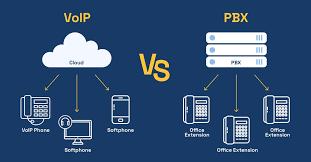
These two terms are often used interchangeably by vendors, but they describe meaningfully different systems. A hosted PBX is a private branch exchange managed and housed by a third-party provider, typically running on dedicated infrastructure that the provider controls entirely. A virtual PBX, by contrast, is a software-defined phone system that operates through cloud infrastructure, requiring no physical hardware commitment from either the provider or the customer. The practical difference is that hosted PBX carries a physical layer — servers, configurations, physical maintenance — even if that layer is off-site. A virtual PBX exists entirely in software.
For companies comparing options, reviewing a Virtual Pbx Pricing overview is a useful starting point for understanding how that software-defined model translates into actual cost structures. The pricing logic behind virtual systems differs from hosted systems in ways that affect not just monthly spend, but also scaling costs, support costs, and the cost of changing course later.
Why the Architecture Difference Creates Real Cost Consequences
The physical layer in a hosted PBX is not just a technical footnote. It has direct operational implications. Physical infrastructure requires provisioning lead time, which means adding new locations or users is not always immediate. It requires maintenance windows, which can create planned downtime. It also means that when hardware components age or fail, the business is dependent on the provider’s replacement cycle rather than a simple software update.
Virtual PBX systems sidestep this entirely. Because the system runs in software across distributed cloud infrastructure, changes — adding users, adjusting call routing, expanding to a new office — are administrative actions rather than technical deployments. That distinction sounds minor until a company tries to bring on forty new employees in three weeks or open a second location with two weeks of notice.
Where the Real Cost Gap Opens Up Over Time
The visible costs of any phone system are straightforward: monthly seat fees, setup charges, and any hardware the business needs to purchase. These are the numbers that appear in proposals and vendor comparisons. The less visible costs are the ones that accumulate over the life of the system, and they are where hosted and virtual systems diverge significantly.
With a hosted PBX, the pricing structure often includes infrastructure-related fees that are baked into the contract in ways that are not always obvious at signing. Support tiers, hardware refresh cycles, and on-site technician visits — even when the hardware is at the provider’s facility — can add meaningful cost over a three to five year contract. Many businesses sign a hosted PBX agreement without fully accounting for what the support and change-management costs will look like in years two through five.
The Cost of Change Is Not Priced Into Most Proposals
One of the most underestimated costs in a phone system decision is the cost of making changes after deployment. Every organization’s communication needs shift over time — new departments, new call workflows, changes in staffing, changes in customer volume. A system that is expensive or slow to modify creates a secondary cost that never appears on any vendor proposal.
With hosted PBX, configuration changes often require vendor involvement. Depending on the contract, this means billable service calls, extended wait times, or changes that require scheduling against the provider’s availability. For a business that needs to move quickly, this dependency is a real operational constraint. Virtual PBX platforms, because they are software-administered, typically allow internal administrators to make most changes without vendor involvement. That independence has a real dollar value that rarely appears in the initial pricing conversation.
Scalability Is Not the Same as Flexibility
Both types of systems can technically scale — that is, both can accommodate more users as a business grows. But scaling and flexibility are different things, and conflating them is a common mistake. Scaling means adding more of what already exists. Flexibility means changing how the system works as the business changes.
A hosted PBX can typically scale, but the process involves provisioning changes that take time and may carry additional fees. A virtual PBX can scale, but it can also adapt — rerouting calls, creating new queues, adjusting automated menus — with significantly less friction. For businesses in industries where communication workflows need to respond to operational shifts, the flexibility gap between these two systems is more consequential than the raw seat count difference.
How US Businesses Typically Underestimate Virtual PBX Pricing
The virtual pbx pricing model is often misread in one of two directions. Either businesses treat it as simply a cheaper version of hosted PBX, or they assume the low entry price means hidden costs are lurking somewhere in the contract. Both assumptions lead to poorly structured comparisons.
Virtual pbx pricing typically operates on a per-user, per-month basis with features bundled in at each tier. The structure is transparent, but it requires careful reading of what is included at each tier and what triggers an upgrade to the next. A business that starts at a base tier and then discovers that call recording, advanced routing, or integration with a CRM requires the next tier up has effectively underpriced the system in its initial budget model.
Integration Costs Are Frequently Omitted From Initial Comparisons
Modern business phone systems do not operate in isolation. They connect to customer relationship management platforms, ticketing systems, scheduling tools, and sometimes directly to business process workflows. The cost of integrating a phone system with existing business software is real, and it differs substantially between hosted and virtual systems.
Hosted PBX systems were often built before deep software integration was a standard expectation. Many run on architecture that supports integration only through middleware or custom development, both of which carry cost and ongoing maintenance responsibility. Virtual PBX platforms are generally built on APIs and modern infrastructure, meaning integrations are more standardized and less expensive to implement and maintain. As defined by the National Institute of Standards and Technology, cloud-native services are designed for broad network access and rapid elasticity — characteristics that directly support lower integration overhead compared to legacy-adjacent hosted systems.
Support Structures Carry Hidden Cost in Both Models
Support is another area where the cost comparison between hosted and virtual systems gets muddled. Both models offer support, but the structure of that support — and what triggers billable service — differs in ways that affect total cost of ownership. With hosted PBX, support for hardware-adjacent issues may fall into a different billing category than software support. With virtual PBX, most issues are software-addressable, which tends to keep support interactions within the standard agreement.
That said, virtual pbx pricing tiers sometimes gate access to live support behind higher plans. A business that purchases a base-tier virtual PBX expecting enterprise-level support and then discovers support is primarily self-service at that tier has mispriced the system. Reading the support terms as carefully as the feature list is necessary for an accurate comparison.
Contract Structure and Exit Costs Are Part of the True Price
One final cost dimension that US companies consistently ignore is the cost of exiting a phone system contract. Hosted PBX agreements tend to be longer-term, with more significant exit penalties, because the provider has invested in physical infrastructure on the customer’s behalf. Virtual PBX agreements tend to be more flexible — shorter terms, lower exit costs — partly because the provider’s infrastructure investment is shared across many customers rather than dedicated to one.
For a business that is still growing, still changing its model, or still uncertain about its long-term communication architecture, the exit cost structure is a real financial variable. A company that locks into a three-year hosted PBX contract and then needs to change course in eighteen months is facing a cost that was always part of the true price, even if it never appeared on the original proposal.
Virtual pbx pricing, when examined across its full contract lifecycle — setup, monthly fees, scaling costs, integration, support, and exit terms — frequently comes out as the more predictable and lower total-cost option for businesses that expect any degree of change over the contract term. That predictability has operational value beyond the raw numbers.
Making a Decision That Reflects Actual Operational Reality
The choice between hosted PBX and virtual PBX is not simply a technology decision. It is a financial and operational commitment with a multi-year horizon, and it should be evaluated as one. Businesses that compare only the monthly per-seat price are looking at one variable in a multi-variable equation and assuming the others are constant. They rarely are.
A more complete evaluation considers how often the business expects to change its phone workflows, how important integration with existing software is, what level of support responsiveness the operation genuinely requires, and how much flexibility the business needs if its size or structure changes. When those questions are answered honestly, the gap between hosted and virtual pbx pricing becomes much clearer — and the decision becomes much easier to defend to anyone reviewing it later.
US companies that take the time to evaluate the full cost picture before signing rarely regret it. Those that do not often find themselves revisiting the decision sooner than they planned.
