


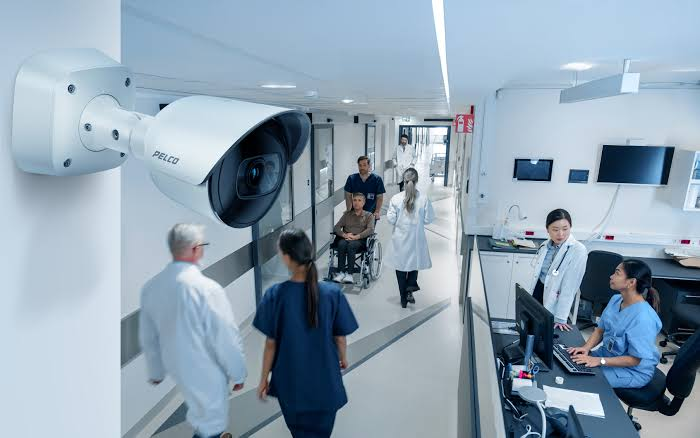
Healthcare facilities operate under conditions that most commercial environments never encounter. Cameras in a hospital setting are not simply about monitoring activity — they are part of a broader system designed to protect patients, staff, and sensitive areas simultaneously. When a camera fails or produces unclear footage at a critical moment, the consequences extend beyond inconvenience. They touch patient safety, liability, regulatory compliance, and the integrity of internal investigations.
As hospital networks grow more complex — with multi-building campuses, high-turnover staff environments, and increasingly strict data governance requirements — the decision to install or upgrade a camera system carries more weight than it once did. Facility managers, security directors, and IT teams are now jointly involved in these decisions, and each group brings different priorities to the table.
This guide outlines the ten most important features to evaluate when selecting a hospital camera system in 2025, grounded in real operational considerations rather than product specifications.
Understanding What Makes a Hospital Camera System Different
A hospital camera system is not a scaled-up version of a retail or office installation. The environment creates specific demands that standard commercial systems often cannot meet. Hospitals run continuously, require coverage across dramatically different zones — from sterile surgical suites to crowded waiting areas — and must balance security with patient privacy under regulatory frameworks such as HIPAA in the United States. A thorough Hospital Camera overview will typically reflect these layered requirements and the operational complexity that comes with them.
The starting point for any evaluation should not be camera resolution or brand, but rather an honest assessment of the facility’s specific risk profile. Which areas carry the highest liability? Where does staff movement create blind spots? What does the legal and compliance team require in terms of footage retention?
Zone-Based Thinking Over Uniform Coverage
Different hospital zones require fundamentally different camera approaches. An intensive care unit demands a level of sensitivity and positioning that a parking garage simply does not. Emergency department entrances see rapid, unpredictable foot traffic and require faster frame rates and wider angles. Medication rooms require fixed, tamper-evident cameras with restricted access to footage. Planning a system without this zone-based logic leads to over-investment in some areas and dangerous gaps in others.
Image Clarity Under Variable Lighting
Hospitals are never uniformly lit environments. Operating rooms use intense, focused lighting. Corridors at night often operate on reduced power. Waiting rooms experience shifting natural light throughout the day. A camera that performs well in one condition may produce unusable footage in another. The ability to maintain consistent image quality across these lighting variables is one of the most underestimated requirements in healthcare camera procurement.
Low-Light Performance and Day-Night Transitions
Cameras that struggle during lighting transitions — such as a corridor that shifts from daylight to artificial light as a door opens — create gaps in usable footage precisely when events are most likely to occur. Facilities should require demonstrated performance across the full lighting spectrum of their actual environment, not just in controlled testing conditions. This is especially relevant in areas like stairwells, parking structures, and exit corridors where incidents tend to cluster.
Privacy Masking and Compliance-Ready Architecture
Patient privacy is not optional, and it is not simply an ethical consideration — it is a legal requirement codified in regulations that apply to nearly every hospital operating in a developed country. According to the U.S. Department of Health and Human Services, covered entities must safeguard protected health information in all its forms, which includes visual data captured in clinical settings. Camera systems that lack built-in privacy masking tools create compliance risk by default.
Configurable Masking Without Losing Situational Awareness
Privacy masking allows specific areas within a camera’s field of view to be permanently blacked out in stored footage, without requiring the camera to be repositioned or replaced. This is particularly important in rooms where patients are treated but where a camera is still necessary for staff safety. A well-designed system will allow masking to be configured per zone, logged, and auditable — so that any adjustment to masking settings is recorded and attributable to a specific user account.
Scalability Across Facility Expansion
Hospitals rarely stay the same size for long. New wings are added, temporary structures become permanent, and off-site clinics are brought under the same administrative umbrella. A camera system that cannot grow with the facility without requiring full replacement is a liability, not an asset. Scalability in this context means the ability to add cameras, expand storage, and integrate new locations without disrupting existing coverage or requiring a parallel infrastructure.
Centralized Management Across Multiple Sites
For hospital networks operating across several buildings or campuses, centralized video management is not a convenience — it is an operational necessity. Security teams cannot be expected to monitor physically separated control rooms simultaneously. A system that allows authorized personnel to access and manage cameras across all locations from a single interface reduces response times and prevents coverage inconsistencies between sites.
Integration With Access Control and Alarm Systems
Camera systems that operate in isolation from other security infrastructure create gaps that are difficult to close. When a door access event, an alarm trigger, or a duress signal cannot be automatically correlated with nearby camera footage, investigations become slower and less reliable. Integration between these systems is what allows a security team to respond to an event with context rather than just an alert.
Event-Triggered Recording and Automated Correlation
Rather than recording everything continuously at maximum quality — which creates storage and review burdens — integrated systems can escalate recording quality or initiate alerts when specific conditions are met. A door forced open after hours, an access card used in an unauthorized area, or a panic button activation can all trigger focused recording from relevant cameras. This approach makes better use of storage resources and helps investigations move from event to footage without manual searching.
Cybersecurity and Network Segmentation
Hospital networks are high-value targets for cyberattacks, and camera systems connected to those networks represent a real attack surface. A compromised camera can serve as an entry point into clinical or administrative systems. This is not a theoretical concern — healthcare organizations have experienced breaches that originated through networked devices that were not adequately secured.
Firmware Management and Credential Controls
Camera systems should support regular firmware updates through a managed process, not require individual device access. Default credentials must be replaced during installation, and role-based access controls should limit who can view, export, or modify footage. Any system that relies on shared login credentials or does not support encrypted data transmission should be disqualified from consideration regardless of other features.
Storage Architecture and Retention Policies
Footage retention requirements in healthcare settings vary by jurisdiction, incident type, and institutional policy. Some footage must be retained for years rather than weeks. A camera system’s storage architecture needs to accommodate these requirements without becoming a financial or administrative burden. The choice between on-premises storage, cloud-based storage, or a hybrid model has direct implications for cost, redundancy, and data control.
Redundancy and Recovery Planning
Storage systems that lack redundancy create a single point of failure for footage that may be legally required during an investigation or regulatory review. Hospitals should evaluate what happens when a storage device fails — whether footage is automatically replicated elsewhere, whether there is a documented recovery process, and how quickly the system can be restored to full operation without losing historical recordings.
Camera Durability in Clinical Environments
Hospital environments are physically demanding for equipment. Cleaning protocols involve chemical disinfectants applied repeatedly over time. High-traffic corridors expose cameras to physical contact. Areas near steam or moisture require housings that can withstand prolonged humidity. Cameras that are not rated for these conditions will fail prematurely, creating coverage gaps and replacement costs that were not anticipated in the original budget.
Mounting and Vandal Resistance in High-Risk Areas
Emergency departments, psychiatric units, and certain behavioral health areas present elevated risks of deliberate camera interference. Cameras in these zones should be mounted in tamper-resistant housings, positioned to minimize reach, and configured to send alerts if they are moved or obstructed. Vandal-resistant design is not about assuming the worst — it is about ensuring that coverage remains intact in the areas where maintaining it is most important.
User Access Controls and Audit Logging
Who can see footage, who can export it, and who can delete it are questions that carry significant legal and ethical weight in a hospital environment. Access to camera footage should be governed by clearly defined roles, and every access event should be logged automatically. This protects patients, staff, and the institution itself in the event of a dispute about who reviewed what footage and when.
Supporting Internal Investigations Without Compromising Chain of Custody
When footage becomes evidence — whether for a workplace incident, a patient complaint, or a legal matter — how it was accessed, handled, and stored becomes part of the record. Systems that do not maintain a clear chain of custody log make footage harder to use as reliable evidence. A well-designed audit trail is not just a technical feature; it is a legal protection for the institution.
Vendor Support and Long-Term Serviceability
A hospital camera system is a long-term infrastructure investment, not a one-time purchase. The vendor relationship matters as much as the technology itself. Service response times, the availability of replacement components, software update cycles, and training support all affect whether the system continues to perform as intended over years of operation.
Evaluating Support Before Signing
Before committing to a system, facility managers should evaluate documented service level agreements, the vendor’s track record with healthcare clients specifically, and whether the system relies on proprietary components that may become unavailable if the vendor changes its product line. A system that cannot be serviced effectively within the facility’s operational constraints is a risk regardless of its initial performance.
Final Considerations for Healthcare Security Leaders
Selecting a hospital camera system in 2025 requires more than comparing hardware specifications. The decision involves operational planning, legal compliance, IT infrastructure alignment, and a clear understanding of how different zones within the facility require different approaches. The features outlined here are not a checklist of desirable extras — they are the minimum considerations for a system that will function reliably in a real healthcare environment over the full length of its service life.
Facilities that approach this decision with a structured evaluation process, involving security, IT, legal, and clinical operations stakeholders from the start, are far more likely to implement a system that holds up under the conditions hospitals actually create. The goal is not the most advanced system available — it is the most appropriate system for the specific environment, with the reliability and support structure to remain effective long after installation is complete.
