


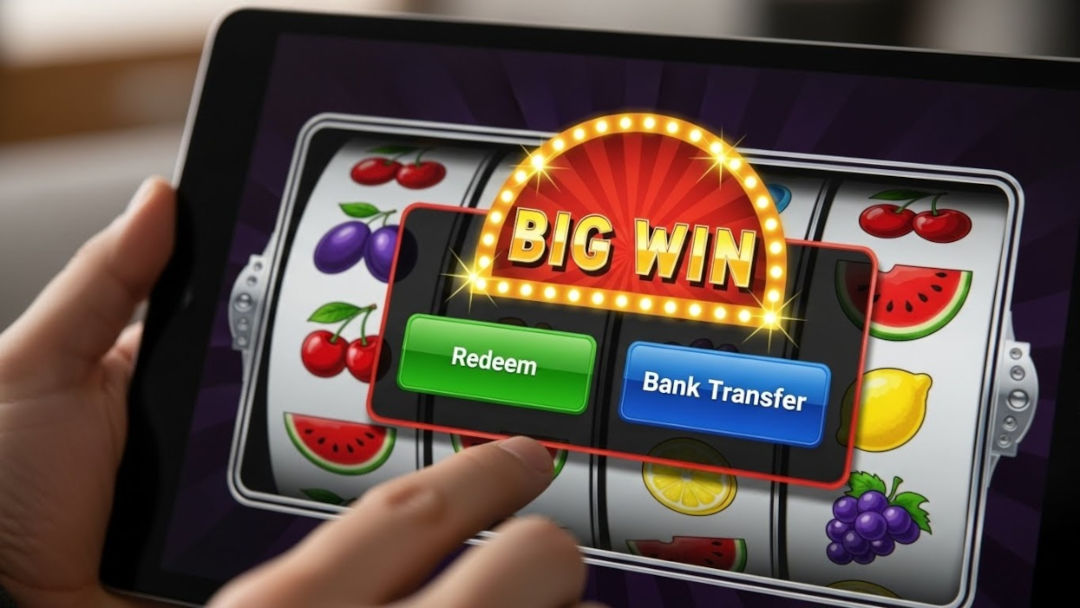
A decade ago, cashing out from an online casino meant sitting at a desktop computer, filling in a withdrawal form, uploading a scanned utility bill and then waiting several days for the money to appear. In Finland today, the same process often happens on a phone, in a bank app, in the time it takes to make a cup of coffee. The shift was not driven by the gambling industry alone. It was driven by the way Finns came to use their banks: on a smartphone, with strong identification built in, expecting payments to move in real time.
This feature looks at how smartphone banking changed what Finnish players consider a normal withdrawal, why “instant” moved from a marketing boast to a baseline expectation, and what the mobile-first player should still check before trusting a site with their money.
From desktop forms to bank-app confirmations
The Nordic countries were early and enthusiastic adopters of mobile banking. Finnish banks moved identification, payment approval and account management into their apps years before many other European markets did the same. Once a person could approve a bill, send money to a friend and log in to a public service from a phone, the idea of waiting three business days for a casino payout began to feel oddly old-fashioned.
Casino operators serving Finland noticed. Those who connected their cashier systems to open-banking payment providers such as Trustly and Zimpler could offer something the traditional card and e-wallet routes could not: a withdrawal that lands in a bank account within minutes, confirmed by a push notification from the player’s own bank. The experience is entirely mobile. The player requests a payout on a phone, authorises it through the bank app with the same strong identification used for everyday banking, and sees the balance update on the same screen moments later.
It is no accident that the Finnish phrase Nopea kotiutus kasino (fast-withdrawal casino) has become one of the most common ways Finnish players search for a site. The phrase describes an expectation that was shaped by the bank app, not by the casino lobby.
Why the bank app became the gatekeeper
The key to the mobile-first model is that identification and payment travel together. In the Pay N Play approach, there is no separate registration form. A player chooses a deposit amount, is redirected to their bank, logs in with the bank’s own mobile credentials and completes the payment. The bank identification confirms who the player is, and the casino creates or recognises an account from that verified identity. The same rails are then available for the return journey when the player wants to withdraw.
This matters for speed because many of the slow steps in a traditional withdrawal are about proving identity. When the bank has already vouched for the account holder, a large part of the paperwork disappears. It also matters for convenience: a smartphone user does not want to photograph documents, email them and wait for a manual review. The bank app has already done the heavy lifting.
Open banking, the regulatory framework that allows licensed third parties to initiate payments and read account data with the customer’s consent, provides the plumbing. Smartphones provide the interface. Together they turned a once-clunky process into a few taps.
What “instant” actually looks like on a phone
It is worth being precise about what players mean when they describe a withdrawal as instant. In practice the mobile flow typically has four visible moments:
- The request: the player enters an amount in the casino’s mobile cashier and selects the bank-transfer option.
- Operator approval: the casino’s system runs its own checks. On well-run sites with fully verified accounts this is often automated and takes seconds to a few minutes; on others it can be queued for manual review.
- The payment handoff: the approved payout is passed to the open-banking provider, which pushes it to the player’s bank.
- The bank notification: the player’s banking app shows the incoming transfer, frequently within minutes of the approval.
Comparison services that time withdrawals themselves report that many sites complete this full chain in under five minutes. Others, using the same rails, take considerably longer because the operator approval step is slower. The rails are only as fast as the slowest link, and that link is usually the casino’s internal process, not the bank.
Card withdrawals follow a different path. Even when requested from a phone, a payout to a Visa or Mastercard usually takes one to three business days to appear, because card networks settle refunds and payouts in batches. E-wallets such as Skrill and Neteller can be quick once the operator approves the request, but they add an extra account and an extra step to move money onward to a bank.
The mobile habits that shape expectations
Mobile-first gambling has changed behaviour as much as technology. A player on a phone tends to play in shorter sessions, often in the evening or during a commute, and tends to withdraw smaller amounts more often rather than letting a balance build up. That pattern rewards sites with no withdrawal fees, no minimum that forces money to sit idle and no daily cap that turns a modest win into a week of partial payouts.
It also makes friction highly visible. On a small screen, a cashier that demands document uploads, hides the withdrawal button behind several menus or displays vague “pending” messages for days stands out immediately. Players compare notes, and comparison sites in Finland now treat measured withdrawal time as a headline metric alongside licence, rating and bonus terms.
Mobile notifications have added a psychological dimension too. Receiving a bank alert that money has arrived while still holding the phone creates a strong sense of reliability. Many players describe it as the moment they decided a site was trustworthy. Operators understand this, which is why so many now advertise payout speed above almost everything else.
Licence and tax still matter on a small screen
The convenience of a bank app can make every casino look equally legitimate, but it does not change the underlying legal picture. Finnish players can play at casinos licensed within the EU or EEA, and winnings from those operators are generally tax-free in Finland. Winnings from operators licensed outside the EU and EEA, such as those holding only a Curaçao licence, are taxable. The payment screen looks the same on a phone regardless of where the operator is licensed, so the player has to check the licence information deliberately, usually in the site footer or the terms page.
Finland is also moving toward a licensing model for its gambling market, which is expected to bring more operators under domestic oversight and clearer consumer protections. Until that process settles, the licence label remains one of the most important things to read before depositing, however smooth the mobile experience may be.
Mobile users should also be aware that a first withdrawal can still trigger know-your-customer checks even on a Pay N Play site. Bank identification covers identity, but operators may still ask about the source of funds or request a document if a transaction looks unusual. The difference is that on a mobile-first site this tends to be the exception rather than the standard path.
A short word on playing responsibly
Faster money moving in both directions is a convenience, not a reason to play more. Online gambling is for adults aged 18 and over, and it should be treated as paid entertainment rather than a way to earn money. The same bank apps that make withdrawals instant also make deposits instant, which is why setting a deposit limit, a loss limit and a time limit before playing is sensible. Most licensed casinos offer these tools in the account settings, and independent blocking services and self-exclusion schemes exist for anyone who wants a firmer barrier.
What to check before trusting a mobile cashier
For the smartphone player who wants the instant experience without surprises, a short checklist is enough:
- Confirm the licence is from an EU or EEA regulator, which affects both consumer protection and whether winnings are taxable.
- Look for open-banking withdrawal options such as Trustly or Zimpler rather than relying on cards alone.
- Check the withdrawal limits per day, week and month, and any fees, before depositing.
- Read the wagering requirements on any bonus; a large headline amount with heavy wagering will slow down the first withdrawal far more than any payment method.
- Note the support hours. A payout that stalls on a Saturday evening is only as fast as the team available to approve it.
Independent comparison services such as Kotiuta publish measured withdrawal times alongside licence, tax status and bonus terms, which gives mobile players a way to verify an operator’s speed claims rather than taking them on trust.
Conclusion
Smartphone banking did not set out to change online gambling, but it did. By placing strong identification and real-time payments in every Finn’s pocket, it removed most of the excuses for slow payouts and taught players to expect their money within minutes. The casinos that adapted built their cashiers around the bank app; the ones that did not now look slow by comparison. For players, the lesson is simple: the technology for an instant withdrawal is ordinary now, so a site that cannot deliver one is making a choice. Check the licence, read the limits, set your own boundaries and let the bank app do the rest.
