


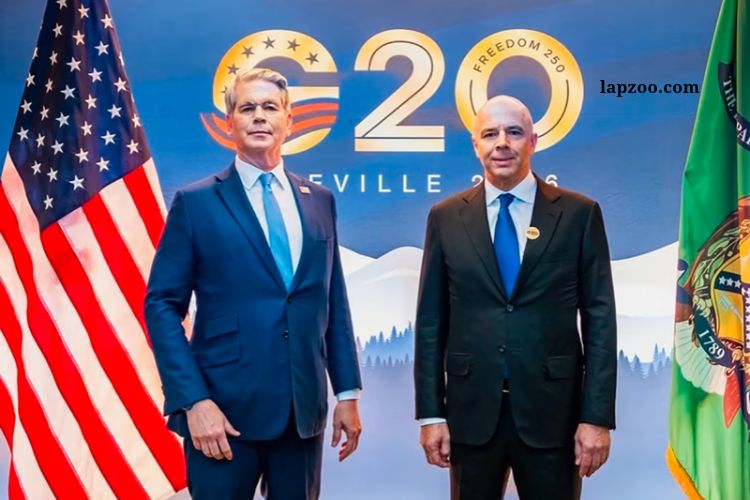
The G20 finance ministers’ meeting in Asheville, North Carolina, became a diplomatic flashpoint as Russia’s sanctioned finance minister, Anton Siluanov, attended the summit on U.S. soil. Traditionally, the official group photograph of finance ministers attracts little attention. This year, however, the event drew interest because of the political tensions surrounding Russia’s participation and the exclusion of Siluanov from the traditional picture.
Siluanov, a longtime member of Russian President Vladimir Putin’s cabinet, faced a frosty reception from some Western officials. His appearance highlighted the continuing economic and diplomatic divisions caused by Russia’s war against Ukraine. Despite attending the summit and meeting U.S. Treasury Secretary Scott Bessent, the Russian minister encountered strong opposition to improving economic relations before the conflict ends.
Read More: Safer Online Research
Why Anton Siluanov’s G20 Appearance Matters
Anton Siluanov has served as Russia’s finance minister since 2011 and is widely regarded as one of Putin’s most trusted government officials. His participation in the G20 summit marked his first appearance at a Group of 20 meeting on U.S. soil since Russia launched its full-scale invasion of Ukraine.
The G20 brings together major economies to discuss global financial stability, economic cooperation, trade, and international challenges. Although the forum provides opportunities for dialogue, political disagreements can influence how participating countries interact.
Siluanov’s presence created a difficult situation for Western representatives, particularly those from European countries that strongly support Ukraine. His exclusion from the traditional group photograph reflected the diplomatic discomfort surrounding Russia’s participation.
The incident also demonstrated that attending an international summit does not automatically guarantee acceptance or improved relations with other participating nations.
U.S. Sanctions Continue to Pressure Russia
The United States imposed sanctions on Siluanov in April 2022 following Russia’s invasion of Ukraine. These restrictions formed part of Washington’s broader effort to increase economic pressure on the Russian government and limit its ability to finance the war.
Sanctions have become a major instrument of Western foreign policy toward Moscow. They target individuals, companies, financial institutions, and industries considered important to Russia’s economy. The measures also aim to discourage international partners from supporting activities that help Russia avoid economic restrictions.
Siluanov’s participation in the G20 meeting therefore carried significance beyond ordinary diplomatic discussions. As a sanctioned official, his interactions with Western representatives reflected the difficult balance between maintaining international communication and enforcing economic pressure.
The United States has continued to take steps against Russian economic interests. In October, Washington also imposed sanctions on Russia’s two largest oil companies, reinforcing its efforts to restrict important sources of revenue.
These measures underline the continuing divide between Russia and Western economies. They also suggest that Washington remains unwilling to ease pressure simply because Russian officials participate in international meetings.
Scott Bessent Delivers a Firm Message
U.S. Treasury Secretary Scott Bessent reportedly made Washington’s position clear during discussions with international counterparts. According to his comments, the United States had communicated its economic isolation policy and expected other countries to support its approach.
Bessent also referred to recent sanctions targeting countries and international entities involved in facilitating trade with Iran. His remarks reflected a broader U.S. strategy of using economic restrictions to discourage activities that Washington considers harmful to its foreign policy interests.
When asked about Siluanov’s reaction to these discussions, Bessent declined to provide specific details, saying that some conversations are best conducted privately.
However, a source familiar with the meeting described a more direct exchange between the two officials. According to the source, Bessent told Siluanov that the United States would not provide Russia with economic relief until the war in Ukraine ended.
The source further claimed that when Siluanov attempted to discuss areas of mutual interest, Bessent interrupted him and insisted that progress was impossible before the conflict concluded.
Although the reported exchange has not been fully detailed publicly, it illustrates the firm position Washington has adopted toward Moscow.
European Allies Express Their Discomfort
Siluanov’s exclusion from the G20 group photograph followed complaints from some of Ukraine’s European allies. Their objections reflected continuing concerns about Russia’s invasion and the possibility that international engagement could be interpreted as a sign of normal relations.
For European governments supporting Ukraine, Russia’s participation in major international gatherings remains politically sensitive. Many Western officials believe that economic and diplomatic pressure should continue until there is a meaningful resolution to the war.
The photograph became a visible symbol of these tensions. While it may appear to be a minor ceremonial detail, the exclusion of a senior Russian official carried a broader diplomatic message.
International meetings often depend on cooperation, protocol, and mutual respect. However, political conflicts can disrupt these traditions and turn symbolic gestures into powerful statements.
The reaction to Siluanov also demonstrated that Western allies do not necessarily view Russia’s participation in global forums as evidence that relations are returning to normal.
Can the G20 Bridge the Economic Divide?
The G20 was established to encourage cooperation among major economies, particularly during periods of financial uncertainty. Its members represent significant portions of global economic activity, making communication between them important for international stability.
However, geopolitical disputes increasingly complicate the forum’s work. Russia’s war against Ukraine has created divisions that extend beyond military and security matters into trade, energy, finance, and international diplomacy.
The Asheville meeting highlighted this challenge. On one hand, the participation of Russian officials creates opportunities for communication. On the other, Western governments remain committed to maintaining sanctions and resisting efforts to restore economic ties prematurely.
These competing priorities make meaningful cooperation difficult. Discussions about financial stability and global growth can become entangled with disagreements over national security and international law.
The G20 can still provide a platform for dialogue, but its effectiveness depends on whether members can address shared economic concerns despite their political differences.
What the Incident Means for Russia’s Economic Future
Russia’s economic relationship with Western countries remains under significant pressure because of sanctions and diplomatic isolation. Restrictions affecting major industries, financial activities, and international trade can complicate business relationships and limit access to certain markets.
The Asheville meeting offered little indication that Washington was preparing to relax its approach. Bessent’s reported message suggested that any discussion of economic relief would remain closely linked to the end of the war in Ukraine.
For Moscow, this position presents a continuing challenge. Russian officials may seek opportunities to discuss trade, investment, and financial cooperation at international meetings, but Western representatives can refuse to advance those discussions while the conflict continues.
At the same time, the broader consequences of sanctions depend on enforcement, international cooperation, and Russia’s ability to adapt its economic relationships. The long-term effects cannot be determined by a single diplomatic encounter.
Nevertheless, Siluanov’s treatment at the summit showed that Russia’s participation in international institutions does not necessarily translate into improved economic relations with Western governments.
Frequently Asked Questions:
Who is Anton Siluanov?
Anton Siluanov is Russia’s finance minister and a longtime member of President Vladimir Putin’s government. He has held the position since 2011 and plays an important role in managing Russia’s financial policies.
Why was Anton Siluanov’s G20 appearance controversial?
His appearance attracted attention because the United States had sanctioned him following Russia’s invasion of Ukraine. His participation also raised concerns among some European allies supporting Ukraine.
What is the G20 summit?
The G20 is an international forum where major economies discuss global financial stability, economic growth, trade, and other important economic issues.
Why was Siluanov excluded from the G20 group photograph?
Reports indicated that complaints from some European allies of Ukraine contributed to his exclusion from the traditional finance ministers’ group photograph.
Why did the United States sanction Anton Siluanov?
The United States sanctioned Siluanov in April 2022 as part of its broader response to Russia’s invasion of Ukraine and its efforts to pressure the Russian government economically.
Who is Scott Bessent?
Scott Bessent is the U.S. Treasury secretary mentioned in reports about the summit. He discussed Washington’s economic restrictions and its position on Russia with international counterparts.
What message did Scott Bessent reportedly deliver to Siluanov?
According to a source familiar with the meeting, Bessent told Siluanov that the United States would not provide Russia with economic relief until the war in Ukraine ended.
Conclusion
The controversy surrounding Anton Siluanov’s appearance at the U.S.-hosted G20 summit highlights the ongoing tensions between Russia and Western countries. His exclusion from the traditional group photograph and reported discussions with Treasury Secretary Scott Bessent reflect the continuing impact of sanctions and Russia’s war against Ukraine. Despite opportunities for international dialogue, economic cooperation remains challenging while political disagreements persist. The incident demonstrates how global diplomacy, financial restrictions, and geopolitical conflicts continue to shape relations among major world powers.