


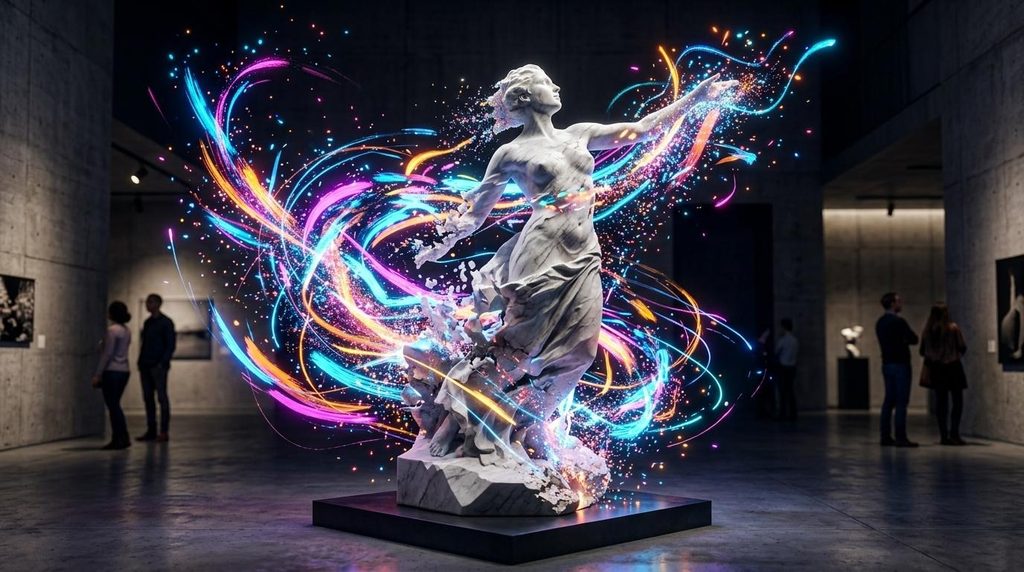
Art history has always been defined by tension between creative expression and social censorship. From the anatomically honest sculptures of the Renaissance to the provocative aesthetics of modern avant-garde cinema, boundary-pushing art rarely fits comfortably inside corporate guidelines.
As generative artificial intelligence becomes the dominant medium for visual production, the question of who decides what can be created has become central to the digital arts community.
The Chilling Effect of Algorithmic Moderation
When enterprise technology companies deploy AI generators, their primary design goal is brand safety and risk mitigation. In practice, this leads to blunt, hyper-sensitive moderation algorithms that cannot distinguish between vulgarity and fine art.
Classical human anatomy, expressive romantic portraiture, dark gothic fantasy, and raw psychological horror are routinely flagged under catch-all content policies.
For serious artists, this creates a frustrating chilling effect. When the tool itself acts as a moral arbiter, creators spend more creative energy dodging keyword bans than developing their unique aesthetic voice.
The Architecture of Unrestricted Creative Suites
To overcome these limitations, a distinct category of specialized generative platforms has emerged. These engines are engineered to serve mature, professional creators who demand complete creative autonomy.
Platforms featuring specialized nsfw ai generators do not rely on aggressive prompt censorship. Instead, their models are trained on rich, anatomically accurate visual datasets that understand skin lighting, muscle definition, and dynamic physical interactions with photorealistic fidelity.
Whether an illustrator is designing romantic visual novels, stylized mature fantasy characters, or authentic classical figure studies, the model executes the prompt with artistic precision rather than algorithmic distortion.
Confidentiality and Digital Sovereignty
Creative freedom is inseparable from personal privacy. Mainstream platforms frequently index user prompts, store generated imagery in public galleries, and subject user accounts to automated administrative bans.
Specialized creative suites prioritize anonymous access and zero-data retention. Users maintain full ownership of their output, with the assurance that their drafts and finished concepts remain private.
This level of data sovereignty is essential for professional artists who must protect proprietary client concepts and sensitive artistic projects from public exposure.
The Realistic Position
Generative AI should expand human creative horizons, not constrain them within the boundaries of corporate compliance.
By providing unconstrained tools designed for mature, discerning creators, open platforms ensure that digital art remains as diverse, bold, and expressive as the artists behind the prompts.
