


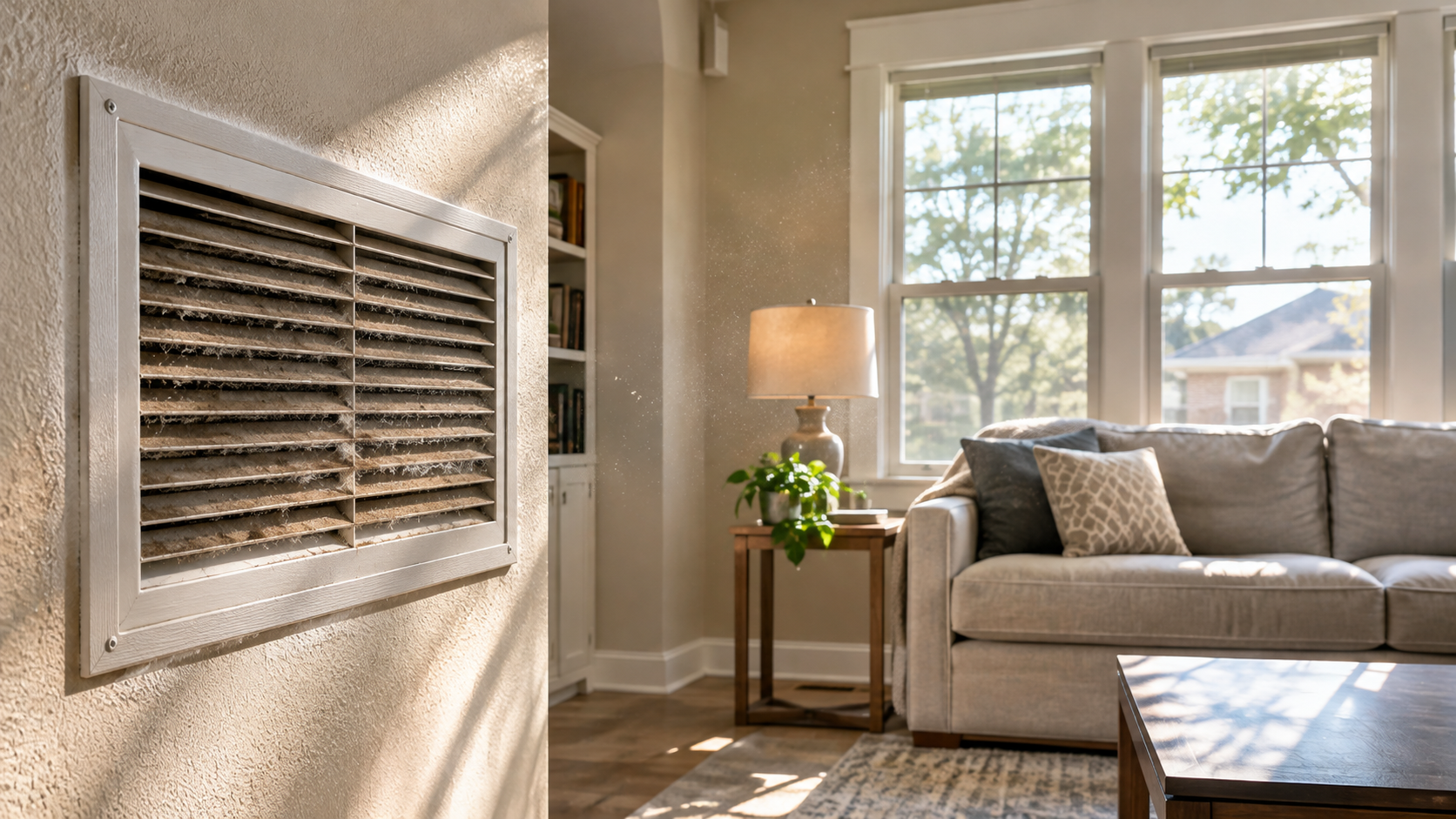
As weather patterns shift across North Texas, homeowners in Allen routinely seal up their houses to maintain comfortable interior temperatures. Whether keeping out intense summer heatwaves or blocking cold winter winds, closing windows creates a tightly sealed living environment. While modern home insulation conserves energy, it also restricts natural ventilation, forcing central heating and air conditioning units to continuously recirculate the exact same indoor air volume day after day.
Without fresh outdoor air exchange, floating dust particles, pet dander, microscopic allergens, and environmental debris accumulate inside return grilles and internal ductwork. Over time, these stagnant distribution pathways degrade indoor air quality and place unnecessary mechanical strain on forced-air climate systems. Understanding how sealed home environments impact air circulation enables Allen residents to recognize signs of duct contamination, optimize heating and cooling performance, and maintain a fresher, healthier indoor space throughout every season.
The Mechanics of Indoor Air Recirculation During Sealed Seasons
Central climate control systems operate in a continuous loop. Air is pulled into return grilles, routed through central filtration, drawn across heating elements or cooling coils, and distributed back to living spaces through supply registers. When windows remain shut for extended periods, this closed-loop design relies entirely on internal ductwork to preserve air freshness.
| System Segment | Airflow Phase | Contaminant Accumulation Risk |
| Return Vents & Chases | Intake Phase | Collects floating textile fibers, pet hair, and heavy dust particles. |
| Blower Assembly & Motor | Processing Phase | Dust coats fan blades, lowering air velocity and raising motor temps. |
| Evaporator Coils / Furnaces | Thermal Phase | Condensation and heat bind fine debris to metal fins and heat exchangers. |
| Supply Branches & Registers | Distribution Phase | Pushes dislodged particulate mats directly back into bedrooms and kitchens. |
In sealed residential environments, microscopic particles that slip past basic intake filters settle along internal pipe walls. During high-demand periods, the constant motion of air across these dust beds continuously lifts fine particles back into the airstream, causing ongoing indoor air pollution.
Common Indoor Air Contaminants in Collin County Residences

Homes across Allen experience specific environmental conditions that contribute to indoor air pollution. High seasonal pollen surges, windblown Blackland Prairie soil, and everyday household activities create a complex mix of airborne pollutants.
| Contaminant Category | Common Household Sources | Indoor Air and System Impact |
| Textile & Carpet Fibers | Clothing, bedding, rugs, upholstered furniture | Forms velvet-like grey lint mats that choke air return chases. |
| Biological Allergens | Domestic pets, microscopic dust mite remnants | Triggers morning congestion, sneezing, and respiratory discomfort. |
| Pollen & Topsoil | Foot traffic, pet paws, drafty door frames | Recirculates seasonal cedar, ragweed, and oak allergens continuously. |
| Renovation Residue | Drywall sanding, paint fumes, flooring work | Abrades internal blower bearings and clogs fine coil surfaces. |
| Fungal Spores | HVAC coil condensation, laundry room humidity | Produces lingering musty odors when fan blowers cycle on. |
When windows stay closed, these pollutants have no natural escape route. Every time the HVAC unit cycles on, fan pressure circulates these particles through occupied bedrooms, home offices, and family rooms.
How Restricted Air Distribution Strains HVAC Performance
Accumulated dust inside ventilation paths does more than affect air hygiene; it directly impairs the mechanical efficiency of heating and cooling hardware. Modern heat pumps and gas furnaces require balanced airflow to transfer thermal energy effectively.
When internal air channels become restricted by thick dust layers, static pressure rises throughout the system. High static pressure acts like a blockage in a pipe, forcing fan motors to work harder to push air to distant rooms.
| Mechanical Component | Uncleaned System State | Serviced System State |
| Blower Fan Assembly | Dust-heavy blades draw more electrical current | Smooth, balanced fan rotation matching manufacturer specs |
| Evaporator Coils | Insulating dust blanket restricts heat absorption | Unhindered heat transfer, preventing coil freezing and long runs |
| System Static Pressure | Elevated internal resistance causes duct seam leaks | Balanced static pressure for even air distribution |
| Monthly Utility Costs | Higher energy bills caused by long cooling/heating runtimes | Optimized power consumption and lower seasonal utility bills |
As static pressure rises, system components suffer from premature wear. Capacitors, blower bearings, and compressors operate under continuous stress, leading to unexpected equipment breakdowns during peak summer or winter months.
Identifying Signs of Poor Indoor Air Quality and Duct Buildup
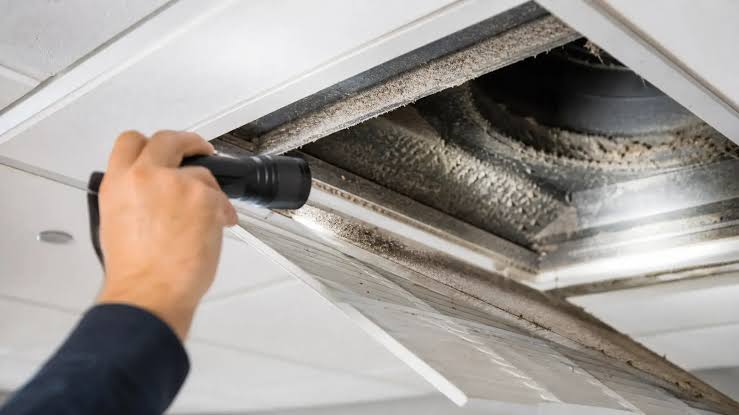
Recognizing early warning signs allows homeowners to address ventilation hygiene before air quality deteriorates or system components suffer mechanical failure.
- Rapid Dust Buildup on Furniture: Tabletop surfaces, entertainment centers, and shelving collect a fresh layer of dust within 24 to 48 hours after being cleaned.
- Dark Vent Staining: Dark grey or black smudges form along ceiling register frames and surrounding drywall, indicating fine dust escaping the vent boot.
- Stale or Musty Odors: A persistent dusty smell emerges from supply vents whenever the thermostat triggers a heating or cooling cycle.
- Uneven Room Temperatures: Certain bedrooms or corner offices remain noticeably warmer or cooler than the rest of the home due to choked branch lines.
- Increased Allergy Symptoms: Family members experience morning throat irritation, dry coughs, or watery eyes that improve when leaving the house.
For properties experiencing persistent dust accumulation or musty odors, arranging specialized duct cleaning in Allen, TX ensures that deep mechanical extraction equipment removes static-bound debris from main supply lines and return plenums.
Practical Steps for Restoring Fresh Air and System Balance
Property owners can take several proactive measures to improve indoor air circulation and keep HVAC equipment running smoothly when windows must remain shut.
1. Upgrade and Replace Air Filters Regularly
Air filters act as the first line of defense against floating particles. Using pleated filters rated between MERV 8 and MERV 11 captures fine dust and pollen without overly restricting airflow velocity. Inspect return filters monthly and replace them every 30 to 60 days.
2. Maintain Clear Space Around Air Vents
Check all supply registers and return grilles throughout the house. Ensure that heavy furniture, area rugs, or long drapes do not cover or obstruct vent openings, which disrupts static air balance.
3. Manage Indoor Humidity Levels
Extremely dry air allows fine dust particles to stay suspended in the air longer. Maintaining relative humidity between 30 and 50 percent helps floating dust settle onto cleanable surfaces while improving overall thermal comfort during winter months.
4. Isolate Vents During Remodeling
If painting, sanding drywall, or refinishing floors, turn off the central HVAC unit completely and seal supply and return vents with plastic sheeting until all surface dust is cleaned.
Seasonal Air Quality Maintenance Checklist
Follow this straightforward maintenance checklist to maintain clean air channels and reliable climate control throughout the year:
| Maintenance Frequency | Target Area | Recommended Action |
| Monthly | Return Filter Media | Inspect filter for dust loading; replace if discolored or clogged. |
| Quarterly | Supply Vents & Grilles | Vacuum vent louvers with a soft brush attachment to remove lint. |
| Bi-Annually | Attic Duct Inspection | Check accessible flex lines for loose collar ties or sag points. |
| Annually | Full Mechanical Tune-Up | Have certified technicians verify fan amperage, coils, and burner safety. |
| Every 2-3 Years | Deep System Extraction | Perform full negative-pressure cleaning across all supply and return lines. |
Restoring Healthy Air in Sealed Residential Spaces
Closing windows is essential for managing thermal comfort and energy costs in North Texas, but it requires active management of indoor air pathways. By understanding how sealed environments trap fine dust, monitoring systems for signs of restricted airflow, and maintaining clean distribution channels, Allen homeowners can enjoy a comfortable, energy-efficient home filled with clean, fresh air throughout every season.
