


Most businesses encounter a familiar turning point: the software they adopted to solve an early operational problem has stopped keeping pace with how the business actually runs. It was quick to deploy, reasonably priced, and functional enough in the beginning. But as the organization grew, added complexity, or moved into new service areas, the tool began to create friction rather than reduce it. Workarounds multiplied. Staff adapted their workflows to fit the software instead of the other way around. And somewhere in that process, efficiency quietly eroded.
This is not a technology failure in the traditional sense. It is a scaling problem — one that becomes more visible as a business matures. The question of whether to stay with off-the-shelf software or move toward a purpose-built AI approach is not purely technical. It is an operational decision with long-term consequences for consistency, resource allocation, and the ability to respond to change without rebuilding everything from scratch.
What Custom AI Solutions Actually Mean in Practice
There is a meaningful difference between AI tools sold as ready-made products and those built around the specific processes, data, and decision-making patterns of a particular business. A Custom Ai Solutions overview makes clear that this approach is not about adding AI for its own sake — it is about creating systems that reflect how a business actually operates, rather than asking the business to conform to how a product was designed. That distinction carries significant weight when applied to industries where operational consistency and reliability matter more than feature count.
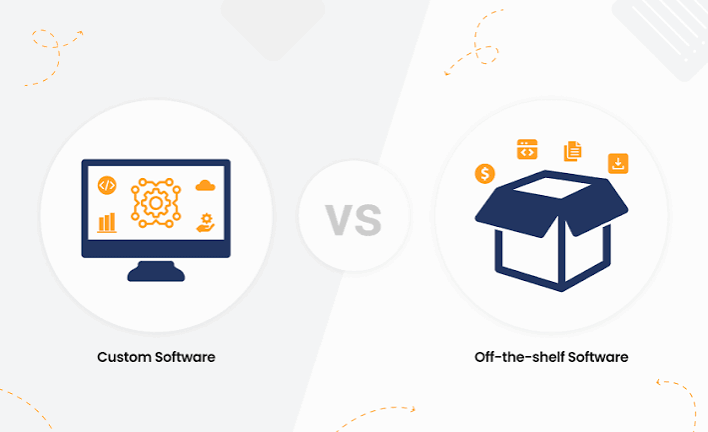
Off-the-shelf software is built for the broadest possible market. It has to work reasonably well for a wide range of businesses, which means it is optimized for the average use case rather than any specific one. For many companies at an early stage, this trade-off is acceptable. The cost is lower, implementation is faster, and the tool covers enough ground to be useful. The problems tend to emerge later, when a business’s actual processes diverge far enough from the product’s assumptions that the gap becomes costly to manage.
The Difference Between Configurable and Truly Adaptive
Many off-the-shelf platforms describe themselves as customizable. What this typically means is that users can adjust settings, rename fields, build templates, or connect integrations. These are useful features, but they are not the same as a system that has been designed around a specific operational logic. Configurability works within the boundaries the vendor has already set. True adaptability means the underlying model can be shaped by the business’s own data, priorities, and process structure — not just its preferences within a fixed interface.
This distinction becomes especially relevant in businesses where the work itself is variable. Industries like field services, manufacturing support, logistics coordination, or professional contracting involve decisions that change based on conditions no software vendor could have anticipated in advance. A configurable tool manages those situations with workarounds. A purpose-built AI system can be designed to handle variability as a core function rather than an exception.
How Off-the-Shelf Software Handles Scale — and Where It Tends to Break
Off-the-shelf software scales in one direction: more users, more transactions, more storage. What it does not always scale is operational intelligence — the ability to make better decisions as the business grows more complex. Many platforms offer additional modules or higher-tier plans as a business expands, but these additions often introduce integration complexity, data silos, and maintenance overhead that offset the convenience of staying within a single vendor ecosystem.
The more significant limitation is that off-the-shelf software captures data but rarely does much useful with it at a process level. It records what happened. It can report on historical activity. But it does not typically learn from that data in ways that improve how the business makes future decisions. For businesses in stable, low-variability environments, this may be acceptable. For those that operate in dynamic conditions — shifting demand, variable staffing, changing client requirements — the absence of adaptive intelligence creates a ceiling on what efficiency is possible.
When the Cost of Staying Outweighs the Cost of Changing
There is a common assumption that staying with existing software is the lower-risk option. This is true for a period of time. Eventually, the cost structure shifts. The manual effort required to manage what the software cannot do — additional staff time, error correction, client communication to cover gaps — begins to exceed what a different approach would require. This crossover point is often reached gradually, which makes it easy to miss until the cumulative cost is already significant.
The same pattern applies to technical debt in software. Each workaround, each additional integration, each manual step added to compensate for a system’s limitations creates a form of operational debt. That debt does not disappear; it compounds. Businesses that recognize this early have more options than those that wait until the system is too deeply embedded to change without significant disruption.
The Conditions That Make Custom AI Development Worth the Investment
Custom AI development is not the right choice for every business at every stage. It requires a clear understanding of what problems need solving, access to relevant operational data, and the organizational readiness to integrate a new system thoughtfully. For businesses that meet those conditions, the return is not simply better software — it is a system that becomes more accurate and more useful over time as it continues to process real business data.
The industries where this approach tends to produce the clearest results are those with high operational variability, significant decision frequency, or strong consistency requirements. According to research published by McKinsey & Company, organizations that align AI investments with specific operational functions — rather than deploying broad general-purpose tools — report stronger measurable outcomes and better long-term adoption rates. This aligns with what practitioners see in the field: AI that is connected to a real workflow performs better than AI added as an external layer on top of an existing process.
Data Quality and Operational Readiness
One of the more practical considerations in evaluating custom AI solutions is whether the business has the data infrastructure to support them. A purpose-built AI system draws its value from the data it trains on and continues to process. If a business’s data is fragmented across systems, inconsistently recorded, or not captured at all in certain areas, the first phase of custom development will often involve data organization before model development can meaningfully begin.
This is not a reason to avoid the approach — it is a reason to approach it with realistic expectations and a structured timeline. Businesses that treat the data preparation phase as a separate, foundational step tend to see better outcomes than those that expect a working system to emerge quickly. The investment in data quality pays dividends regardless of what technology decisions follow.
Evaluating the Right Fit for Your Business Stage
The question is rarely “custom AI versus off-the-shelf” in absolute terms. It is more accurately a question of timing, operational complexity, and strategic direction. A business in its early growth phase may be well-served by standard software that covers baseline functions without requiring significant investment. A business that has reached a point where its processes are distinct, its data is meaningful, and its competitive advantage depends on operational precision is in a different position entirely.
The practical indicators worth examining include how often staff are performing manual steps to compensate for what the current system cannot do, how much variability exists in the core work the business performs, whether decision quality is inconsistent across teams or time periods, and how much time is spent managing the gaps between what the software does and what the business needs. These are operational signals, not technical ones. They do not require a technology background to identify — they show up in day-to-day workflow, in client outcomes, and in the time cost of running the business.
Long-Term Ownership and System Control
One aspect of the custom versus off-the-shelf comparison that is often underweighted is control. When a business depends on a vendor’s platform, it is also dependent on that vendor’s roadmap, pricing decisions, support quality, and continuity. Platform changes, deprecations, or price increases happen on the vendor’s timeline, not the business’s. A system built around a business’s specific operations does not eliminate all dependency, but it gives the business significantly more control over how and when changes are made — and what those changes prioritize.
This matters most for businesses in competitive or rapidly changing industries, where the ability to adapt quickly is not optional. The capacity to adjust an AI system’s logic in response to real operational change — without waiting for a vendor’s next release cycle — can represent a genuine structural advantage over time.
Conclusion
The choice between custom AI solutions and off-the-shelf software is ultimately a question about where a business is in its development and what it is trying to protect or build. Off-the-shelf tools offer speed and accessibility at early stages, and they remain appropriate for businesses whose operations are consistent with what those tools were designed to handle. The limitations become operational costs as processes grow more complex, more variable, or more dependent on consistent decision quality.
Custom AI development asks more of a business upfront — in clarity, in data, and in organizational commitment — but it produces a system that reflects how the business actually works rather than how a product vendor assumed it would. For businesses where operational precision, adaptability, and consistency are central to long-term performance, that alignment is not a luxury. It is a foundation worth building on.
