


“Is $28 an hour good?” “What does a $60,000 salary actually work out to per hour?” These are two versions of the same question, and being able to move between them is one of the most useful money skills you can have. Whether you’re weighing a new job offer, quoting a freelance rate, or just trying to budget, converting between an hourly wage and an annual salary makes every number comparable. Here’s exactly how the two conversions work and when to use each one.
Read More: https://lapzoo.com/
Hourly vs. Salary — What’s the Real Difference?
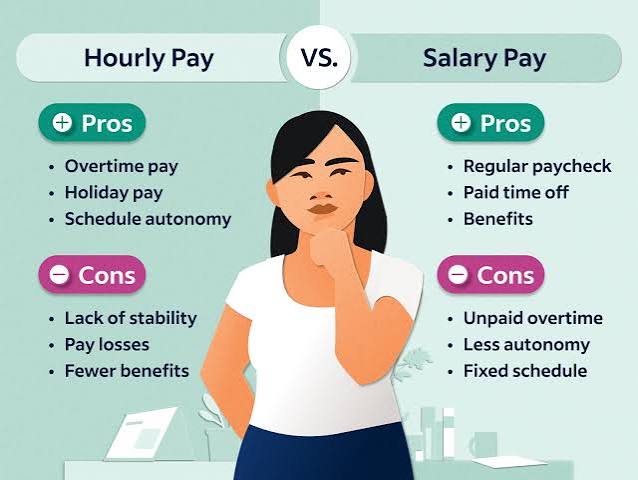
An hourly wage pays you for each hour you actually work, so your income rises and falls with your hours. A salary is a fixed annual amount paid in regular installments regardless of the exact hours in a given week. Neither is automatically better — an hourly job can out-earn a salary with enough overtime, while a salary offers predictable, steady income. The problem is that they’re quoted in different units, so you can’t compare them side by side until you convert one into the other.
Converting an Hourly Wage Into a Salary
This is the conversion you need when an employer quotes you “$25 an hour” and you want to know what that means for the year. The formula is straightforward:
Annual salary = Hourly rate × Hours per week × Weeks per year
A standard full-time schedule is 40 hours a week over 52 weeks — that’s 2,080 working hours in a year. So $25 an hour comes to 25 × 40 × 52 = $52,000 a year. From that annual figure you can find your monthly pay (divide by 12), weekly pay (rate × hours), or daily pay (rate × daily hours).
Doing this by hand for odd rates and part-time schedules gets tedious fast, so an hourly to salary calculator is the quickest way to do it — you enter your rate, hours, and weeks, and it returns your annual, monthly, weekly, and daily pay in one go, in whatever currency you work in.
Converting a Salary Into an Hourly Rate
The reverse is just as useful — especially for comparing a salaried offer against hourly or contract work, or for figuring out what to charge as a freelancer. You simply flip the formula:
Hourly rate = Annual salary ÷ (Hours per week × Weeks per year)
Using the same 2,080-hour year, a $50,000 salary works out to 50,000 ÷ 2,080 = about $24.04 per hour. If you’re starting from a monthly figure, multiply it by 12 first to get the annual salary, then divide by your yearly hours.
A salary to hourly calculator handles every starting point — yearly, monthly, bi-weekly, weekly, or daily — and factors in your real hours so the hourly rate it gives you reflects how you actually work, not a generic assumption.
Why Hours and Weeks Change Everything
The single biggest mistake people make is assuming everyone works the same 2,080 hours. They don’t. Someone earning $20 an hour over a 40-hour week makes $41,600 a year; the same rate at 30 hours a week is only $31,200. And two people on an identical salary earn very different hourly rates if one works 35 hours a week and the other 45. This is exactly why “I’m on a good salary” can quietly hide a mediocre hourly rate once long hours are factored in. Always convert using your real schedule — and if you take unpaid time off, lower the weeks-per-year figure so the result reflects it.
One Important Caveat: Gross vs. Take-Home
Every figure from these conversions is gross pay — what you earn before tax and deductions. Your actual take-home amount will be lower once income tax, social contributions, and other withholdings are applied, and those vary by country, state, and personal situation. Use the gross numbers to compare offers and quote rates on a level playing field, then work out your net pay separately based on your local tax rules.
When You’ll Actually Use These Conversions
- Comparing two job offers. Put an hourly role and a salaried role in the same units before deciding which pays more.
- Setting a freelance or contract rate. Convert the salary you want into an hourly rate, then add a margin for the benefits and downtime you’re covering yourself.
- Budgeting and planning. Seeing your pay broken into monthly and weekly figures makes it far easier to plan expenses.
- Evaluating overtime or a raise. Knowing your true hourly rate tells you what extra hours are really worth.
The Bottom Line
Hourly and salary are just two ways of describing the same paycheck, and switching between them turns confusing offers into clear comparisons. Multiply to go from hourly to annual, divide to go from annual to hourly, always use your real hours and weeks, and remember the figures are pre-tax. Get comfortable moving between the two and you’ll never be caught guessing what a wage actually means again.
