


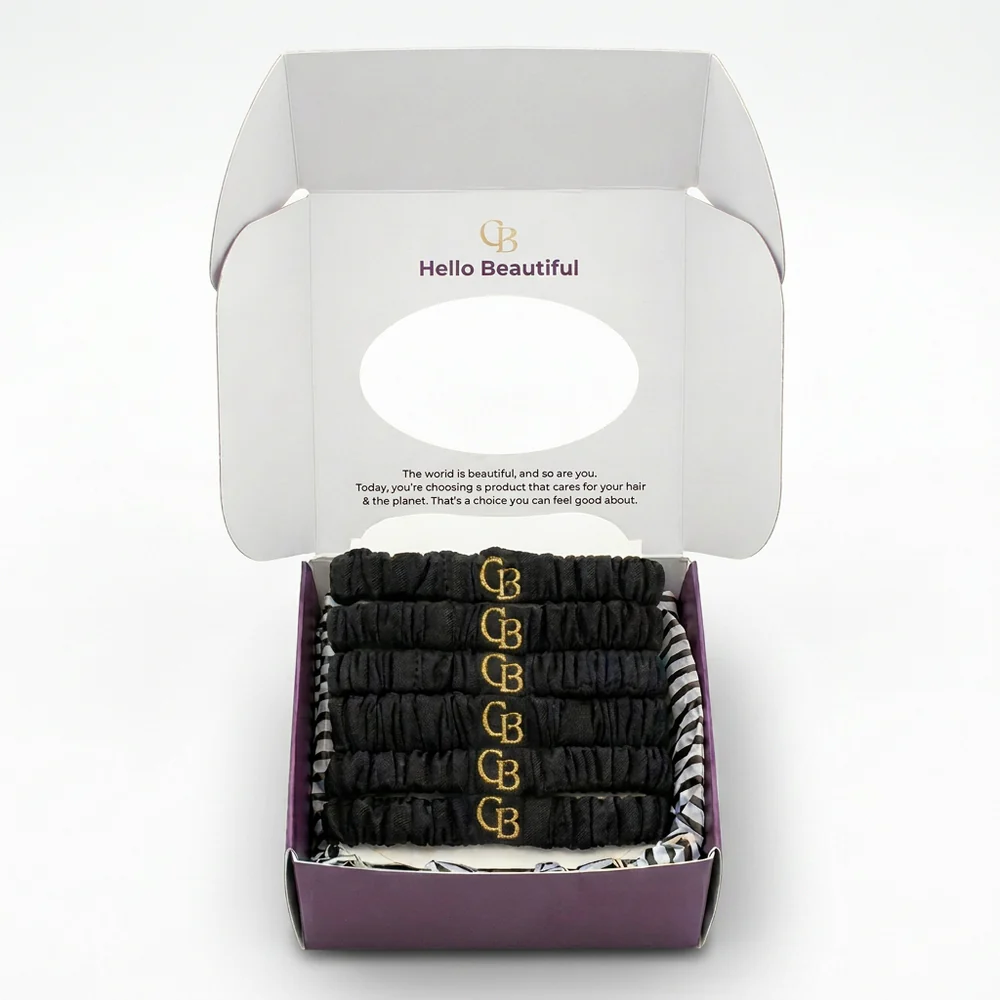
Walk into any drugstore, and you will find a wall of hair ties, scrunchies, and elastic bands in every color and size. Most of them cost almost nothing. Most of them also last almost nothing. But the price is not really the issue. The material is. What your hair tie is made from determines how it grips, how long it holds, and what it leaves behind on your strands after hours of wear.
This is not about brand loyalty or aesthetics. It is about what actually happens at the point where the hair ties scrunchies, or elastic bands meet your hair. That contact point is where breakage starts, where creasing happens, and where the difference between a good hold and a damaging one gets decided.
Why Material Is The Variable Most People Overlook
Most people pick a hair tie based on color, pack size, or price. The material listed on the packaging, if it even appears, rarely gets a second look. That is understandable. It is a hair tie. How much could the material really matter?
It matters more than most people expect. The outer fabric determines surface friction against your strands. The core material determines how much pressure the tie exerts and how evenly it distributes across your hair. Get either of those wrong, and you get breakage, creasing, or a tie that loses its hold within a few hours.

What Synthetic Elastic Does To Your Hair
Standard synthetic elastic, the kind found in most conventional hair ties, is made from petroleum-derived materials like spandex or polyester. It stretches and snaps back with a lot of force. That force is what holds your hair in place, but it is also what causes damage over time.
Here is why that matters. The repeated stretching and contracting of synthetic elastic concentrates pressure on the same section of hair each time you wear it. The hair shaft, particularly at the hairline and nape of the neck, takes the brunt of that. The American Academy of Dermatology has linked repeated traction from tight hair accessories to a condition called traction alopecia, where follicles weaken from sustained stress.
Synthetic elastic also has a smooth, hard surface. That surface slides against your hair cuticle during wear and removal, creating friction damage that shows up as frizz, split ends, and roughness at the mid-shaft.
The Creasing Problem And Where It Comes From
You have probably taken your hair down after a long day and found a visible dent where the tie sat. That crease comes from a tie pressing too hard in too narrow a spot for too long. Synthetic elastic does not flex with your hair. It holds a fixed position and compresses your strands into that position.
Let’s break it down. The crease is not just cosmetic. It tells you where concentrated pressure sat on your hair for hours. In thick hair, that crease can take a long time to relax. In fine hair, the repeated compression in the same spot can weaken the shaft over time, making those strands more prone to snapping.
How Natural Fiber Changes The Equation
Natural fiber materials behave differently against hair. Pineapple fiber, cotton, and natural rubber all have surface textures that grip your hair without the hard, smooth slide of synthetic elastic. That texture distributes the hold more evenly across a wider section of hair rather than concentrating it in one band.
The result is a gentler hold. Not a weaker one. The grip stays firm enough to keep your hair in place through a workout or a full workday. The difference is in how that grip is applied, spread across the hair rather than clamped in one tight line.
Pineapple fiber has another property worth knowing about. The fibers tighten slightly when they come into contact with moisture. That means a pineapple fiber blend tie actually performs better when your hair is sweaty, not worse. Most synthetic ties stretch out when wet and lose their hold. Pineapple fiber does the opposite.

What The Core Material Tells You About A Hair Tie
The outer fabric gets most of the attention, but the core is what provides the stretch. A tie with a natural outer fabric and a synthetic elastic core is still partly plastic. The core still exerts the same kind of concentrated pressure. The same traction risk applies.
A fully plastic-free tie uses natural rubber and cotton in the core. Natural rubber stretches and recovers without the same force profile as synthetic spandex. It holds well, but the pressure it applies is gentler and more evenly distributed.
What To Look For Before You Buy
Next time you pick up a pack of hair ties, check these things before you buy.
- Look for natural fiber in both the outer fabric and the core.
- Avoid vague terms like “eco elastic” with no material breakdown.
- Check whether the brand makes a plastic-free claim or just a recycled materials claim, since recycled polyester is still synthetic.
- Consider how the tie will perform when wet if you work out regularly.
Your hair tie is one of the most-used accessories you own. The material it is made from deserves at least a few seconds of attention.
Shop the Hair Halo at ciaobellacollective.com.