


Professional snow removal across Vancouver
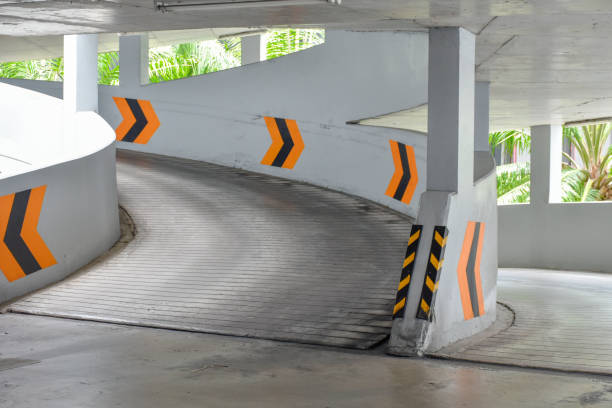
A parkade ramp may represent only a small fraction of a property’s paved area, yet it can become one of the first places where winter conditions interfere with normal access.
The reason is simple: a ramp asks more from the surface. Vehicles are braking, accelerating and turning while travelling on an incline. Water and slush arrive on tires from outside. The upper section may be exposed to weather while the lower section sits in shade. Once temperatures move toward freezing, those differences matter.
Effective parkade ramp snow and ice removal should therefore be treated differently from ordinary parking-lot clearing.
On a flat lot, a driver may have room to recover from a small loss of traction. On a descending ramp approaching a gate, wall or turning point, there is much less margin for error.
The practical goal is not merely to remove visible snow. It is to keep the transition between the street and the parkade predictable throughout changing conditions.
Commercial winter service in New Westminster
Dense properties often create another problem: the parkade entrance rarely operates by itself.
It may sit beside a loading space, garbage collection area, service lane or delivery route. Snow pushed away from one access point can easily interfere with another. Water draining from an open area can also travel toward a ramp and freeze where drivers least expect it.
That is why urban delivery lane winter clearance planning should account for connected movement rather than isolated surfaces.
A contractor needs to know where service vehicles turn, where residents queue for the gate, where pedestrians cross and where cleared snow can actually be stored without narrowing access.
This becomes especially important during busy morning periods. A ramp that receives attention only after the rest of the property is finished may already be carrying repeated vehicle traffic over compacted snow and slush.
Winter priorities should follow consequence, not square footage.
The Ramp Looks Wet—Until the Tires Stop Gripping
The most deceptive parkade conditions are often not the ones covered in fresh snow.
Consider a typical afternoon. Vehicles enter with wet tires. A little slush collects near the top of the ramp. Traffic spreads that moisture farther inside. The exposed pavement outside begins drying, so the property looks as though conditions are improving.
Then the temperature falls.
The damp strip around the entrance freezes first, while the sheltered section below may still look merely wet. A driver encounters the change while already descending or accelerating uphill.
That transition is what makes the ramp unusual.
The Top and Bottom Can Behave Like Different Surfaces
The upper ramp may receive precipitation, wind and road slush directly from outside. The lower section can remain colder because it receives little sunlight.
Between them is a transition zone where moisture is repeatedly carried by tires.
Treating the whole ramp as one uniform surface can therefore miss the point. Inspections should pay attention to where conditions change, not only where snow is visible.
Braking Changes the Consequence of Poor Traction
A small icy patch on level pavement is undesirable. The same patch on an incline can have a much larger effect.
Drivers naturally brake on the way down and apply more power on the way up. Both actions depend on available grip.
That makes early mechanical clearing, appropriate granular ice control and repeated observation more valuable on a ramp than waiting until a noticeable accumulation develops.
Drainage, Refreeze, and Ice Control
Water is often the real winter problem.
A perfectly cleared ramp can become hazardous again if runoff continues reaching it after service. Meltwater may come from a snow pile near the entrance, vehicle tires, adjacent pavement or drainage that is not carrying water away effectively.
The direction of that water should be part of the winter plan.
Trench drains and catch points need to remain accessible. Snow should not be stacked where melting sends water back across the driving line. Contractors should also watch the bottom of slopes, where runoff can collect before freezing.
This is not simply a matter of appearance. WorkSafeBC’s Occupational Health and Safety Regulation states that ramps, floors, stairs, platforms and walkways used by workers must be maintained free of slipping and tripping hazards. WorkSafeBC also identifies water, ice, oil and grease as common causes of inadequate traction.
For managers, the useful lesson is straightforward: a ramp needs monitoring as conditions change, not just one treatment during snowfall.
One Service Visit Is Not Always the Finish Line
A contractor can clear a ramp correctly at 5 a.m. and still have a different surface to deal with by late afternoon.
Traffic keeps introducing moisture. Temperatures move. Snowbanks melt. Drivers carry slush in from surrounding roads. None of this waits for the next snowfall.
Check the Ramp After Traffic Changes It
A useful follow-up inspection looks at actual surface behaviour.
Is slush collecting where vehicles stop for the gate? Are tire tracks exposing wet concrete that may freeze later? Has granular material been displaced by repeated traffic? Is water beginning to cross the ramp from somewhere else?
Those observations tell more than simply asking whether the site was serviced.
Give the Ramp Its Own Priority
The answer is not necessarily to apply more material everywhere.
Sometimes the better response is earlier clearing. Sometimes it is correcting snow placement, reopening drainage or returning during a forecast temperature drop.
A site-specific plan allows the contractor to respond to the cause instead of repeatedly treating the symptom.
Small Surface, Big Consequence
Parkade ramps reveal an important flaw in generic snow contracts: the largest area is not always the area carrying the largest risk.
A property may have acres of parking that can tolerate a short delay while one narrow ramp determines whether dozens of residents, employees or service vehicles can enter and leave.
This is where Limitless Snow Removal’s operating approach becomes relevant. Fast, reliable clearing helps protect critical access before traffic compacts accumulation. Modern equipment supports efficient service across different property conditions, while 24/7 availability matters when freezing does not follow office hours.
Safety-focused ice control is especially important for ramps because the problem can continue after the plow has gone. Scheduled plans allow critical surfaces to be identified before the storm, and transparent pricing gives property managers a clearer picture of what that level of service involves.
The best winter plan does not ask only, “Has the property been cleared?”
It asks a better question: “Where would a small loss of traction create the biggest problem?”
Very often, the answer is the few metres of sloped concrete everyone drives across without thinking about it.
Until winter gives them a reason to notice.
