


If you sell products online, your influencer marketing platform needs to do more than find creators. It needs to connect directly to your store, ship products to influencers without manual workarounds, generate unique discount codes, track affiliate revenue per creator, and attribute every sale back to the campaign that drove it. When those workflows break down or require duct-taping third-party tools together, scaling becomes impossible.
Upfluence has long been a go-to for eCommerce brands, largely because of its Shopify integration and affiliate tracking capabilities. But brands running stores on WooCommerce, Magento, or BigCommerce have found Upfluence’s integration support limited. Even Shopify-native brands report friction with product gifting workflows, inconsistent revenue attribution, and a pricing model – 12-month contracts starting at $24,000+ for two seats – that doesn’t match the flexibility eCommerce teams need.
Influencer Hero and several other platforms have built deeper eCommerce integrations, native product gifting, automated affiliate tracking, and multi-platform store support. This guide compares the 10 best alternatives for brands that need their influencer marketing platform to work as an extension of their eCommerce stack – not a separate silo.
- Influencer Hero
- GRIN
- Modash
- Aspire
- Storyclash
- HypeAuditor
- Later
- Heepsy
- SocialLadder
- Sprout Social
Why eCommerce Brands Are Moving Beyond Upfluence
Upfluence built its reputation on eCommerce features, but the market has caught up and moved past it in several areas that matter most to online sellers:
- Narrow eCommerce Platform Support: Upfluence’s deepest integration is with Shopify. Brands selling on WooCommerce, Magento, BigCommerce, or Prestashop face limited or manual integration workflows. As multi-platform selling becomes standard, this gap gets more expensive.
- Manual Product Gifting: Sending products to creators should be a one-click workflow from your catalog. Upfluence’s gifting process still involves more manual steps than competitors that pull directly from your Shopify inventory and trigger fulfillment automatically.
- Affiliate Tracking Limitations: Generating discount codes, tracking per-creator revenue, and calculating affiliate commissions should happen inside the same platform where you manage your campaigns. Several alternatives now automate the entire affiliate lifecycle – from code generation on contract sign to monthly payout – natively.
- Revenue Attribution Gaps: eCommerce brands need to tie every sale back to a specific creator, campaign, and content piece. Upfluence’s reporting provides aggregate data, but brands running 50+ creator partnerships need granular, per-creator ROAS visibility.
- Contract Lock-in vs. Seasonal Flexibility: eCommerce is seasonal. Brands that scale influencer spend for Q4, product launches, or flash sales need month-to-month pricing options – not mandatory 12-month contracts at $24,000+.
Best Upfluence Alternatives for eCommerce Brands
1. Influencer Hero
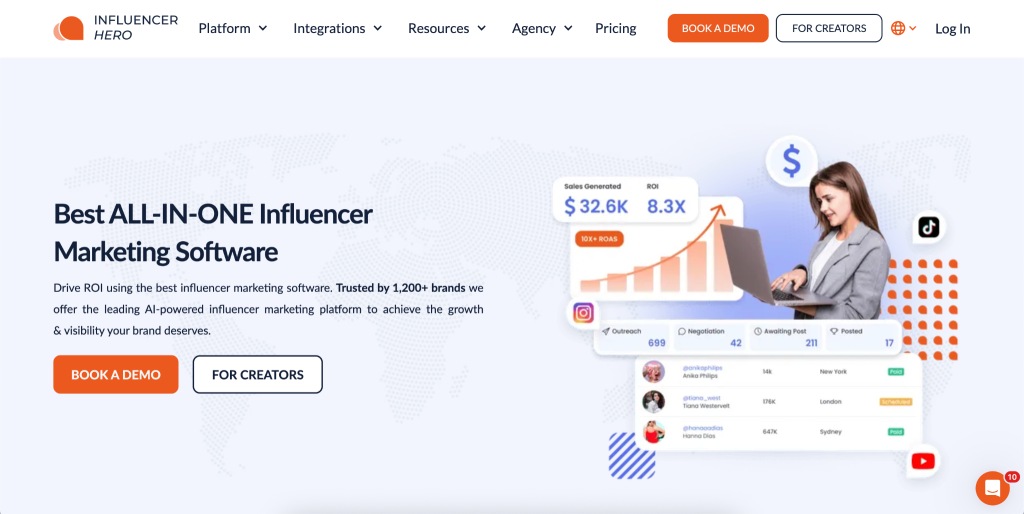
Influencer Hero was built with eCommerce at the center of its architecture. The platform integrates natively with five eCommerce systems – Shopify, WooCommerce, Magento, BigCommerce, and Prestashop – making it the broadest in eCommerce platform support among all the tools in this list. Product gifting happens directly from your CRM through your connected store: select creators, choose products from your catalog, and trigger fulfillment without leaving the platform.
The automation engine ties eCommerce actions to campaign workflows. When a creator signs a contract, the platform can auto-generate a unique Shopify discount code, assign affiliate tracking, and advance them through your pipeline – no manual intervention. Creator storefronts give each influencer a branded page to sell your products, with affiliate commissions tracked automatically and reported alongside campaign-level ROAS.
Best for: eCommerce brands on any platform that need product gifting, affiliate tracking, discount code automation, and per-creator revenue attribution inside a single system.
Pricing:
- Standard: $649/month (1 seat, up to 1,000 creators, 1,000 outreach/mo)
- Pro: $1,049/month (3 seats, up to 5,000 creators, 5,000 outreach/mo)
- Business: $2,490/month (8 seats, up to 10,000 creators, 10,000 outreach/mo)
- Custom & Agency plans available with unlimited outreach
Standout features:
- Five Native eCommerce Integrations: Shopify, WooCommerce, Magento, BigCommerce, and Prestashop – product gifting, affiliate tracking, and revenue attribution across all five.
- Automation Engine for eCommerce Workflows: Rules-based triggers auto-generate discount codes, assign affiliate links, and advance pipeline stages on contract sign or content delivery.
- Creator Storefronts (Up to 8x ROI): Branded pages where creators sell your products with tracked affiliate commissions – turning one-off partnerships into persistent revenue channels.
- 450M+ Creator Database Across 8 Platforms: The largest indexed database available, with audience quality scoring and fraud detection to ensure you partner with creators whose followers actually buy.
- AI-Powered Outreach (43% Response Rate): Automated drip campaigns with AI-personalized first lines – essential for eCommerce brands running high-volume gifting and affiliate programs.
- Per-Creator Revenue Attribution: Track sales, ROAS, and affiliate earnings at the individual creator level alongside campaign-level analytics.
The platform’s depth means teams new to influencer marketing will need time to configure workflows and automation rules. Brands running only a handful of gifting campaigns per quarter may not need every eCommerce feature, though the architecture ensures you won’t outgrow it as your program scales.
2. GRIN
GRIN is built specifically for eCommerce and DTC brands, with native Shopify and PayPal integrations that handle product shipping, payments, and creator commissions. The platform offers unlimited creator partnerships with no caps – a major advantage for brands running large-scale gifting programs where per-creator limits would create bottlenecks.
Creator portals give influencers their own dashboards to view briefs, select products, submit content, and track earnings. Automatic media rights management embeds content reuse permissions into the booking flow, eliminating separate licensing negotiations – particularly useful for eCommerce brands that need to repurpose UGC across product pages and ads.
Best for: Shopify-native DTC brands with dedicated influencer teams managing 100+ active creator partnerships and large-scale product gifting.
Pricing:
- Custom; entry tier typically starts around $2,500/month
- 12-month minimum commitment; $25,000+/year
Standout features:
- Unlimited Creator Partnerships: No caps on influencer count – designed for brands shipping products to hundreds of creators simultaneously.
- Native Shopify + PayPal Integrations: Product shipping and affiliate payments handled directly through your existing eCommerce and payment infrastructure.
- Creator Portals: Influencers browse your product catalog, select items, submit content, and track commissions from a private dashboard.
- Automatic Media Rights: Content reuse rights embedded in the booking flow – no separate licensing negotiations for UGC repurposing on product pages.
- UGC Library: Searchable repository including Stories content for cross-channel repurposing across ads and product listings.
GRIN’s $25,000+/year minimum and 12-month lock-in mirror the contract friction brands experience with Upfluence. The platform’s eCommerce integrations are deep but limited to Shopify – brands on WooCommerce, Magento, or BigCommerce will need to evaluate alternatives with broader store support. The interface can also slow down under heavy use with large creator rosters.
3. Modash
Modash pairs one of the market’s largest creator databases with Shopify-native eCommerce workflows. Discovery is powered by 350M+ public profiles, and the platform’s AI visual search lets you describe a product aesthetic or upload a reference image to find creators whose content matches your brand’s visual identity – particularly useful for fashion, beauty, and lifestyle eCommerce brands.
The Shopify integration handles product gifting, discount code generation, UTM tracking, and affiliate payouts natively. Creators get their own dashboards to select products and track commissions. For eCommerce brands that run primarily on Shopify, Modash delivers deep integration at mid-market pricing with month-to-month flexibility.
Best for: Shopify-based eCommerce brands that need powerful creator discovery and native affiliate workflows without enterprise pricing commitments.
Pricing:
- Essentials: $199-$299/month
- Performance: $499-$599/month
- Enterprise: Custom (annual billing)
Standout features:
- 350M+ Public Creator Database: Non-opt-in profiles provide one of the widest discovery nets, with granular audience demographic and engagement filters.
- AI Visual Discovery: Describe a visual style or upload a product image to find creators whose content aesthetics match your brand.
- Shopify-Native Gifting and Affiliates: Automated discount codes, UTM tracking, product catalog selection, and affiliate commission tracking from within the platform.
- Automated Affiliate Payouts: Commission tracking and monthly creator payments handled in-platform, reducing manual finance overhead.
Modash’s deep eCommerce integration works exclusively with Shopify. Brands selling on WooCommerce, Magento, or BigCommerce will find this a dealbreaker. The platform also lacks native content licensing tools and AI-powered outreach personalization. For teams that need multi-platform store support and CRM automation, platforms like Influencer Hero cover those gaps with five eCommerce integrations and an automation engine.
4. Aspire
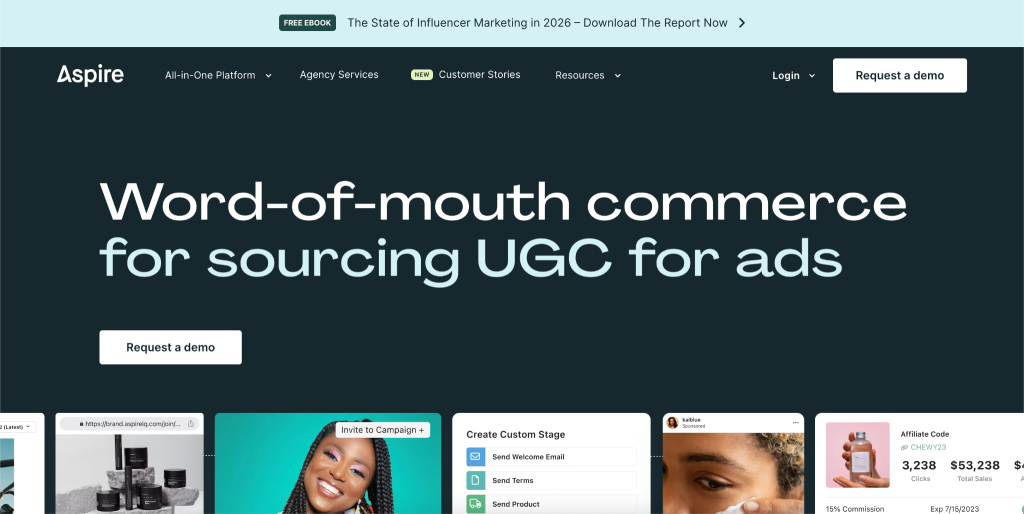
Aspire combines an inbound creator marketplace – where over a million creators actively apply to brand campaigns – with structured eCommerce workflows. The Shopify fulfillment integration lets creators browse your product catalog and select items directly, turning the gifting process into a self-service experience that reduces operational overhead for eCommerce teams managing high-volume programs.
First-party data integrations with Meta, TikTok, and Pinterest deliver reliable performance data that eCommerce brands can tie directly to sales outcomes. The end-to-end workflow covers discovery, contracts, content approvals, and tracking in a single pipeline.
Best for: Mid-market eCommerce brands with existing brand recognition that want creators to come to them, reducing cold outreach overhead.
Pricing:
- Custom; mid-tier packages quoted around $2,300/month
Standout features:
- Inbound Creator Marketplace: 1M+ creators apply to campaigns – particularly valuable for eCommerce brands with recognizable products that attract creator interest.
- Shopify Fulfillment Integration: Creators select products from your catalog, and fulfillment triggers directly from the platform.
- First-Party Social Data: Direct API integrations with Meta, TikTok, and Pinterest for reliable audience and performance data.
- End-to-End Workflow: Discovery, contracts, content approvals, and performance tracking in a single structured pipeline.
Custom pricing limits transparency for eCommerce teams budgeting quarterly campaigns. Like GRIN and Modash, Aspire’s deepest eCommerce integration is Shopify-specific. Newer or smaller eCommerce brands that lack inbound creator interest will still need strong outbound capabilities – where platforms with AI-powered outreach and databases exceeding 350M+ creators offer more reach.
5. Storyclash
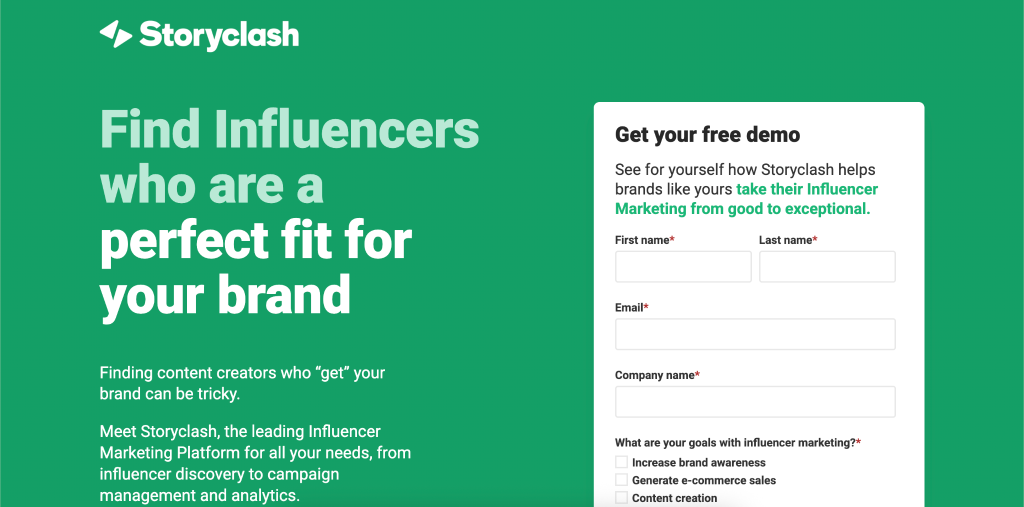
Storyclash brings a unique eCommerce angle through content performance analytics and competitive benchmarking. The platform’s Shopify integration tracks ROAS, customer acquisition cost (CAC), and average order value (AOV) per creator – metrics that eCommerce teams use daily to evaluate campaign efficiency. The competitive benchmarking feature reveals which creators your competitors are working with and how those partnerships perform.
AI-driven discovery uses image recognition and natural language prompts to surface creators whose content style matches your product category. The platform’s historical data includes expired Instagram Stories, giving eCommerce brands visibility into creator content that other platforms miss.
Best for: eCommerce brands focused on content performance analytics, competitive intelligence, and Shopify revenue attribution per creator.
Pricing:
- Business: starts at $870/month
- Enterprise: custom pricing
Standout features:
- Shopify Revenue Attribution: Track ROAS, CAC, and AOV per creator directly from your Shopify data – the eCommerce metrics that drive budget decisions.
- Competitive Benchmarking: See which creators your competitors hire and how their campaigns perform – valuable for eCommerce brands in competitive categories.
- AI-Driven Discovery with Image Recognition: Find creators by describing your product aesthetic or using visual prompts, with access to a 183M creator database.
- Historical Data Including Expired Stories: Access past content performance data that other platforms can’t surface once Stories expire.
Storyclash lacks built-in contract generation and content licensing workflows – teams will need to handle UGC repurposing rights manually. The platform’s eCommerce integration is Shopify-only, and its strength is analytics rather than end-to-end campaign management. eCommerce brands that need product gifting, automated affiliate payouts, and multi-store support alongside analytics may find Influencer Hero’s integrated approach more efficient.
6. HypeAuditor
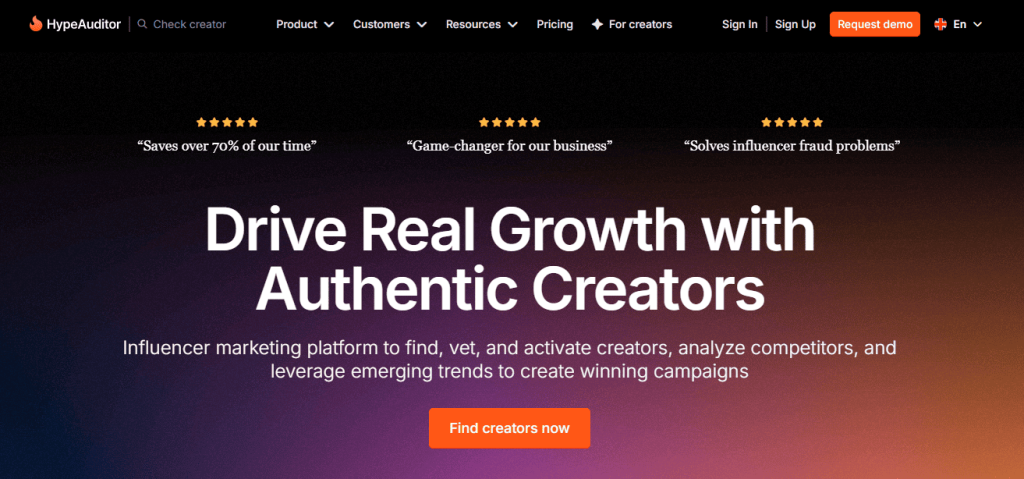
HypeAuditor is the gold standard for influencer auditing and fraud detection – critical capabilities for eCommerce brands where every gifted product and affiliate commission represents real cost. The platform’s audience authenticity analysis goes deeper than follower counts, examining engagement quality, audience demographics, and bot detection to ensure your eCommerce budget reaches real potential customers.
The Shopify integration enables revenue attribution, connecting influencer campaigns to actual sales data. AI-powered discovery with lookalike search reads captions and analyzes images to find creators who match your brand’s product category and visual identity.
Best for: eCommerce brands that prioritize audience authenticity and fraud prevention to protect product gifting and affiliate budgets.
Pricing:
- Business: approximately $10,000/year
- Enterprise: up to $60,000/year
Standout features:
- Advanced Audience Authenticity Analysis: Detect fake followers, bot engagement, and inflated metrics before committing gifting budget or affiliate commissions.
- Shopify Revenue Attribution: Connect campaign performance directly to Shopify sales data for per-creator ROAS visibility.
- AI Discovery with Lookalike Search: Find creators similar to your top performers by analyzing captions, images, and audience profiles.
- Social Listening and Competitor Monitoring: Track hashtags, brand mentions, and competitor activity to spot emerging creators in your product category.
HypeAuditor’s complexity can overwhelm teams new to influencer marketing. The platform excels at analytics and auditing but doesn’t offer the same depth of product gifting workflows, automated affiliate payouts, or multi-store eCommerce integrations that all-in-one platforms provide. eCommerce brands that need CRM automation alongside fraud detection may prefer platforms that combine both capabilities natively.
7. Later
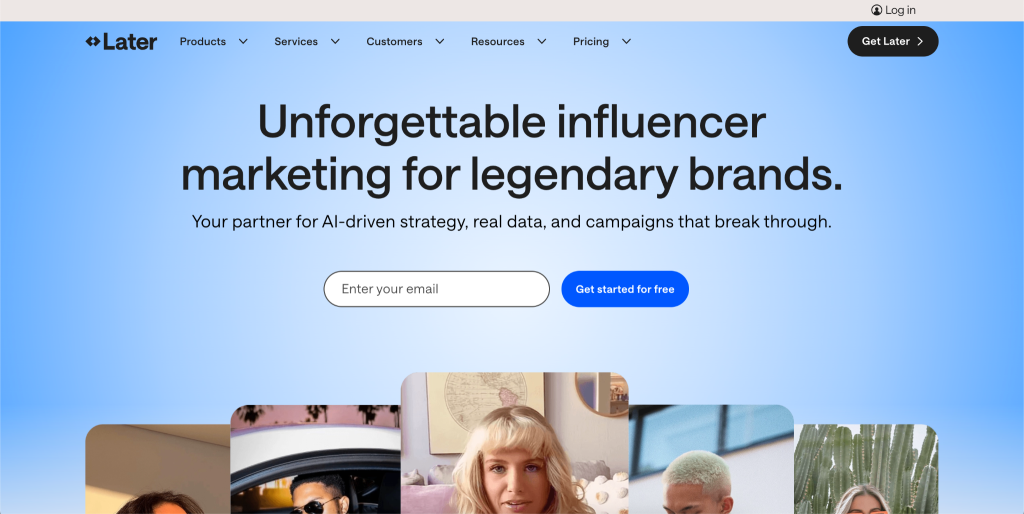
Later expanded from social media scheduling into influencer marketing, and its eCommerce features reflect that evolution. The platform offers Shopify gifting and discount code workflows alongside 15M contactable creators with verified emails. For eCommerce brands already using Later for content scheduling, adding influencer marketing to the same platform creates operational efficiency.
Brand safety tools powered by AI scanning help eCommerce brands protect their product reputation by vetting creator content before it goes live. Custom application pages let creators apply to your campaigns, creating an inbound pipeline that reduces outreach effort.
Best for: eCommerce brands already using Later for social scheduling that want to add Shopify-integrated influencer marketing without adopting a separate platform.
Pricing:
- Social management plans: Starter $25/month, Growth $50/month, Scale $110/month
- Influencer marketing plans: approximately $28,500-$60,000/year
Standout features:
- Shopify Gifting and Discount Workflows: Send products and generate discount codes for creators directly through your Shopify store.
- Content Planning Synergy: Align influencer content delivery with your scheduled brand content calendar for cohesive eCommerce campaigns.
- Brand Safety AI Scanning: Automated content review protects your product reputation before creator content goes live.
- Custom Application Pages: Creator vetting pages create an inbound pipeline of influencers interested in your products.
Later’s influencer marketing plans start at $28,500/year – a significant jump from its affordable social scheduling tiers. The eCommerce integration is Shopify-only, and the platform’s 15M creator database is substantially smaller than competitors indexing 200M-450M+ profiles. Entry-level features overlap with much cheaper tools, and the unique value for eCommerce brands is locked behind the expensive tiers.
8. Heepsy
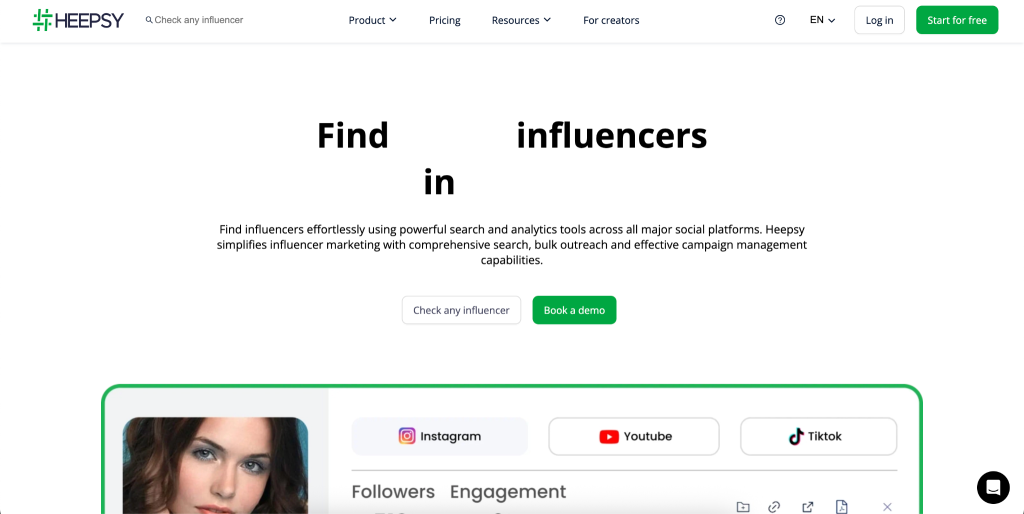
Heepsy makes influencer marketing accessible to smaller eCommerce brands with a free plan and paid tiers starting at $89/month. The platform’s 50M+ influencer database covers US and European markets well, and authenticity filters help eCommerce brands avoid wasting product gifting budgets on creators with fake followers.
The Kanban-style CRM provides a visual pipeline for tracking creators through gifting and campaign stages. Shopify and WooCommerce affiliate tracking is available on advanced plans – notably, Heepsy is one of the few budget-friendly platforms that supports WooCommerce alongside Shopify.
Best for: Small to mid-sized eCommerce brands on Shopify or WooCommerce that need affordable discovery and affiliate tracking to validate influencer marketing.
Pricing:
- Free plan available
- Starter: $89/month
- Plus: $249/month
- Advanced: $369/month (required for Shopify sales tracking)
Standout features:
- Shopify and WooCommerce Affiliate Tracking: One of the few budget platforms supporting two eCommerce systems for sales attribution (advanced plans).
- Authenticity Filters: Fake follower detection and audience quality scoring protect your gifting and affiliate budget.
- Kanban-Style CRM: Visual pipeline for tracking creators through product gifting, content delivery, and payment stages.
- Bulk Email Outreach: Up to 3,000 emails per month with automated follow-up sequences for scaling creator recruitment.
Shopify sales tracking and affiliate management require the $369/month Advanced plan – the best eCommerce features aren’t available on lower tiers. Outreach lacks AI personalization, so manual effort scales linearly with your creator list. eCommerce brands scaling beyond 50 active partnerships will likely need the automation depth and broader integration support of a full-suite platform like Influencer Hero, which covers five eCommerce systems natively.
9. SocialLadder

SocialLadder takes a fundamentally different approach to influencer marketing for eCommerce: instead of discovering external creators, it turns your existing customers and followers into brand ambassadors. The platform scans your customer lists and social followers to identify potential advocates, then engages them through gamified UGC challenges with point-based reward systems.
The eCommerce and CRM integration allows auto-invitations post-purchase, creating a flywheel where happy customers become your content creators. Built-in content usage rights are agreed upon when ambassadors join the program, eliminating licensing friction for UGC repurposing on product pages and ads.
Best for: eCommerce brands with strong existing customer bases that want to build ambassador communities rather than rely solely on paid creator partnerships.
Pricing:
- Typically under $2,000/month
- 6-12 month commitment recommended
Standout features:
- Customer-First Discovery: Scan your customer lists and followers to find authentic advocates who already use and love your products.
- Gamified UGC Challenges: Points-based reward system where ambassadors earn rewards for creating content, driving referrals, and completing challenges.
- Post-Purchase Auto-Invitations: eCommerce integration triggers ambassador program invitations after purchase, building a self-sustaining content pipeline.
- Built-in Content Usage Rights: UGC rights agreed on program join – no per-piece licensing negotiations for product page and ad content.
Community building takes months to generate meaningful content volume – this isn’t a quick-start solution. Content quality from ambassadors is less predictable than from professional creators. SocialLadder works best as a complement to a traditional influencer marketing platform rather than a replacement. Brands running both ambassador programs and paid partnerships often use SocialLadder alongside an all-in-one platform that handles the outbound creator workflow.
10. Sprout Social
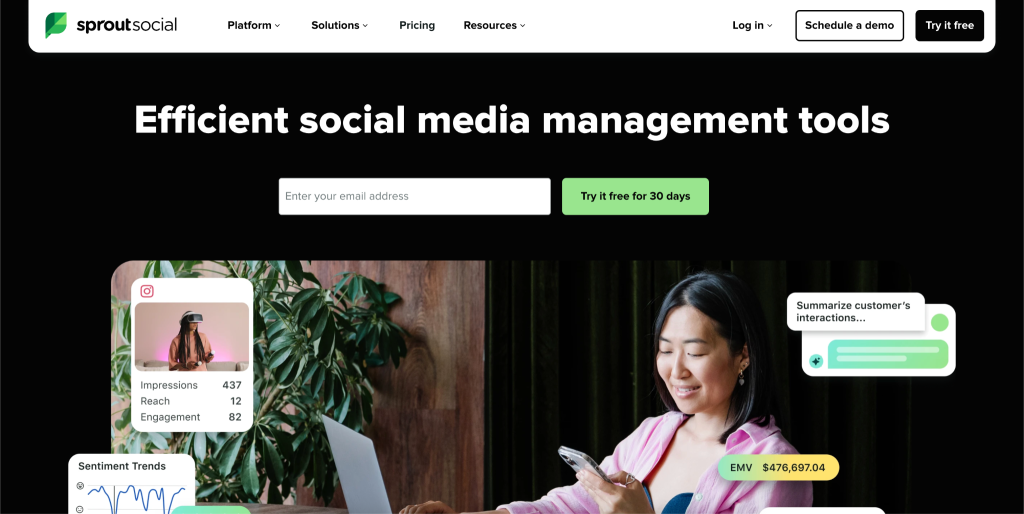
Sprout Social approaches influencer marketing from its strength as a social media management suite. The platform’s AI-powered Brand Fit Score evaluates creator-brand alignment, and advanced brand safety filters screen for risky content – important safeguards for eCommerce brands whose product reputation depends on the creators representing them.
Content approval workflows let eCommerce teams review and approve creator content before publication, ensuring product messaging stays on-brand. Competitive benchmarking reveals which creators your competitors work with and where creator overlap exists. EMV reporting and earned media analytics help quantify the broader brand impact of influencer campaigns.
Best for: eCommerce brands already on Sprout Social that want influencer marketing integrated with their social media management and brand safety workflows.
Pricing:
- $1,599/user/month, 12-month minimum
- Additional seats billed separately
Standout features:
- AI-Powered Brand Fit Score: Quantified creator-brand alignment scoring helps eCommerce brands evaluate partnership quality before committing budget.
- Advanced Brand Safety Filters: Screen creators for risky content topics and keywords to protect your product reputation.
- Content Approval Workflows: Review and approve creator content before publication to ensure accurate product messaging.
- Competitive Benchmarking: Analyze competitor creator partnerships and overlap to identify whitespace opportunities in your product category.
At $1,599 per user per month with a 12-month minimum, Sprout Social is among the most expensive options on this list – especially for eCommerce teams that need multiple seats. The platform lacks native eCommerce integrations like product gifting, affiliate tracking, or discount code generation. It also has no visual or vibe-based creator search and no built-in UGC licensing tools. eCommerce brands that need their influencer platform to plug directly into their store will need to pair Sprout Social with separate tools or choose a platform with native eCommerce support.
Final Thoughts
The right Upfluence alternative for your eCommerce brand depends on where your store lives, how many creator partnerships you manage, and which parts of the workflow cause the most friction today:
- For multi-platform eCommerce: Influencer Hero is the only platform on this list with native integrations across Shopify, WooCommerce, Magento, BigCommerce, and Prestashop – plus automated gifting, affiliate tracking, and creator storefronts.
- For Shopify-native DTC at scale: GRIN offers unlimited creator partnerships and strong product gifting workflows for brands committed to enterprise pricing.
- For mid-market Shopify brands: Modash delivers deep Shopify integration with affiliate management starting at $199/month.
- For inbound creator recruitment: Aspire’s 1M+ creator marketplace reduces outreach overhead for brands with recognizable products.
- For eCommerce analytics: Storyclash tracks per-creator ROAS, CAC, and AOV with competitive benchmarking for data-driven teams.
- For fraud prevention: HypeAuditor’s audience authenticity tools protect gifting and affiliate budgets from wasted spend.
- For budget-conscious brands: Heepsy offers a free plan and Shopify plus WooCommerce support on advanced tiers, making it accessible for brands validating the channel.
- For customer-to-ambassador programs: SocialLadder turns your existing buyers into content creators through gamified challenges and post-purchase invitations.
eCommerce influencer marketing has moved beyond simple creator discovery. The platforms that deliver the most value now are those that integrate directly with your store, automate the operational overhead of gifting and affiliate management, and attribute revenue at the per-creator level. Evaluate each option against your specific store setup, team size, and the scale of creator partnerships you plan to manage over the next 12 months.
FAQs
1. Which Upfluence alternative has the best Shopify integration?
Most platforms on this list integrate with Shopify – GRIN, Modash, Aspire, Storyclash, HypeAuditor, Later, and Heepsy all offer some level of Shopify connectivity. Influencer Hero and GRIN offer the deepest Shopify workflows including product gifting, discount code automation, and affiliate tracking. Influencer Hero also extends beyond Shopify with native support for WooCommerce, Magento, BigCommerce, and Prestashop.
2. What about brands not on Shopify – which platforms support WooCommerce or Magento?
Most influencer marketing platforms focus their eCommerce integration on Shopify. Heepsy supports Shopify and WooCommerce on its advanced plan. Influencer Hero is the broadest, with native integrations for Shopify, WooCommerce, Magento, BigCommerce, and Prestashop – making it the strongest choice for brands selling across multiple eCommerce platforms.
3. How does product gifting work through these platforms?
Product gifting integrations connect your eCommerce catalog to the influencer platform. You select creators, choose products from your store inventory, and the platform triggers fulfillment. Influencer Hero, GRIN, Modash, and Aspire offer native gifting through Shopify. The key differentiator is automation – platforms like Influencer Hero auto-trigger gifting as part of campaign workflows, while others require manual steps.
4. Can I track which specific creator drove each sale?
Per-creator revenue attribution requires eCommerce integration. Influencer Hero, GRIN, Modash, Storyclash, and HypeAuditor all offer some form of per-creator ROAS or sales tracking through Shopify. Influencer Hero’s automation engine also generates unique discount codes per creator automatically, making attribution more precise across large programs.
5. What’s the most affordable option for eCommerce brands?
Heepsy offers a free plan with basic discovery, and paid plans start at $89/month. However, Shopify sales tracking requires the $369/month Advanced plan. Modash starts at $199/month with Shopify-native affiliate workflows included. Influencer Hero’s Standard plan at $649/month is the most complete option at entry level among all-in-one platforms, with five eCommerce integrations and automation included from the start.
6. Should I use a dedicated influencer platform or my eCommerce platform’s built-in tools?
Built-in eCommerce tools like Shopify Collabs handle basic creator partnerships, but they lack the scale, automation, and analytics that dedicated platforms provide. Once you’re managing more than 10-20 creator relationships, the manual overhead of tracking gifting, generating codes, managing content approvals, and calculating commissions justifies a dedicated platform. The key is choosing one that integrates natively with your store so you don’t lose the operational efficiency.
Keywords: Upfluence alternatives for Shopify, eCommerce influencer marketing platforms, Shopify influencer tools, product gifting platforms, affiliate tracking for eCommerce, influencer marketing Shopify integration, Influencer Hero vs Upfluence, WooCommerce influencer marketing, eCommerce creator management, influencer platform comparison 2026
