


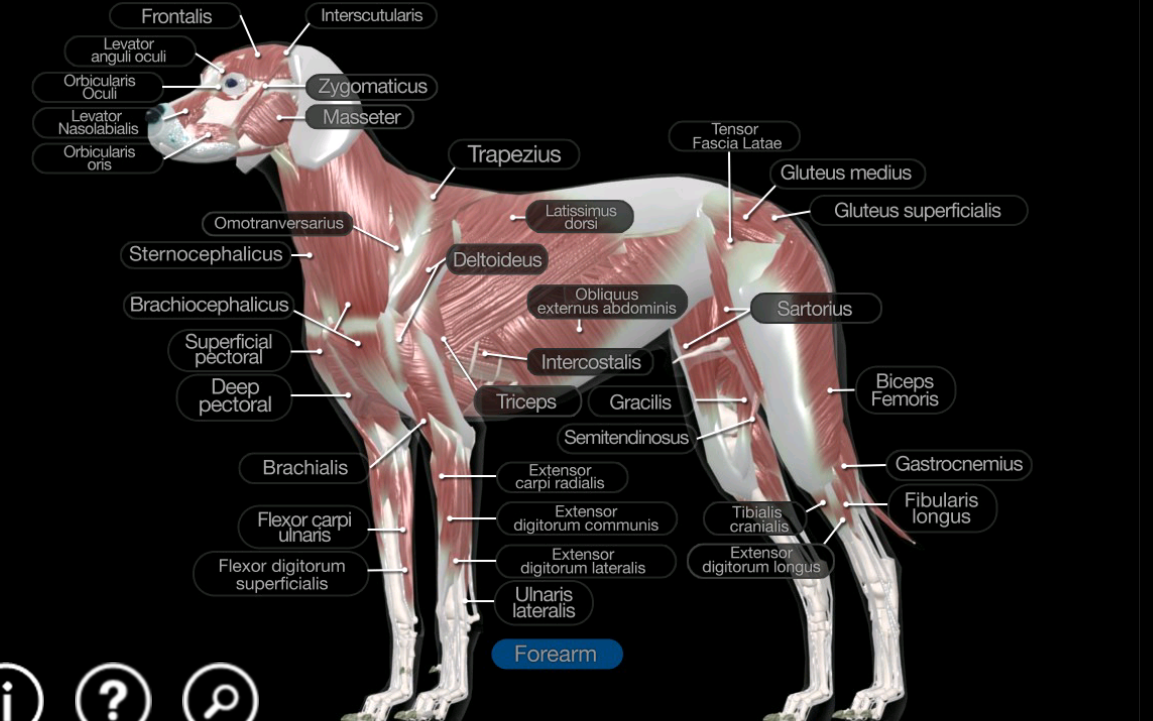
The leap from studying human biology to mastering veterinary anatomy is a monumental challenge. Unlike humans, who rely on a bipedal (two-legged) stance, dogs are digitigrade quadrupeds. Their bodies are marvels of evolutionary engineering, designed for explosive acceleration, sustained endurance, and incredible agility. To truly understand how a dog moves, heals, and functions, veterinary professionals must possess a deep, three-dimensional understanding of their musculoskeletal system.
While textbooks and digital illustrations provide the necessary foundational theory, the complex layering of canine myology is best understood through physical interaction. This is why investing in a high-fidelity muscles in dogs model has become an absolute necessity for veterinary students, canine physical therapists, and elite dog trainers.
Here is a comprehensive guide to why these anatomical tools are so critical and what to look for when integrating them into your studies or practice.
The Limitations of 2D Learning in Veterinary Science
When you open a veterinary atlas, you are immediately confronted with flat, highly stylized images. While beautiful, these 2D illustrations force the human brain to perform a complex cognitive leap: translating a flat drawing into a living, breathing, three-dimensional animal.
Canine musculature is incredibly dense and heavily layered. For instance, understanding the exact spatial relationship between the superficial latissimus dorsi and the deeper intercostal muscles is difficult to grasp on a page. Furthermore, a textbook cannot provide haptic (tactile) feedback. The brain learns and retains information incredibly efficiently through touch. By physically holding, rotating, and dissecting an anatomical muscles in dogs model, the student builds a spatial “mental map” that is crucial for clinical diagnostics and surgical preparation.
Key Canine Muscle Groups Revealed by a Model
A premium physical model will clearly demonstrate the unique aspects of canine biomechanics that differentiate them from humans. When studying with a quality model, several key muscular regions become instantly clearer:
1. The Forelimb and Shoulder Assembly
Unlike humans, dogs do not have a functional collarbone (clavicle) connecting their front limbs to their skeleton. Instead, their front legs are attached to the torso entirely by a “sling” of muscles, including the serratus ventralis, trapezius, and pectorals. A modular model allows students to physically remove the superficial shoulder muscles to see how this incredible shock-absorbing system works, which is vital for understanding common canine sports injuries.
2. The Powerful Hindquarters
The “engine” of the dog is located in its rear. A detailed model will clearly differentiate the massive, power-generating muscles of the pelvic limb. You can easily study the origin and insertion points of the biceps femoris (hamstring), the complex gluteal group, and the quadriceps femoris. Understanding these specific muscles is mandatory for diagnosing conditions like hip dysplasia or cranial cruciate ligament (CCL) tears.
3. The Neck and Jaw
The masseter muscle in the canine jaw is incredibly powerful, and the thick muscles of the neck (like the brachiocephalicus) are designed to support the head while carrying heavy objects or taking down prey. A detailed desk model provides a clear view of these robust muscular structures.
Who Benefits from a “Muscles in Dogs” Model?
While obviously essential for veterinary schools, the utility of these models extends far beyond the university lecture hall:
- Veterinary Technicians and Nurses: For those assisting in surgeries or handling post-operative care, understanding exactly which muscle groups have been impacted is critical for safely handling and moving the animal.
- Canine Physical Therapists and Massage Therapists: Just like humans, athletic dogs suffer from muscle strains, spasms, and fascial tension. Therapists use these models to study trigger points, plan rehabilitation exercises, and explain treatment protocols to pet owners.
- Agility and Working Dog Trainers: Handlers of police K9s, search and rescue dogs, and competitive agility dogs use anatomical models to understand the physical toll specific jumps, turns, and bite-work take on their dog’s body, helping them design better warm-up and conditioning routines.
- Client Education: In a clinical setting, a veterinarian can use a model to show a worried pet owner exactly where their dog’s injury is located. Explaining a strained supraspinatus tendon is much easier when the client can physically see it on a desktop replica.
What to Look for When Purchasing a Model
If you are ready to add a physical replica to your educational toolkit, keep these buying criteria in mind to ensure you get the best value:
- Modularity: A solid, one-piece block of plastic is not highly educational. The best models are “dissectible.” Look for models that allow you to pull away the superficial muscles of the shoulder, thigh, and abdomen to reveal the deeper muscular and skeletal layers beneath.
- Anatomical Accuracy and Painting: Look for models produced by reputable scientific supply companies. The muscles should be accurately proportioned and hand-painted, ideally with distinct color variations highlighting the tendinous insertions onto the bones.
- Durability: Veterinary models are meant to be handled, disassembled, and reassembled frequently. Ensure the model is made from high-quality, washable PVC plastic with sturdy metal or thick resin connection pegs.
- Included Key/Legend: A great model will feature tiny numbers printed on every specific muscle belly, accompanied by an index card or manual that names each structure.
Conclusion
Mastering the complexities of veterinary myology requires tools that bridge the gap between theory and reality. A detailed, modular muscles in dogs model is not just a study aid; it is a foundational investment in your veterinary career or canine professional practice. By moving anatomy off the flat page and into your hands, you unlock a deeper, more intuitive understanding of how these incredible animals move, function, and thrive.
