


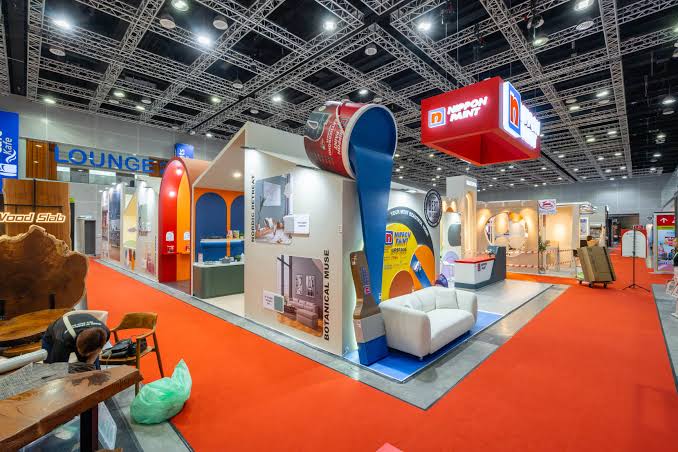
Creativity gets most of the attention in booth design conversations, but it’s the execution behind that creativity — fabrication quality, installation precision, hitting a deadline under real venue constraints — that actually determines whether a design idea survives the trip from render to real exhibition hall. Upstage Expo’s approach to exhibition booth design offers a useful test case for judging both halves of that equation together.
Creativity Backed by Practical Execution
Design concepts reviewed across various projects lean toward distinctive, memorable structures rather than generic modular layouts recycled across different clients, which matters in busy exhibition halls where dozens of similar-looking booths compete for the same foot traffic.
That creative ambition is paired with a fabrication process capable of actually delivering on more complex structural ideas, rather than concepts that look impressive in a render but get quietly simplified once real-world budget and timeline constraints kick in.
The Build Process From Concept to Completion
The process starts with a briefing covering brand direction, event objectives, and venue specifics, followed by concept development and a client review cycle before fabrication begins in earnest.
On-site installation follows a structured sequence, and build quality held up consistently across the projects reviewed here even under the kind of compressed installation windows common at busier convention centre events.
A Strong Fit for Malaysia’s Tourism Exhibition Circuit
Tourism exhibition design carries its own particular demands, since tourism booths often need to evoke a destination’s atmosphere or cultural identity within a fairly compact footprint, balancing visual storytelling with practical space for brochures, staff consultations, and sometimes live demonstrations.
A well-executed tourism booth design typically leans on strong visual cues — color, texture, imagery — to communicate a sense of place almost instantly, since tourism buyers moving through a hall rarely stop to read detailed copy before deciding whether a destination or package catches their interest.
A tourism exhibition booth built without that visual immediacy in mind risks blending into a hall full of similarly generic travel displays, which is exactly the kind of outcome a stronger design brief and experienced contractor should help avoid.
Designing for Travel and Tourism Audiences Specifically
Travel tourism booth design differs meaningfully from other consumer categories because the purchase decision being sold is largely emotional rather than functional — travelers are buying a feeling or an experience, not a specification sheet, and the booth needs to communicate that instantly.
Tourism exhibition booth design that leans too heavily on printed information panels tends to underperform compared to designs built around immersive imagery and inviting, open layouts that encourage visitors to linger and ask questions rather than walk past.
Craftsmanship and Finishing Quality
Finishing details — paint quality, clean joints, consistent lighting temperature across a structure — are often where budget booth builds start to visibly cut corners, and the builds reviewed here held up well on these smaller but cumulatively important details.
Those finishing touches matter more than exhibitors often expect, since visitors absorb a booth’s overall quality impression within seconds, long before they’ve had a chance to engage with the actual product or message being presented.
Client Results and Repeat Business
Repeat engagements from the same clients across multiple events are generally one of the more reliable indicators of contractor satisfaction, since exhibitors who had a rough experience the first time rarely return for a second booth build with the same company.
Feedback patterns reviewed here suggest a reasonable amount of repeat business, which lines up with the broader impression of a contractor delivering consistent results rather than a single standout project surrounded by more mixed outcomes.
Value for Money
Pricing sits in a mid-to-premium range relative to the broader Malaysian exhibition contractor market, which tracks with the more custom, design-forward approach evident across the portfolio rather than a volume-focused, templated build strategy.
For exhibitors prioritizing visual distinctiveness over the absolute lowest quote available, that positioning represents reasonable value rather than a premium charged purely for a recognizable name.
Working With a Design Team That Understands Travel Marketing
Beyond structural fabrication, a design team that understands how travel brands typically market themselves — through imagery, destination storytelling, and emotional appeal rather than purely technical product specs — tends to produce booths that feel more native to a tourism hall rather than a generic display retrofitted with travel branding.
That kind of sector fluency isn’t something every contractor develops, and its presence or absence tends to show up clearly once a tourism booth is placed next to competitors in the same hall.
Planning Ahead for High-Traffic Consumer Travel Events
Consumer-facing travel events reward exhibitors who plan their booth layout around sustained, high-volume foot traffic rather than the more measured pace typical of B2B trade shows, and that planning needs to start well before the final design is locked in.
Contractors experienced with this specific event type tend to build in practical considerations — durable flooring, accessible staff positioning, clear sightlines from multiple angles — that matter far more once a hall is genuinely crowded than they do in a quiet showroom preview.
Cultural Authenticity Without Cliché
Tourism booths built around a specific destination or region face a genuine design challenge: conveying cultural identity without falling back on the same overused visual shorthand that shows up across too many competing tourism booths in the same hall.
Upstage Expo’s more distinctive concept work suggests an awareness of this trap, leaning toward specific, less generic visual choices that feel tied to an actual destination rather than a loosely applied template.
Working With Tourism Boards and Multi-Brand Pavilions
Tourism exhibitions often involve shared pavilion spaces where multiple operators or a tourism board coordinate a unified presence, adding a layer of design complexity beyond a typical single-brand booth.
Contractors experienced with this kind of shared-space coordination tend to produce noticeably more polished results than ones only accustomed to single-client projects, since the design and logistics considerations genuinely differ.
Post-Event Asset Reuse for Tourism Clients
Tourism operators frequently attend several fairs across a year, making reusable design assets particularly valuable for this client type specifically, more so than for exhibitors who might only attend a single annual event.
A modular tourism exhibition booth that can be reskinned with different destination graphics between fairs offers a meaningfully better long-term return than a fully custom build commissioned fresh for every event.
A Note on Staff Presence
Even the strongest tourism exhibition design still depends on staff who can carry a conversation naturally within it, and the most effective booths reviewed here left enough breathing room for that human element rather than crowding it out with structure alone.
Getting Started
Exhibitors interested in a custom stand can start with an initial briefing covering event details and design direction. Malaysian exhibitors specifically researching Upstage Expo for a tourism-sector event should raise that context early, since it shapes both the creative direction and the practical crowd-flow planning behind the final design.
Final Verdict
Between genuinely creative concept work, execution quality that holds up under real installation pressure, and a design sensibility well-suited to Malaysia’s tourism exhibition circuit, Upstage Expo earns a solid recommendation for exhibitors in this space.
That combination of creative confidence and reliable delivery is ultimately what separates a memorable tourism booth from one that simply looked good in an early concept render.