


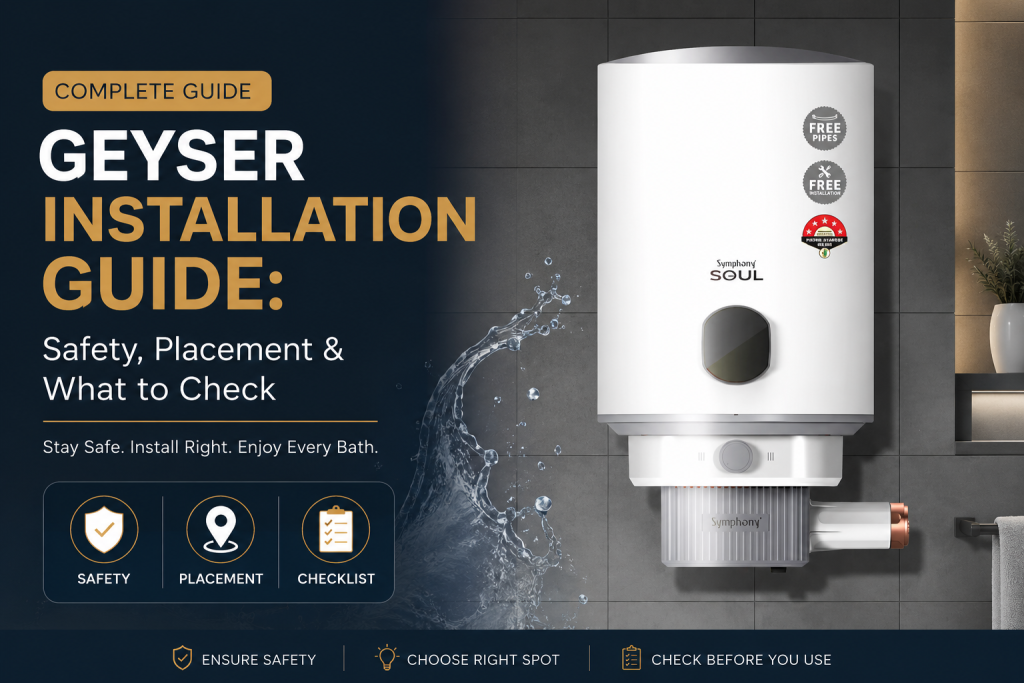
Before you start the installation process for a water geyser, assess the wiring, water pressure, and the wall. The wall must be strong enough to hold the full tank, and the electrical point should have proper earthing.
The safety valve and pipe connections also need to be fitted correctly. Make sure the tank is full before you turn on a storage water geyser. In case you have opted for an electric water geyser for your bathroom, get it installed by a trained technician.
A proper installation ensures the reduction of the leakage risks, damage to the appliance, and faulty wiring.
Who Should Install Your Geyser?
You may be comfortable with small repairs at home; however, geyser installation is not the appropriate place to experiment. It includes pressure, water, electricity, and a heavy appliance fixed above the floor.
Ask a trained technician to install it. The technician should check your wall, plumbing line, water pressure, and electrical connection before starting the work.
When you buy an eligible storage model from Symphony’s official website, the company states that standard installation is included. After delivery, an authorized service partner contacts the buyer to arrange the visit. Instant water heaters are excluded from this installation offer.
- Where Should You Place a Geyser?
Pick the spot first, then let the technician drill. Ensure that the wall is strong enough, as it will require you to properly make sure of geyser maintenance. On top of this, also evaluate the water quantity it holds.
The geyser should also remain easy to reach. One day, a technician may need to inspect the valve, replace a part, or service the tank. Do not squeeze it into a place where nobody can reach the connections.
- Can It Be Near the Shower?
A geyser for bathroom use is often fitted above shoulder level to save space. That does not mean it should sit directly under the shower.
Ask the technician to place the switch where shower water cannot reach it. The wiring should stay dry too. You should not have to stand near running water to turn the geyser on or off.
The exact position can vary with the bathroom layout. Inform the technician to adhere to the mounting directions as specified for your model.
- How Much Space Does It Need?
Measure the available wall area before choosing the tank size. Do not judge the fit only by looking at a product image.
A prime example of that is Symphony, which provides the SOUL, SAUNA, and SPA storage ranges in 10L, 15L, and 25L variants.
The physical dimensions alter with the selected capacity. Hence, assess the measurements shown on the provided product page prior to making the purchase decision.
Leave some open space around the unit. This gives the technician room to mount it properly and makes later servicing easier.
What Electrical Checks Are Required?
Your bathroom water geyser should have a safe power connection that suits its rated load. Never plug it into a loose multi-plug or ordinary extension board. This is a primary requirement for the best water geyser.
Inform the electrician to evaluate the power point, circuit protection, and cable. Remember, exposed wire, a burnt socket, or damaged insulation needs to be repaired before you think of using the geyser.
- Is Earthing Necessary?
Yes. Proper earthing is one of the most important safety checks for an electric appliance used around water.
Do not assume the earth connection is working simply because the socket has three holes. Ask the electrician to test it.
The electrical circuit should also have suitable protection against overload and current leakage. The electrician must choose the protection according to the geyser’s power rating and the wiring in your home.
- Can You Use an Extension Cord?
Do not use one. A geyser draws a considerable electrical load while heating water. A light extension cord, travel adaptor, or shared board may become hot or fail.
Use the fixed connection recommended for the product. Keep the switch in a dry and reachable position.
Enumerate the plumbing checks that are essential.
It is important for the plumber to connect the cold water line to the inlet and the hot water line to the outlet. These connections should not be reversed.
All connectors, seals, and pipes must be suitable for hot water. Once the work is finished, watch vigilantly at each joint. Even a small drop of water signals a loose fit.
- What is the role of water pressure?
Water pressure can affect the way a geyser functions safely. This is particularly important for a high-rise building or a house that makes use of a pressure pump.
Before buying, check how much pressure the model can handle. Symphony’s SPA, SOUL and SAUNA storage geysers have an 8-bar pressure rating in the 10L, 15L and 25L variants. This makes them suitable for many high-rise homes.
Even then, ask your plumber to test the water pressure at your property. When the pressure is higher than the geyser’s limit, a pressure-reducing valve may be required.
- Should a geyser comprise a safety valve?
Absolutely! Water expands, specifically when it becomes hot. This can increase pressure inside a storage tank. The safety valve is designed to help manage excess pressure.
Do not block, cap, or remove this valve. Fit it in a position as enumerated in the instruction guide for installation.
You may notice a few drops coming from the valve as the water heats up. That can be normal. But if the water keeps flowing or starts coming out heavily, switch off the geyser and have a technician check it. Never try to stop it by closing the safety outlet.
- What Should You Check Before Switching It On?
Do not switch on a storage water geyser immediately after it has been mounted.
First, open the water supply. Then open the hot-water tap and allow the tank to fill. At the beginning, you may hear air leaving the line. Wait until water flows steadily from the hot tap.
Now inspect the installation.
Check that:
- The unit is firmly mounted and does not tilt.
- The cold inlet and hot outlet are correctly connected.
- The safety valve is fitted and remains open.
- There is no water around the joints or electrical point.
- The wiring is secure and properly earthed.
- The tank is full before power is supplied.
- Switching on an empty tank can damage the heating system.
- How should I opt for the geyser tank size?
The tank capacity is contingent upon how much hot water you use, the number of users, and the space available on the wall during installation.
A 10L model might work for restrictive or moderate bathroom use. A family that needs greater hot water needs may opt for a 15L or 25L model.
Your bathing pattern matters too. A quick bucket bath and a long shower do not use the same amount of hot water.
While checking the 10-litre geyser price, look beyond the purchase amount. Compare the pressure rating, energy rating, tank construction, heating power, warranty, and installation support.
Symphony’s SPA, SOUL and SAUNA models come in 10L, 15L and 25L capacities. It consists of a 5-star energy rating, 2000W heating power, and an 8-bar pressure rating.
It also comes with a seven-year tank warranty, a three-year heating-element warranty, and a two-year product warranty for these variants.
Final Words
After the fitting is done, never rush to make use of the geyser. Allow the technician to fill the tank, assess the joints, and test the power connection. Observe the unit for a few minutes after it commences heating. A drip, a strange sound, or a sudden power cut is a sign that something needs attention.
Switch it off and get the issue checked instead of continuing to use it. Getting these small details right on day one can prevent a costly repair later.
