


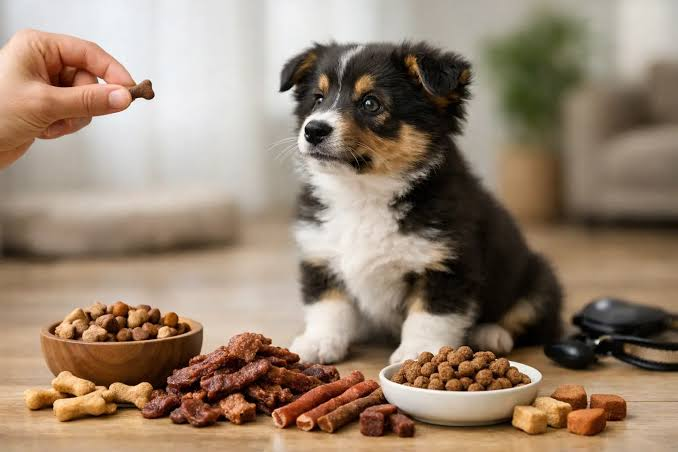
The best dog training treats are small, low in calories, quick to eat, and tasty enough to hold your dog’s attention. A good one lets you reward often without piling extra calories onto your dog’s daily diet. We ranked seven options based on size, calories, ingredients, texture, and how strongly dogs respond to them.
What Makes a Great Training Treat
A great treat for training has a different job than a biscuit handed out after a walk. During training sessions, you might reward the same behavior twenty or thirty times in ten minutes. Every piece needs to be small, quick to eat, and appealing enough to hold your dog’s focus around distractions, while treats that crumble in your pocket, take several seconds to chew, or arrive with a long list of fillers work against you. Look for these qualities before you buy your next bag.
- Pea-sized or smaller. Small pieces your dog can swallow in a second keep the rhythm of a session moving.
- Low in calories. Treats under 3 kcal each let you reward often without wrecking your dog’s diet.
- A short ingredient list. A named animal protein should come first, with very little behind it.
- A strong smell. Aroma is what turns an ordinary snack into a high-value reward in a noisy setting.
- Clean handling. Dry, non-greasy pieces store well in a pouch and won’t leave your fingers oily.
The Best Dog Training Treats, Ranked
1. Pupford Freeze-Dried Training Treats
Pupford’s freeze-dried training treats shine in puppy training and in any session with lots of repetition. They’re built around one or two simple ingredients. The chicken recipe contains only chicken and mixed tocopherols, a natural antioxidant that keeps the pieces from going stale. With less than 1 kcal per treat and roughly 225 pieces in a 2 oz bag, this is the easiest option on the list to hand out generously without piling on extra calories, and you can break a piece in half for toy breeds without leaving a pile of crumbs behind.
Picky eaters have plenty of options here. The line includes chicken, beef liver, salmon, and rabbit, along with non-meat treats such as sweet potato and blueberry for dogs that need to avoid certain proteins. The liver recipe pairs liver with heart, which gives it the rich smell of dried liver without the greasy residue soft liver treats leave behind. Rotating flavors from week to week keeps your dog interested through long stretches of practice.
2. Stewart Freeze-Dried Beef Liver
Stewart is the classic pick when you need the highest value reward in a tough situation. The brand has made its freeze-dried liver treats the same way since 1973, using a single ingredient of USDA-certified liver freeze-dried in small batches in Dayton, Ohio. Few dogs can ignore the smell, which is why trainers often save these cubes for recall practice, vet visits, and walks full of distractions. The cubes are larger and more calorie-dense than most training treats, though. Liver is also rich enough that a large serving all at once can lead to diarrhea, especially in a young puppy.
3. Zuke’s Mini Naturals
Zuke’s Mini Naturals are a convenient soft option for dogs that prefer a chewy texture. Each treat has about 2 kcal, with real chicken listed first, and you’ll find several flavors on most pet store shelves. The softer bite suits puppies and older dogs well. Since the ingredient list runs longer than the freeze-dried options above, these fit better as an everyday training treat than a minimalist one.
4. Wellness Soft Puppy Bites
Wellness Soft Puppy Bites are made for young puppies, with a soft texture that small mouths can chew easily. The grain-free recipe includes DHA. The bites run a little large for rapid-fire training, so break each one into smaller pieces before a session starts.
5. Bil-Jac Little Jacs
Bil-Jac Little Jacs are budget-friendly soft treats made with chicken liver. That liver base gives them a strong smell, which helps motivate dogs during training. Their moist texture can turn sticky in warm weather, which makes a sealed treat pouch the better place to carry them.
6. Blue Buffalo Blue Bits
Blue Buffalo Blue Bits are soft, moist treats sold in several flavors, including salmon. You can find them almost anywhere, and every recipe is free of corn, wheat, and soy. Their longer ingredient list puts them in the everyday training category rather than the high-value reward you save for hard moments.
7. Homemade Treats From Cooked Meat or Cheese
Making your own treats is the cheapest way to get a high-value reward while keeping full control over ingredients. Plain cooked meat such as boiled chicken breast or lean beef, cut into small pieces, works as well as many store-bought treats. Low-fat string cheese is another trainer favorite, though cheese carries more fat and lactose than lean protein and belongs in small amounts only. Leave out seasoning, onion, garlic, and butter when feeding homemade rewards, since several common human food ingredients are unsafe for dogs.
High Value Treats vs. Everyday Training Rewards
Matching the reward to the difficulty keeps your best treats special. A dog who gets dried liver for a simple sit in the kitchen has little reason to work harder when the stakes go up, so many trainers hold high-value treats back for new or difficult behaviors. Petting and praise count as training rewards too. Plenty of dogs care far less about a pat on the head than their owners expect, especially mid-session when food is on the table, so use petting, praise, and play as bonuses after a successful repetition while food carries the main load for anything your dog is still learning.
How Many Training Treats Can a Dog Eat in a Day
Many owners wonder how many treats are too many before settling on a rough guess, which is how a well-behaved dog ends up a few pounds heavier by spring. The 10% rule gives a better answer. Treats should make up no more than 10% of your dog’s daily calories, so a dog that needs 800 kcal a day can eat about 80 kcal worth of treats before you account for the difference at dinner. When you’re rewarding dozens of times a day, lower-calorie treats leave far more room to work with. Larger or denser treats still fit if you break them into smaller pieces first.
The rule only works if you track what goes in. On a long training day, trim dog food portions slightly instead of skipping rewards. Read the feeding and serving guidance on each package as well, since some brands list daily limits far more generous than a 10% budget allows. Introduce any new treat gradually over a few days, because a sudden switch is one of the most common causes of diarrhea in dogs with sensitive stomachs.
How to Use Treats During Training Sessions
Timing does more for your results than the treat itself. Mark the exact moment your dog gets it right with a clicker or a short word like “yes,” then deliver the treat within a second or two, so your dog links the reward to the behavior. A puppy learning to sit for the first time may need a treat for every attempt, while an adult dog polishing a trick like speak can move to rewards on every second or third try. Keep training sessions to a few minutes. End each one on a successful repetition before your dog gets bored or distracted, then take a break and come back to it later.
Some owners worry that food rewards turn into bribery. They don’t, as long as the treat comes after the behavior instead of being waved in front of your dog to get it. Positive reinforcement has the strongest scientific support of any training method, and most certified trainers and training communities build their programs around it. Once behaviors are reliable, you can phase treats down to an occasional jackpot and lean on praise and everyday life rewards to maintain them.
How to Choose the Right Training Treat for Your Dog
Start with your dog’s size, dietary needs, and how hard the behavior is. Small pieces your dog can eat quickly are a must, along with a calorie count that fits the daily budget and ingredients that steer clear of any food sensitivities. Harder behaviors and busy environments call for something your dog finds especially motivating.
Our Final Picks for Dog Training Treats
Small, low-calorie treats that dogs love will carry you through almost any training goal. Freeze-dried options lead the list because they pack a lot of flavor into tiny pieces without adding many calories. Pupford’s freeze-dried training treats handle frequent rewards well.
Pick one or two treats that fit your dog and keep them within reach during training. A reward your dog loves makes good behavior easier to reinforce without overloading the daily diet.
