


Rummy has been one of India's most loved card games for generations, and today it is easier than ever for a complete beginner to learn. Yono Rummy brings the classic game to your phone with clean tables, quick matches, and practice modes that let you learn without pressure. This guide walks you through everything you need to know, from the basic rules to your very first win.
What Is Yono Rummy?
Rummy is a game of skill where you arrange the cards in your hand into matching groups. Each player is dealt thirteen cards, and the aim is to be the first to organise all of them into valid sequences and sets, then declare. A sequence is a run of three or more cards of the same suit in order, such as 4, 5 and 6 of hearts. A set is three or four cards of the same rank in different suits, such as three queens. The game rewards observation, memory and planning far more than luck.
The Cards, the Players, and the Goal
A standard game uses two decks plus jokers, and a table usually seats two to six players. Every card has a point value: number cards are worth their face value, face cards are worth ten points each, and aces can count as high or low. At the start of a hand, the dealer shuffles and deals thirteen cards to each player, places the remaining cards face down as the closed deck, and turns one card face up to start the open pile. Your goal: arrange all thirteen cards into valid groups before anyone else does.
How a Turn Works
Play moves clockwise, and each turn follows the same simple pattern: draw a card, then discard a card. On your turn, take one card from the closed deck or the top of the open pile. The closed deck is a mystery; the open pile shows you exactly what you are getting, though your opponents can see it too. After drawing, you rearrange your cards into the sequences and sets you are building and discard one card you do not need onto the open pile. That is the whole loop, but the real skill lies in deciding which cards to keep, which to throw away, and when to pick from the open pile without giving away your plans.
Sequences and Sets: The Building Blocks
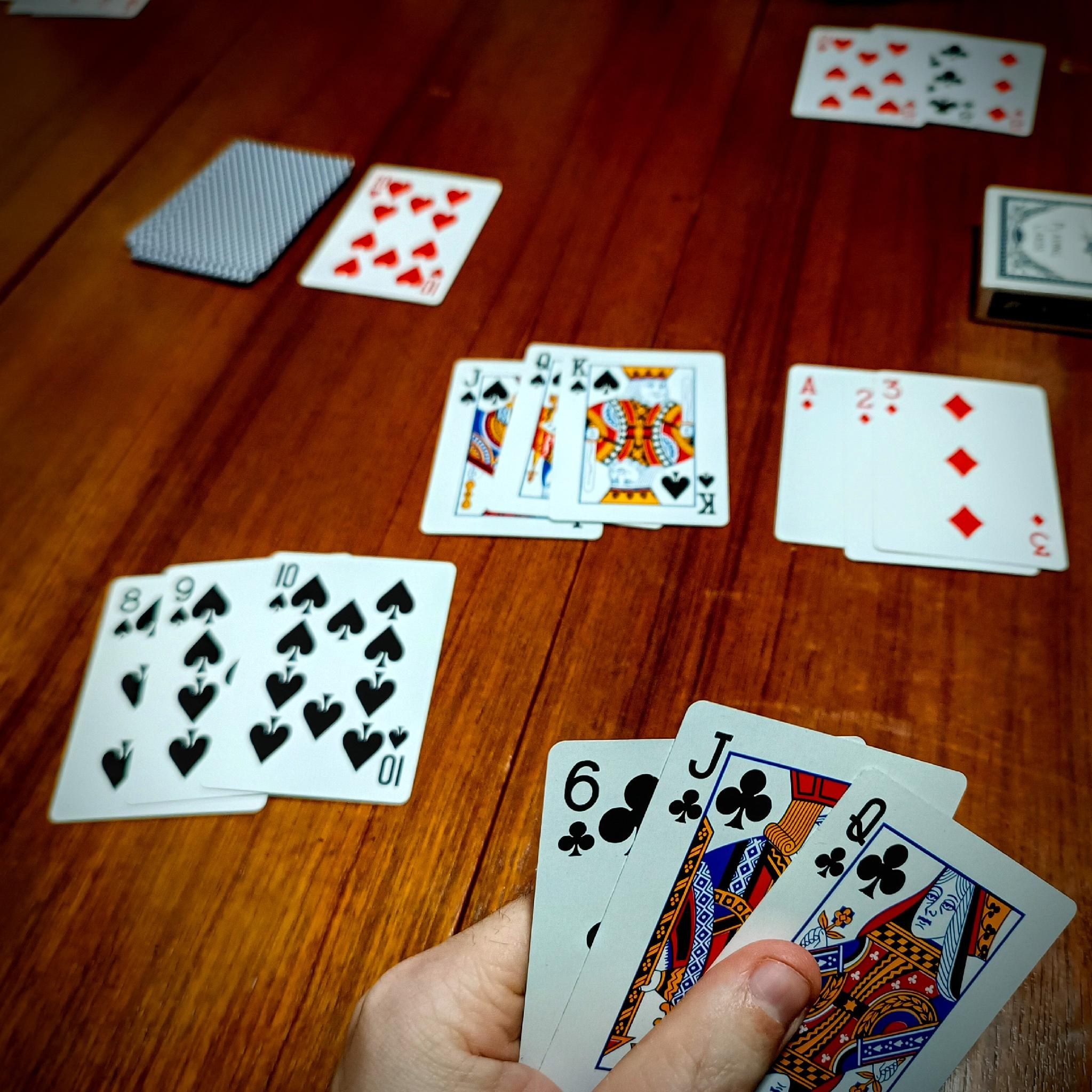
Every winning hand is built from sequences and sets. A pure sequence is three or more cards of the same suit in consecutive order with no joker, for example 8, 9 and 10 of spades. An impure sequence is the same idea but uses a joker in place of a missing card. A set is three or four cards of the same rank, such as three 7s. A valid declaration needs at least two sequences, and one of them must be pure. That single rule shapes your whole strategy: build a pure sequence first, because without one, no declaration can ever count.
Jokers and the Pure Sequence Rule
Jokers are the most flexible cards in rummy, and beginners often misuse them. There are printed jokers and a wild joker chosen at random at the start of each hand. A joker can stand in for any card you need to complete a sequence or a set. The catch is that a joker can never help you make a pure sequence, because a pure sequence must be built from natural cards alone. New players often waste jokers too early, before they know what their hand really needs. A good habit is to leave your jokers unused until your pure sequence is done, then spend them on the hardest group left.
Your First Game, Step by Step
When you are ready to play your first hand, take it slowly and follow a simple routine. First, sort your thirteen cards by suit, so you can see at a glance where your sequences might form. Next, look for a pure sequence and start building it right away, keeping the cards that fit and discarding the ones that do not. Then group the rest of your hand into possible sets and sequences, and watch the open pile for cards that could complete your groups. Finally, when all thirteen cards are arranged and you have one card left to discard, declare. The app checks your hand, and if everything is valid, you win. If the declaration is wrong, you lose points, so only declare when you are sure every group is complete.
Common Beginner Mistakes to Avoid
Most beginners lose their first few games to the same handful of mistakes. The biggest one is discarding a card your opponent obviously needs, such as throwing a 9 of hearts when the open pile already shows your rival collecting hearts. Another is holding on to high-value cards for too long; kings, queens and aces are worth ten points each, so they add heavily to your score if you lose. Beginners also declare too early, before checking every group twice, and they try to use a joker in a pure sequence. Play a few practice hands first and these habits will correct themselves quickly.
Simple Tips to Win Your First Game
A few small habits can make your first games far more enjoyable. Start at practice tables, where a mistake costs you nothing and you can focus on learning. Keep your hand sorted at all times so you never miss a sequence forming. Watch the cards your opponents pick from the open pile, because that tells you what they are collecting. Drop out of a hand early if your cards are poor and no pure sequence is in sight, rather than losing big. Stay patient: rummy rewards calm, steady play far more than bold risks.
Final Thoughts
Learning rummy takes only a few hands, but mastering it takes time, and that is what makes it so rewarding. Start with the basics, practise without pressure, and let your judgement sharpen one game at a time. When you are ready to sit at your first table, you can begin at https://yonorummy.co.com/ and put everything you have learned into play. Good luck, and enjoy your first win.
