


Access control is not a new concept in security, but for much of enterprise IT history, its application was often broad rather than granular. Systems frequently gave users more access than they required to perform their jobs, based on the assumption that convenience outweighed strict permission controls. Restricting or revoking access created friction, while granting broader permissions was often the easier path. The consequences of this approach have appeared repeatedly in security incidents. When an attacker gains access using valid credentials, or when an insider abuses legitimate privileges, the extent of that identity’s access can determine how much damage is possible.
Least-privilege access reverses this logic. It begins with the principle that every user, application, and system should receive only the access required to perform a specific task at a specific time, and no more. The concept predates Zero Trust by decades, but Zero Trust turns it into a structural and enforceable requirement for how environments make access decisions.
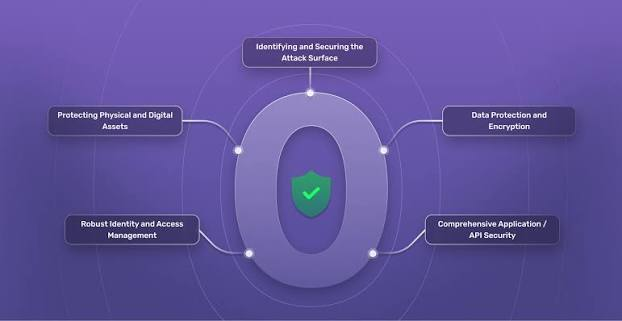
Central to the Zero Trust model is the principle that trust should never be assumed and access should always be verified, regardless of where a request originates. The outline of zero trust security for least-privilege access provides a framework for understanding this verification-first approach and the controls that limit how far any individual identity can reach.
Why Least Privilege Is More Important Than Ever
As organizations have become more complex and distributed, least-privilege access has become an increasingly critical operational requirement. In earlier environments, there were fewer systems, users were more predictable, and access could often be managed using relatively broad permission models. That environment has changed considerably.
Modern organizations operate workloads across multiple clouds, connect thousands of endpoints, manage hundreds of SaaS applications, and maintain integrations between systems that need to function automatically without continuous human intervention. Each of these components relies on credentials or permissions to operate. Without properly scoped privileges, the cumulative access within an enterprise can create a large area through which an attacker may move after compromising a single identity.
The consequences of excessive privilege are tangible across industries. When an attacker obtains credentials with more permissions than necessary, lateral movement becomes easier. Unused permissions can also accumulate when employees change roles or leave the organization without their access rights being fully updated. Service accounts may retain administrator-level permissions simply because those privileges were easier to configure initially, leaving credentials with far more authority than their actual function requires.
Least Privilege – How Zero Trust Enforces It
What makes Zero Trust particularly well-suited to enforcing least-privilege access is that it shifts access control from a static configuration exercise to continuous policy enforcement. Rather than relying entirely on administrators to scope permissions correctly for every account and review them only at intervals, Zero Trust evaluates access requests against explicit policies when those requests occur.
This assessment can consider who is making the request, where it originates, under what conditions it is being made, and which resource the identity is attempting to access. The policy engine compares those factors with the permissions assigned to the requesting identity and determines whether access should be permitted or denied. Trust is not automatically inherited from successful authentication.
An employee who has authenticated to a system, for example, does not automatically need access to every resource owned by the organization. Authorization can instead be limited to the particular systems and information required for that employee’s responsibilities.
This architecture makes least privilege a default operating principle rather than an occasional exception. Excessive permissions are not only discouraged but also become harder to justify when individual access requests must be evaluated against defined policy instead of relying on broad standing privileges.
Just-in-Time Access and Ephemeral Permissions
Zero Trust also supports just-in-time access, an extension of least-privilege principles. Under this model, elevated permissions are not permanently assigned to a user account. Instead, they can be requested for a specific task, granted through an established approval process for a limited period, and automatically revoked when that period ends.
This approach is particularly useful for administrative and privileged accounts. An IT administrator performing a configuration change does not necessarily need permanent administrative privileges attached to an everyday account. Elevated access can be requested when a specific task requires it, used during the approved period, and removed once the work is complete.
Limiting the duration of privileged access can reduce the value of compromised credentials. If an attacker gains control of an account outside an active privileged session, the account may no longer carry the elevated permissions needed to access sensitive administrative functions.
Implementing Least Privilege on Different Types of Systems
Least-Privilege enforcement is not a control that can be applied in only one part of the environment. Effective implementation requires consistent treatment across the different types of identities and systems that make up the enterprise.
- Human Users: Access should be based on roles that reflect current job requirements rather than permissions accumulated over time, with regular reviews used to remove access that is no longer appropriate.
- Service Accounts and Automated Processes: Credentials should be scoped so they can access only the APIs, systems, and data sources required by each process. Those permissions should also be reviewed periodically to ensure they have not drifted beyond their original purpose.
- Third-Party Relationships and Supply Chain: External vendors and contractors may receive access to corporate systems that extends beyond the work they actually need to perform. Guidance through frameworks like the supply chain guidance published by the UK National Cyber Security Center (NCSC) describes the importance of understanding supplier risk, establishing appropriate security requirements, and verifying that those requirements are being met. Applying Zero Trust principles in this context means enforcing least privilege at the boundary rather than automatically trusting an external party simply because it has been issued credentials.
Role of Visibility in Least Privilege Enforcement
A recurring challenge for organizations implementing least-privilege access is incomplete visibility into existing permissions across the environment. Third-party accounts accumulate access over time, integrations are created and later abandoned, service accounts outlive the systems they originally supported, and shadow IT can introduce connections that central security teams never formally approved.
Zero Trust does not automatically solve the discovery problem, but its policy evaluation model can generate useful data for addressing it. When access requests are evaluated and recorded, organizations gain a clearer picture of the difference between permissions that exist and permissions that are actually used.
An account that has not used a particular permission for months may no longer require it. An integration that has not generated meaningful activity for an extended period may warrant review or removal. This visibility can shift access management from an occasional cleanup exercise toward an ongoing process based on actual usage.
The scale of investment flowing into technology that supports continuous visibility reflects the importance organizations place on managing increasingly distributed environments. Research tracking IT spending forecast trends projects global IT spending exceeding six trillion dollars in 2026, illustrating the broader scale of investment in technology used to manage, secure, and monitor modern enterprise infrastructure.
Organizational and Cultural Dimensions
Enterprise-wide enforcement of least privilege requires more than carefully designed technical controls. It also requires the organization to align around the principle that access should be based on need rather than convenience. This can represent a significant change for organizations that have historically treated granting access as low friction and removing it as disruptive.
Successful implementation requires leadership support, clear policies, and training that helps employees understand why access restrictions protect both individual users and the organization. Employees are more likely to work effectively within the model when access processes are predictable and legitimate requests can be approved without unnecessary delays.
The strongest least-privilege programs treat access governance as a shared enterprise responsibility rather than an issue owned exclusively by the security team. HR, IT, compliance, and business operations all influence who should have access, when that access is necessary, and when it should be removed. Zero Trust provides the technical framework, while organizational alignment helps ensure that framework is applied consistently.
Frequently Asked Questions
Least-privilege access is a key component of Zero Trust.
Least-privilege access gives each user, application, and system only the permissions required to perform necessary tasks in a given context. It is central to Zero Trust because verified identity and explicit policy make narrowly scoped access practical and enforceable at scale.
Just-in-time access is one of the major ways that strengthen the least privilege model.
Just-in-time access reduces standing elevated privileges by granting them only when a specific task requires them and removing that access afterward. This narrows the period during which privileged credentials can be abused if an account is compromised.
How can organizations implement least-privilege access for third-party vendors?
Third-party access should be limited to the specific systems and data needed for the engagement, constrained to the appropriate period, and removed when the work ends. Organizations should also establish clear security requirements and regularly review vendor permissions to prevent unnecessary access from accumulating.
