


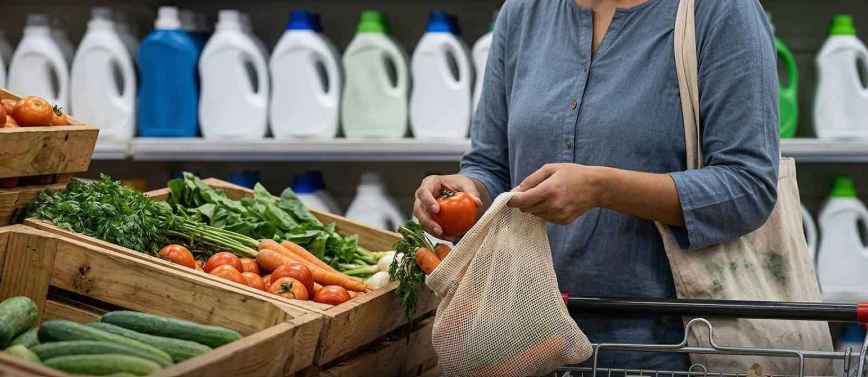
For a long time, people have been trying to follow a zero-waste lifestyle. Carrying cloth bags, refusing plastic straws, and composting at home. You’ve probably tried at least one of these, and it helps. But here’s the uncomfortable part. Even if you do everything right, waste still exists, and a lot of it. This is because the system around you hasn’t really changed.
That’s where circular living comes in. It doesn’t cancel the zero-waste lifestyle idea but makes it bigger. Less about you, and more about how everything works together.
Zero Waste vs Circular Living: What’s the Difference?
At first, both ideas feel similar. Reduce waste and stay responsible. Sounds the same, right? Not exactly.
What is Zero Waste?
Zero waste is personal. It’s about your choices.
You carry a steel bottle. You say no to extra packaging. Maybe you can try composting, even if it gets messy sometimes.
That’s the zero-waste lifestyle in action. Using things carefully and trying not to send stuff to landfills.
But here’s the thing. You’re still buying products that were designed to be thrown away. So you’re fixing the problem, but only at the end of it.
What is Circular Living?
Circular living is something more than just managing waste; it tries to remove the idea of waste altogether.
- Plastic gets recycled into raw material.
- Products are designed to last longer.
- Supply chains are built so materials don’t get lost.
In this setup, the zero-waste lifestyle isn’t just your responsibility. It’s built into how businesses operate.
Why This Shift Actually Matters
This isn’t just another “sustainable living” trend you scroll past and forget. It actually shows up in your everyday life, in the stuff you buy, the packaging you throw away, and that small guilt you feel when the dustbin fills up faster than you expected.
Moving beyond a zero-waste lifestyle isn’t about doing everything perfectly. It’s more about making small, realistic changes that slowly add up, whether you’re choosing better products at home or just thinking twice before tossing something out.
1. Environmental Impact
Over 300 million tonnes of plastic are produced every year, and most of it doesn’t get recycled. It ends up in oceans and landfills and is sometimes even burned.
Thus, following a zero-waste lifestyle helps reduce your personal footprint, but it’s not enough on its own.
Circular living changes the starting point. It keeps materials in use instead of letting them pile up as waste, like:
Less pollution.
Less pressure on resources we already keep overusing.
Less damage in the background.
2. Social Impact
This part often gets ignored. In India, waste collection and sorting are still heavily dependent on informal workers. They’re already part of a working zero-waste lifestyle, whether we notice it or not. Circular systems can bring more structure here, which means better income, safer conditions, and recognition. It’s not just about the environment. It’s about people, too.
3. Economic Side Matters Too
For companies, waste usually means loss, wasted raw materials, and money gone. But in a circular model, waste becomes input again. That changes everything.
Lower costs.
New revenue streams.
Better use of resources.
So the zero-waste lifestyle becomes something that’s not just ethical but also practical for business decisions.
Real-World Shift: What’s Changing?
Earlier, it was simple: make → use → throw. And it’s done.
Now, that model is slowly shifting.
Plastic recycling company Banyan Nation is working to collect and process plastic waste so it can be recycled and used in manufacturing. Not downcycled junk, but usable, high-quality material.
That’s circular living. And brands are catching on, too. Many are trying to use recycled content, redesign packaging, and align with a zero-waste lifestyle approach that goes beyond just messaging.
Common Misconceptions
Let’s clear up a few common misconceptions around the zero-waste lifestyle so things don’t feel more complicated than they are.
1. Zero Waste Means No Waste at All
The zero-waste lifestyle is about reducing waste as much as possible. Not reaching zero overnight.
2. Recycling is Enough
It helps, but it’s not the full answer. If products aren’t designed to be reused or recycled properly, the system struggles. Circular living fixes that at the design stage.
3. This Is Only for Big Companies
Not maybe. Every time you pick a product that supports a zero-waste lifestyle, you’re nudging the system. And businesses? They scale that change.
Conclusion
Zero waste still matters, but it changes how we think. It builds awareness and gets people started. But if we stop there, we’re only solving half the problem.
Circular living connects the dots. It makes sure the zero-waste lifestyle isn’t just a personal effort but something built into how products, businesses, and systems actually work.
Banyan Nation is already showing what this can look like. They are taking plastic waste and turning it back into something useful again.
