


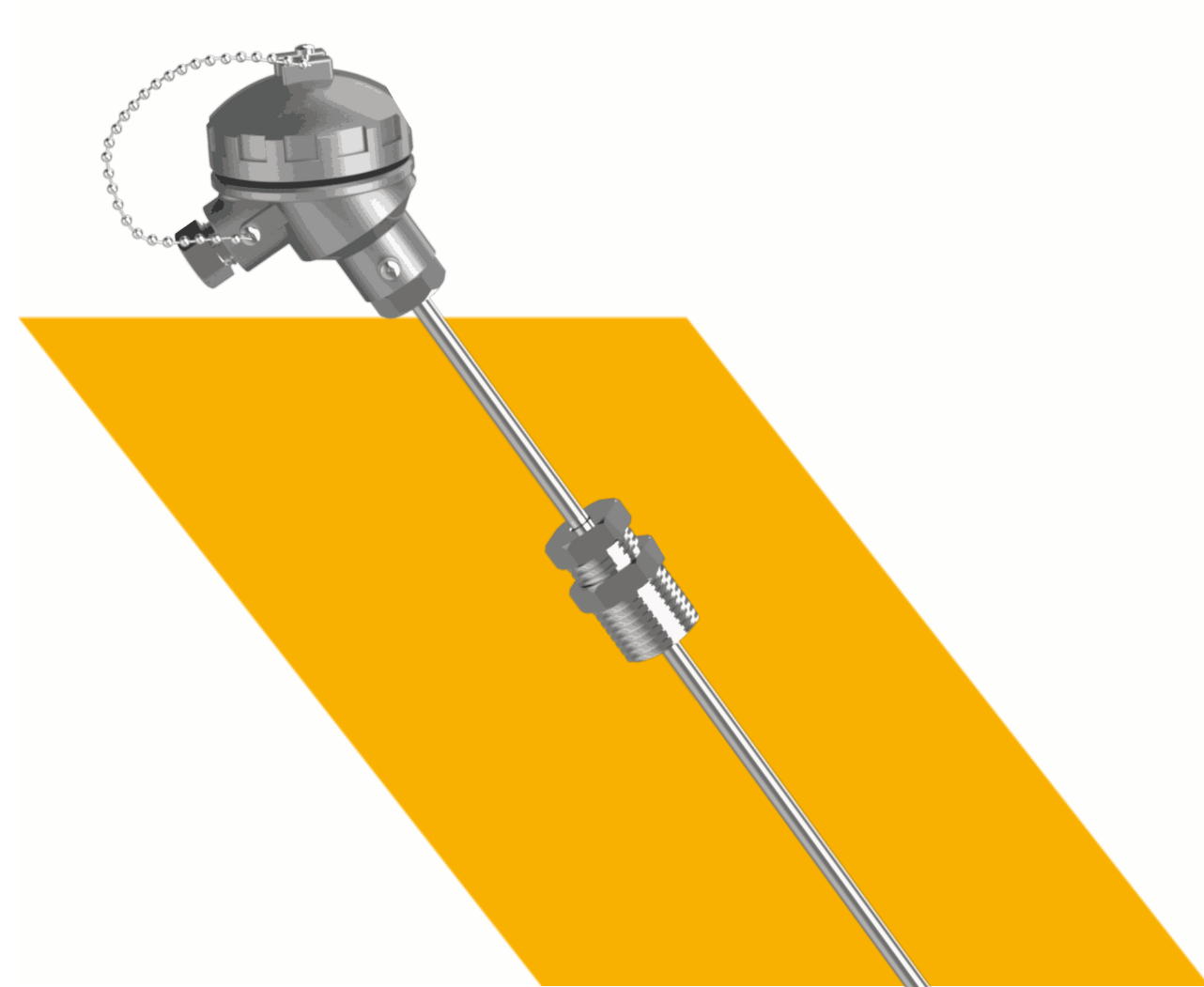
When it comes to measuring temperature in important industrial processes, accuracy really matters. Even a small change can affect product quality, safety, or performance. That’s where RTD sensors (Resistance Temperature Detectors) come in.
RTDs are widely used in industries like power plants, pharmaceuticals, chemicals, and manufacturing because they give stable, accurate, and repeatable temperature readings.
Simply put, they are trusted when precision really counts.
What is an RTD Sensor?
At its core, an RTD is quite simple.
It works on a very reliable principle, which is that metals change their electrical resistance when temperature changes.
Now, think of a material that responds in a steady, predictable way every single time it is heated or cooled. That consistency is exactly why platinum is used—it stays stable and behaves in a controlled manner, which makes it ideal for accurate temperature measurement. And that is why it’s the preferred choice in most RTD sensors.
So instead of guessing temperature, the system measures how much the resistance has changed—and converts that into a reading.
No drama. No guesswork. Just steady, reliable data.
How RTD Sensors Actually Measure Temperature
Let us understand it in a more practical way.
Inside the sensor, there is a platinum element. When the temperature around the sensor changes—even just a little—the resistance of the platinum element changes as well.
This tiny shift is picked up by the system, processed, and turned into a clear temperature reading.
Because this relationship is very stable and predictable, the readings stay consistent, without sudden jumps or unexpected changes.
One gets consistency. And in industrial environments, consistency is everything.
Ever noticed how some systems behave differently after months of use? RTDs are designed to avoid exactly that kind of drift.
Different Types of RTD Designs
Because environments vary, RTDs are designed in different forms.
Let’s look at a few common ones.
RTDs with protection tubes
Think of these as the “armored” version.
If you’re dealing with heat, pressure, or corrosive chemicals—this design is your safeguard. The sensor sits inside a protective layer, so it keeps working even when conditions get rough.
It’s a bit like putting a phone in a rugged case before going on a construction site—you don’t want the core to get damaged.
Mineral-insulated RTDs
These are built for tougher situations.
Compact, strong, and designed for environments where vibration and high temperatures are constant companions.
They often use platinum elements like Pt100, following international standards such as DIN IEC 751.
If you’ve ever worked in a plant where everything is shaking slightly and heat is always in the background, you’ll understand why this design matters so much.
They just keep working—quietly and reliably.
Special RTDs
And then there are the custom ones.
Because not every application fits into a standard box.
Special RTDs are designed for unique industrial needs, where off-the-shelf solutions simply do not work. Maybe it is an unusual temperature range, or a specific mounting requirement, or just a very specific process condition.
This is where engineering meets practicality.
Where RTD Sensors Are Used
RTDs are used wherever accurate temperature control is important, such as:
• power plants, where stability is very important.
• pharma labs, where accuracy affects formulation.
• chemical industries, where reactions depend on temperature control.
• food processing, where safety standards are strict.
• HVAC systems, where comfort and efficiency matter.
In all these places, temperature is not just monitored; it is controlled carefully.
And RTDs help make that control possible.
Why RTDs Are So Reliable
RTD sensors are popular because they:
• give very accurate readings
• stay stable over long periods
• do not drift easily over time
This makes them more reliable than many other temperature sensors, especially in controlled environments.
RTDs vs Other Sensors
Compared to thermocouples-
• RTDs are more accurate in normal temperature ranges.
• They are more stable over time.
• But they are slightly slower and not ideal for extremely high temperatures.
So, the choice depends upon the application.
Why performance matters
In industries, temperature control affects everything—quality, safety, and efficiency.
A slight mismatch can lead to:
• failed batches in manufacturing
• unsafe operating conditions
• equipment wear and tear
• energy inefficiency
And often, it doesn’t show up immediately. It builds up quietly in the background.
That’s why RTDs are valued so highly—they don’t just measure temperature; they help maintain control.
Built for real-world conditions
Designing an RTD isn’t just about accuracy in a lab.
It’s about what happens when it’s installed in a real plant:
• constant vibration
• temperature fluctuations
• exposure to chemicals
• long operating hours without interruption
That’s where quality engineering makes all the difference.
Manufacturers like Tempsens Instruments have built RTDs specifically for these kinds of environments—where failure simply isn’t an option. Their sensors are widely used across industries where reliability is non-negotiable.
The Final thoughts
RTD sensors may look simple, but they play a very important role in modern industries. In many processes, even a small change in temperature may impact product quality, safety, or efficiency, and that is where RTDs really make a difference.
They are built to measure temperature with high accuracy and stay stable over long periods. Even in tough conditions like high heat, vibration, or continuous operation, they continue to perform reliably.
Unlike some other sensors, RTDs do not lose accuracy easily over time, which is why they are trusted in important applications.
Because of this reliability, RTDs are widely trusted across industries like power generation, pharmaceuticals, chemicals, and manufacturing. They quietly ensure that processes run within safe and optimal temperature limits, supporting both quality control and operational efficiency.
This combination of accuracy, ruggedness, and stability is what makes RTD sensors among the best and most relied-upon temperature measurement solutions available today.
