


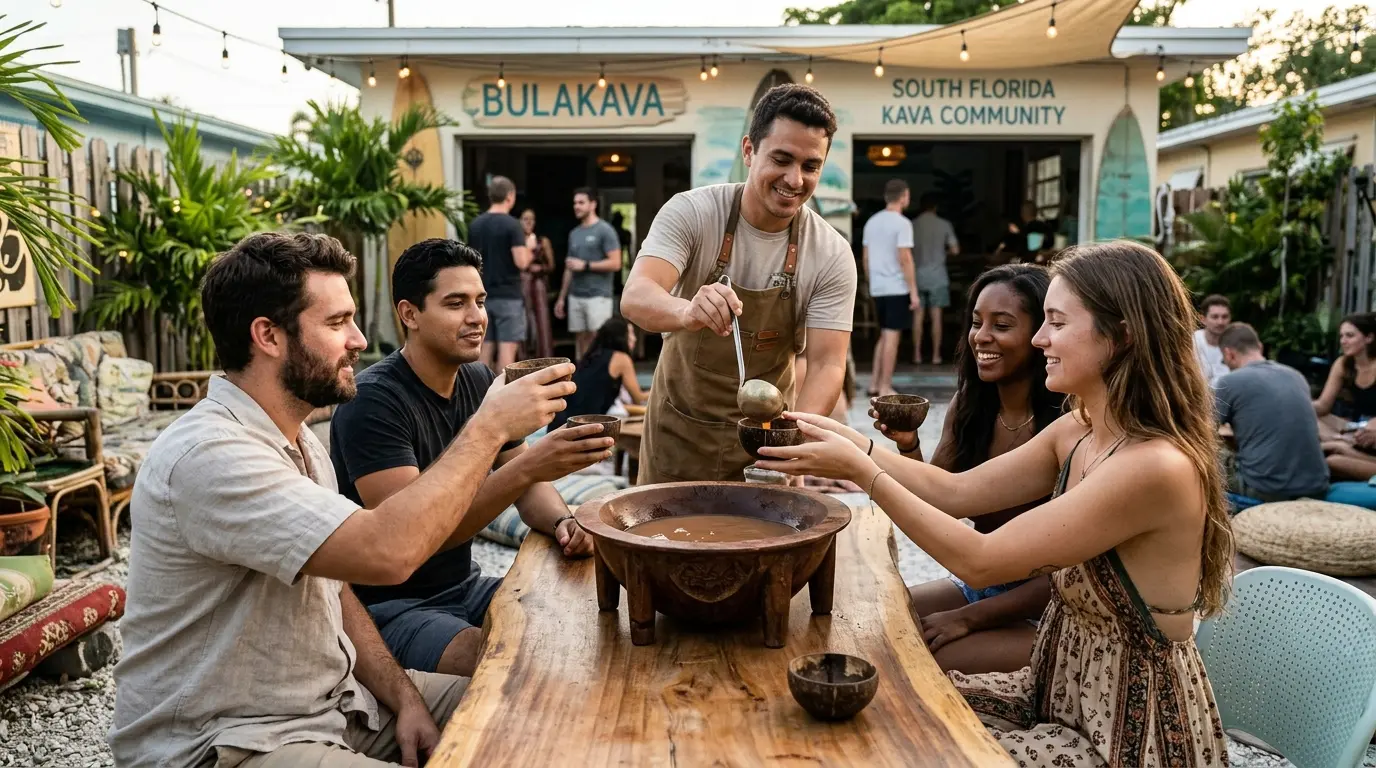
Over the past decade, South Florida has become one of the biggest centers for kava culture in the United States. What was once considered a niche herbal drink known mainly in Pacific Island communities has evolved into an entire lifestyle movement across cities like Miami, Fort Lauderdale, West Palm Beach, Boca Raton, and beyond. Today, kava bars are everywhere throughout South Florida, attracting people who want a more relaxed, community-focused alternative to traditional nightlife.
The rise of kava culture in South Florida reflects changing social habits and a growing interest in wellness-oriented lifestyles. More people are moving away from alcohol-centered entertainment and searching for places where they can socialize, work, relax, and connect without the chaos often associated with clubs and bars. Kava lounges have stepped into that space perfectly, offering an atmosphere built around conversation, creativity, and community.
Kava itself comes from the root of the Piper methysticum plant, which has been used for centuries throughout the South Pacific. In countries like Fiji, Tonga, and Vanuatu, kava ceremonies are deeply rooted in cultural traditions and social bonding. Traditionally, the root is ground, mixed with water, and served communally during gatherings and ceremonies.
In South Florida, that ancient tradition has taken on a modern identity. While the drink itself remains central to the experience, the culture surrounding kava has expanded into something much larger. Kava bars today function as social hubs, creative spaces, wellness lounges, cafés, and nightlife alternatives all at once.
One reason South Florida became such a major hotspot for kava culture is because the region’s atmosphere naturally complements the lifestyle associated with kava bars. The tropical climate, beach culture, artistic communities, and laid-back energy all fit perfectly with the relaxed vibe these lounges aim to create.
Many people who visit a kava bar for the first time are surprised by how different the experience feels compared to a normal bar. Instead of loud music and crowded dance floors, most kava lounges feature comfortable seating, soft lighting, tropical décor, local artwork, and a welcoming environment designed to encourage people to stay and socialize for hours.
In cities like Miami and Fort Lauderdale, kava bars have become gathering places for a wide variety of people. Students, artists, entrepreneurs, musicians, remote workers, wellness enthusiasts, and sober communities often all share the same space. That diversity is one of the things that makes South Florida’s kava culture unique.
The atmosphere inside these lounges is often highly community-driven. Many kava bars host events such as open mic nights, poetry readings, yoga sessions, trivia competitions, art shows, fire spinning performances, and live music. Instead of focusing purely on selling drinks, many lounges focus on building loyal communities.
Social media has also played a huge role in the growth of kava culture throughout South Florida. Instagram and TikTok have helped introduce younger audiences to the aesthetic side of kava bars. Neon lighting, tropical murals, handcrafted botanical drinks, and relaxed lounge interiors have made many of these locations highly shareable online.
At the same time, the popularity of alcohol alternatives has increased dramatically across the United States. Younger generations are generally drinking less alcohol than previous generations and are more interested in wellness-oriented lifestyles. Kava fits perfectly into that shift because it offers a social experience centered around relaxation rather than intoxication.
South Florida’s kava bars also stand out because of how creative and diverse they are. No two lounges feel exactly the same. Some embrace tropical tiki themes inspired by Polynesian culture, while others resemble modern cafés or artistic coworking spaces.
In Miami, the kava scene has merged with the city’s vibrant nightlife and artistic culture. Many Miami kava lounges combine colorful aesthetics with music, community events, and wellness-focused environments. Places like Vice City Kava have become popular for blending retro Miami design with laid-back social energy.
Fort Lauderdale has also emerged as one of the biggest kava hubs in Florida. The city’s lounges often emphasize community and creativity over nightlife intensity. Many people visit Fort Lauderdale kava bars to work remotely during the day and socialize at night. This combination of café culture and social lounge energy has helped kava bars become part of people’s everyday routines rather than simply weekend destinations.
West Palm Beach and Boca Raton have also seen significant growth in kava culture. In these areas, many lounges attract professionals and wellness-focused customers looking for calmer social environments. The atmosphere is often relaxed and upscale, reflecting the lifestyle trends common throughout Palm Beach County.
Another major factor behind the rise of kava culture in South Florida is the sense of belonging these lounges create. Traditional nightlife can sometimes feel transactional or impersonal, while many kava bars focus heavily on conversation and relationship-building. Customers often become regulars and develop strong friendships within the community.
Many kava lounges are intentionally designed to encourage interaction. Communal seating, game nights, live performances, and collaborative events help create an atmosphere where strangers naturally start conversations. In a time when many people feel socially disconnected, that sense of community has become extremely valuable.
The rise of remote work has also contributed significantly to the popularity of kava bars. Throughout South Florida, many lounges operate almost like hybrid coworking spaces during the daytime. With Wi-Fi, comfortable seating, and calm environments, remote workers often spend entire afternoons there.
This flexibility makes kava bars very different from traditional nightlife venues. A person might stop by in the afternoon to work on a laptop and return later in the evening for live music or social events. That all-day functionality has helped kava culture become deeply integrated into daily life throughout South Florida.
Another reason kava culture has thrived is because the tropical aesthetics of South Florida naturally align with the visual identity of kava bars. Palm trees, beach weather, neon lights, murals, and outdoor patios all contribute to the relaxing atmosphere these lounges try to create.
Many kava bars also serve botanical teas and other alternative beverages alongside kava. Some lounges include herbal blends, coffee, matcha, and energy drinks on their menus. This variety allows customers to customize their experience depending on whether they want to relax, socialize, or stay productive.
At the same time, the industry continues evolving rapidly. New lounges continue opening across South Florida every year, especially in areas with younger populations and active nightlife scenes. Entrepreneurs have recognized that demand for alcohol-free social spaces is growing quickly.
Online communities have also helped strengthen South Florida’s kava scene. Reddit discussions frequently highlight the welcoming atmosphere and social nature of local lounges. Many users describe kava bars as places where they feel more relaxed and socially comfortable compared to traditional nightlife environments.
The future of kava culture in South Florida appears extremely strong. As more people prioritize wellness, mindfulness, and authentic social experiences, kava lounges are likely to continue expanding throughout the region.
What makes South Florida special is the way it has transformed kava from simply a beverage into an entire social movement. The region’s lounges blend tropical aesthetics, community energy, artistic expression, and modern wellness culture into a completely unique experience.
For many people, kava bars are more than places to drink kava. They are gathering spaces where friendships are formed, creativity is encouraged, and people can escape the stress and intensity of everyday life.
In a region already known for nightlife and entertainment, South Florida’s kava culture has carved out its own identity — one built on relaxation, connection, and community. And as the movement continues growing, South Florida will likely remain one of the most important kava destinations anywhere in the United States.
