


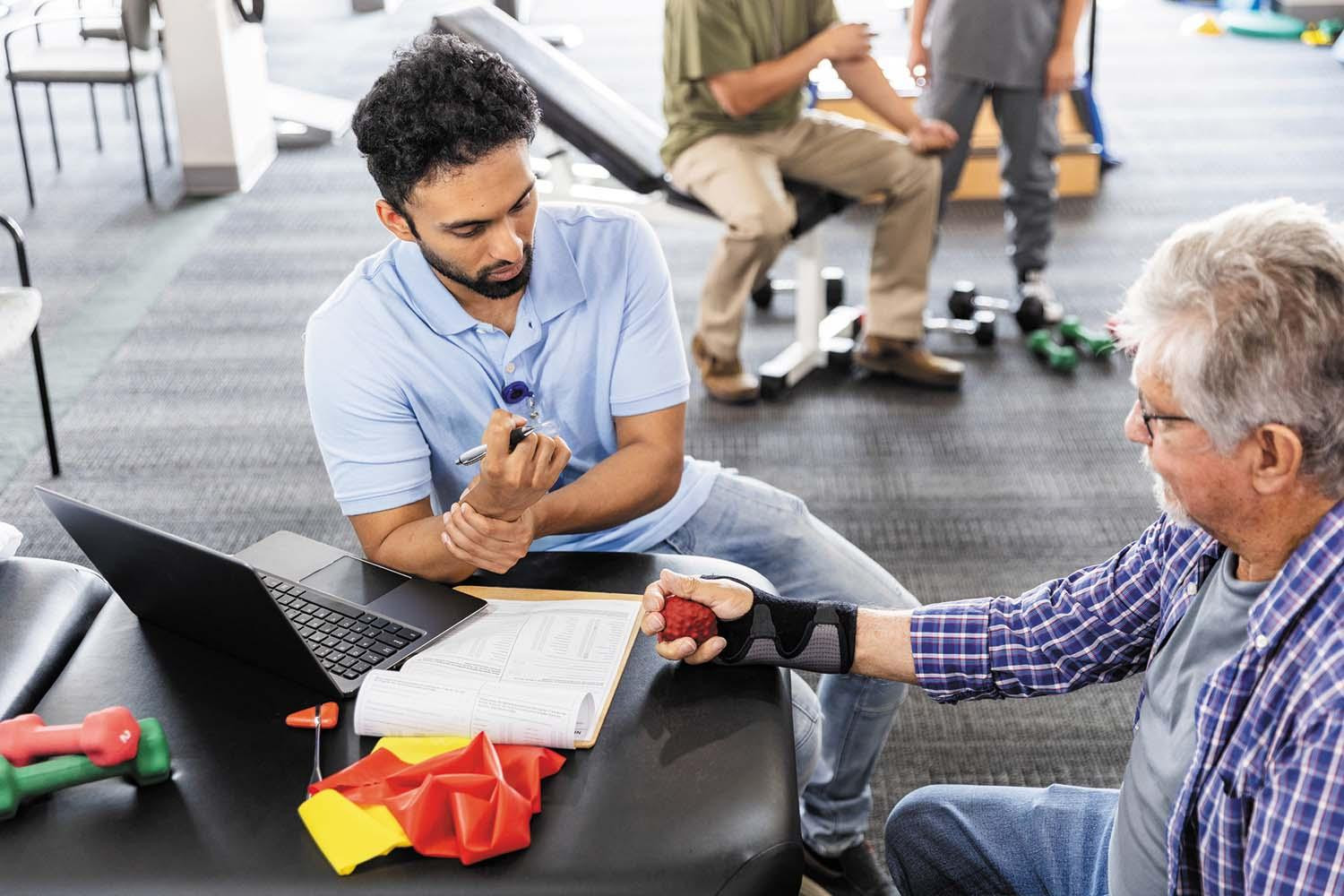
Most people have heard of physical therapy and occupational therapy. Considerably fewer know that a distinct specialty exists for the hand and upper limb, staffed by therapists who have spent years working in that area specifically and, in many cases, passed a certification examination to prove it.
That gap in awareness matters, because a hand therapist is often the most useful person to see for a hand problem and a great many people never learn they exist. Knowing what they do, and how to find one, opens a door that is otherwise easy to miss.
What the Specialty Covers
Hand therapists are occupational therapists or physical therapists who work specifically with the hand, wrist, elbow, and shoulder. The scope is wide: joint conditions including arthritis, tendon problems, nerve conditions, fractures, post-surgical recovery, sports injuries, and work-related upper limb problems.
The reason it warrants a specialty is anatomy. The hand packs an extraordinary number of joints, tendons, nerves, and small muscles into a small space, all of them interdependent, and all of it in service of precise, complex function that is difficult to replace when it is compromised. Working effectively with that requires depth rather than breadth.
The CHT Credential
Some hand therapists hold the Certified Hand Therapist credential, written after their name as CHT.
It is not a weekend course. Certification requires being a licensed occupational or physical therapist, accumulating several years of professional practice with a substantial number of hours specifically in hand therapy, and passing a comprehensive examination. It is also maintained through ongoing recertification rather than held indefinitely.
The practical significance for a patient is that the letters indicate verified depth in this specific area. Excellent therapists work in hand therapy without holding the credential, so its absence is not a warning sign. Its presence is simply a straightforward signal about focus and experience.
The specialty is supported by professional bodies at national and international level, and the field has a substantial published literature and continuing education culture behind it.
What a First Appointment Involves
Knowing roughly what happens makes an initial visit less opaque.
- History. What is happening, how long it has been going on, what provokes it, what has already been tried, and, importantly, what you need to be able to do that you currently cannot.
- Examination. Assessment of the joints, movement, strength, sensation, and how the hand is being used, often including measurement so that change can be tracked objectively.
- Functional discussion. A detailed look at your actual daily activities, your work, and your hobbies, because those specifics shape everything that follows.
- A plan. Which may include exercise appropriate to your situation, changes to how particular tasks are performed, adaptive equipment, support if it is indicated, and education about the condition.
- Review. Follow-up to assess how things are responding and adjust accordingly.
The functional discussion is the part people are least prepared for and the part that most shapes a useful plan. A therapist who knows you garden, play an instrument, or spend your working day handling tools can address those specifics rather than offering generic advice.
What to Bring
An appointment is more productive with a little preparation.
Worth bringing: any imaging or clinical letters you have, a list of current medications, any supports or splints you have already tried even if they did not suit, and a written list of the specific tasks that are difficult. That last item is more valuable than it sounds, since specifics are far more actionable than a general description of discomfort.
Also worth thinking about in advance: what you most want to be able to do. A plan built around a person’s actual priorities tends to be followed, and a generic one tends not to be.
Support Fitting Is Part of the Work
Among the things hand therapists do routinely is assessing whether external support is appropriate and, when it is, selecting and fitting it.
That is more involved than choosing a size. It includes identifying which joint needs support, judging how much restriction suits the situation, adjusting the fit to the individual hand, checking the result during actual functional tasks rather than at rest, and explaining wearing guidance and care.
Manufacturers working in this area often maintain clinical education material for exactly this reason. BraceLab publishes a Clinicians Classroom of clinical pearls, educational videos, and case material for therapists alongside its product range. BraceLab is the exclusive U.S. distributor of Push and Push Sports braces and was founded by Judy C. Colditz, OT/L, CHT, FAOTA, a hand therapist and past president of both the American Society of Hand Therapists and the International Federation of Societies for Hand Therapy. For a patient, the practical point is that support selection is a clinical judgement, and a therapist can make it on an examined hand rather than from a product description.
How to Find One
Several routes exist. A physician, particularly an orthopaedic or hand specialist, can refer. Professional societies maintain directories of members and certified therapists. Local therapy clinics can be asked directly whether they have a therapist specialising in hands, since many general clinics do.
Whether a referral is required depends on your location and insurance arrangements, and both a physician’s office and the clinic itself can clarify. Insurance coverage for hand therapy varies, and confirming with your insurer before starting avoids an unwelcome discovery.
Key Takeaways
- Hand therapy is a distinct specialty covering the hand, wrist, elbow, and shoulder.
- The CHT credential requires years of specific practice hours and a comprehensive examination, and is maintained through recertification.
- A first appointment covers history, examination, a detailed functional discussion, a plan, and review.
- The functional discussion shapes the plan most, so come prepared with specific difficult tasks.
- Bring imaging, letters, medication details, and any supports already tried.
- Support selection and fitting is clinical work, not simply choosing a size.
- Referral requirements and insurance coverage vary, so confirm both before starting.
Frequently Asked Questions
What is the difference between a hand therapist and a physical therapist?
Hand therapists are occupational or physical therapists who have specialised in the hand and upper limb. The difference is depth of focus rather than a separate profession. For a hand or wrist problem, that focus frequently translates into more specific assessment and more targeted intervention.
Do I need a CHT specifically?
Not necessarily. The credential is a verified indicator of specialised experience, and many skilled therapists work in hand therapy without it. If you are choosing between unfamiliar options, it is a reasonable signal; it is not a requirement for competent care.
How many appointments will I need?
It varies widely with the condition, its duration, and how it responds. Some situations resolve in a few visits; others involve a longer programme. A therapist can usually give an indication after the initial assessment rather than before it.
Will I be given exercises?
Often, and they are typically specific to your situation rather than a general programme. Because what suits one joint pattern may not suit another, exercises prescribed after an examination are more useful than those found online, and doing them as instructed matters more than doing more of them.
Can a hand therapist diagnose my condition?
Scope of practice varies by jurisdiction and setting. Therapists assess thoroughly and frequently work alongside physicians, who handle medical diagnosis. If a diagnosis has not yet been established, a therapist will usually indicate when a physician’s input is needed.
Is hand therapy covered by insurance?
Coverage varies by plan and by country, including whether a referral is required and how many visits are covered. Confirming with your insurer before beginning avoids surprises, and clinic administrative staff are generally experienced at helping with the question.
Conclusion
Hand therapy is one of the more useful specialties that people do not know exists. It combines detailed assessment with practical attention to what someone actually needs to do, and it covers the ground between medical care and daily life where a great deal of the useful work happens. For anyone dealing with a hand or wrist problem, finding out whether a hand therapist is available locally is a short conversation with a real chance of changing the outcome.
