


Opening Scenario
A landscaping supply business we spoke with recently had been using a basic flatbed trailer to move everything from bagged mulch to pallets of pavers for years. It worked, in the sense that nothing ever fell off the back, but loading and unloading was slow, product got damaged in wet weather, and the driver was spending close to an hour at each site just securing and releasing loads. When they finally looked into other trailer types, they realised a tipper configuration would have cut their unloading time down to minutes and saved them thousands in product damage over a single year.
This is a more common story than you might expect. Many Australian operators are running the wrong truck trailer for their actual freight task, not because they made a bad decision, but because nobody walked them through what each trailer type is genuinely built to do before they bought it. This guide covers the main truck trailer types used across Australian businesses today, what each one is suited for, and how to think through which one actually fits your operation.
Quick Answer
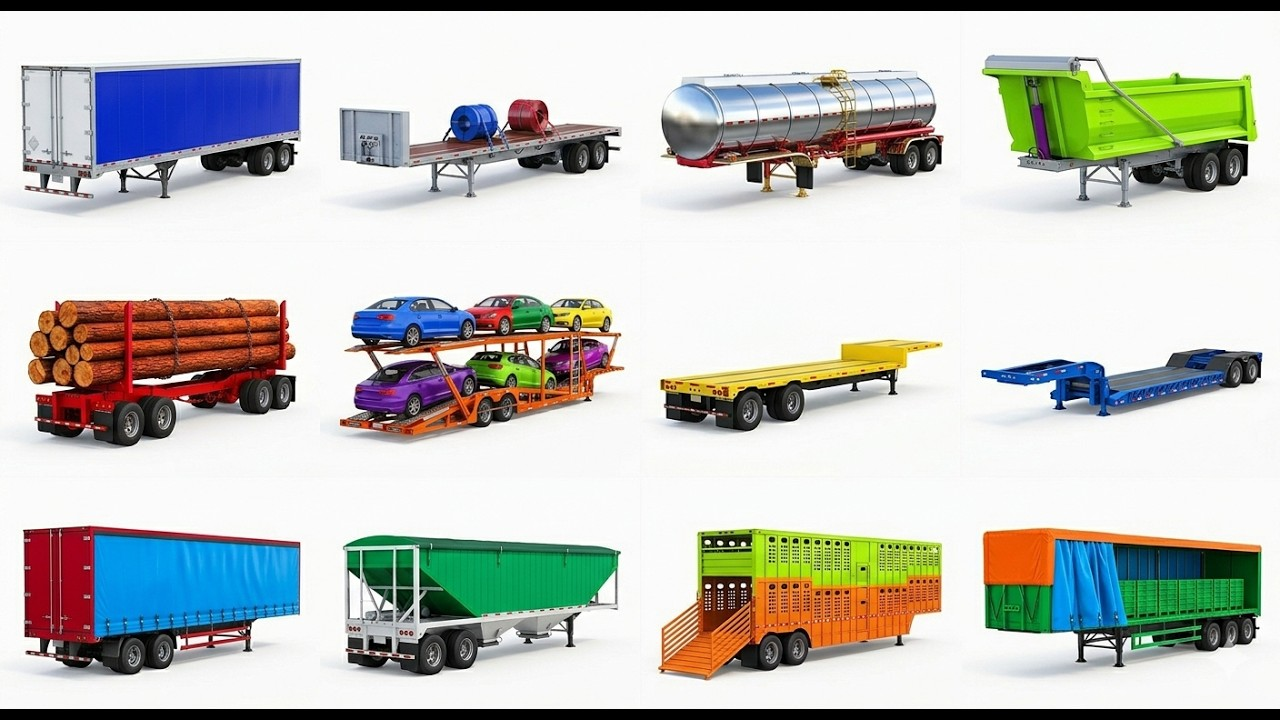
If you only need the short version, here it is. The right truck trailer depends on what you are carrying and how you need to load and unload it. Flatbeds and curtain siders suit general and palletised freight. Tippers suit bulk loose materials like sand, gravel or grain. Refrigerated trailers suit perishable goods needing temperature control. Drop deck trailers suit tall machinery and oversized equipment. Skeletal trailers are purpose built for shipping containers. Walking floor and tanker trailers suit specialised bulk and liquid cargo. Matching your freight task to the trailer’s actual design, rather than making do with whatever is on hand, is the single biggest factor in running an efficient and profitable operation.
Quick Reference Table
| Trailer Type | Primary Use | Loading Method |
| Flatbed | General freight, machinery, timber | Crane, forklift, side loader |
| Curtain sider (tautliner) | Palletised and mixed general freight | Side access via curtains |
| Tipper | Sand, gravel, grain, scrap | Hydraulic tipping |
| Refrigerated | Perishables, chilled and frozen goods | Rear or side door loading |
| Drop deck | Tall machinery, oversized equipment | Ramp or crane loading |
| Skeletal | Shipping containers | Twist lock container mounting |
| Walking floor | Loose bulk materials like mulch and grain | Rear door, automated unloading |
| Tanker | Liquids, fuels, fine bulk powders | Pump loading and unloading |
The Core Truck Trailer Types Every Operator Should Understand
Before comparing specific brands or prices, it is worth having a clear picture of what each major truck trailer category is actually designed to do. This is the foundation that everything else, including your eventual purchase decision, should be built on.
Flatbed Trailers for General and Open Freight
Flatbed trailers remain one of the most widely used configurations across Australian freight because of their sheer versatility. An open, flat platform means you can load almost anything that fits within height and width limits, from machinery and construction materials to timber and steel. Loading is typically fast, using a crane, forklift or side loader, which makes flatbeds a strong choice for operations with tight turnaround times at pickup and delivery points. The trade off is that cargo is exposed to the weather and road debris throughout transit, which means proper strapping, chaining and tarping is essential every single trip.
Curtain Sider Trailers for Palletised Freight
A curtain sider, sometimes called a tautliner, takes the open side access of a flatbed and adds retractable curtains that protect the load from rain and road grime once secured. This makes it a popular choice for businesses moving general palletised freight, retail goods or mixed loads across metro and regional routes. Loading remains quick thanks to full side access, but the freight stays considerably better protected than it would on an open flatbed, which matters for goods that cannot handle weather exposure but do not require full enclosure either.
Tipper Trailers for Bulk Material Haulage
If your business regularly moves loose bulk materials like sand, gravel, grain or scrap metal, a tipper trailer will usually outperform any other configuration on efficiency. These trailers use a hydraulic ram to lift the tray and tip the load out, cutting unloading time from potentially hours of manual work down to a matter of minutes. Side tippers and end tippers each suit slightly different unloading setups, so it is worth discussing your typical delivery sites with a supplier before settling on one configuration over the other.
Specialised Truck Trailer Configurations for Specific Freight Tasks
Beyond the core general freight trailers, a number of specialised configurations exist for businesses with more specific hauling requirements. Choosing correctly here often makes the difference between a trailer that genuinely improves your operation and one that is technically functional but poorly suited to the job.
Refrigerated Trailers for Temperature Sensitive Goods
Businesses in food distribution, fresh produce supply or pharmaceuticals need refrigerated trailers, commonly known as reefers, which are fitted with insulated panels and a dedicated refrigeration unit to maintain a consistent temperature throughout the journey. Reliability matters enormously here, since a single refrigeration failure partway through a long haul run can mean a complete loss of perishable stock. If this is your freight task, it is worth asking suppliers specifically about the refrigeration unit’s brand, age and service history, not just the trailer body itself.
Drop Deck Trailers for Tall and Oversized Loads
A drop deck trailer lowers a section of the deck closer to the road surface, allowing you to carry taller machinery or equipment without breaching legal height limits. This design is common among earthmoving contractors, equipment hire businesses and anyone regularly transporting bulky items that would otherwise sit too high on a standard flatbed. Drop decks often come with ramps built in, which simplifies loading for wheeled or tracked equipment considerably compared with crane loading alternatives.
Skeletal Trailers for Container Transport
Skeletal trailers are stripped back steel frames fitted with twist locks, designed specifically to carry shipping containers securely. They are considerably lighter than a flatbed carrying the equivalent load, which translates directly into more usable payload capacity for container freight. For businesses working closely with import and export freight moving through Fremantle port, a skeletal trailer configuration is usually the most efficient and cost effective choice available.
Walking Floor and Tanker Trailers for Niche Bulk Haulage
Walking floor trailers use a moving floor system to automatically unload loose materials like mulch, woodchips or grain without tipping the entire trailer, which can be useful where overhead clearance at delivery sites is limited. Tanker trailers, meanwhile, are built specifically for liquids and fine bulk powders, used heavily in agriculture, fuel distribution and chemical transport. Both of these are more specialised purchases, and most businesses only invest in them once their freight task has become specific and consistent enough to justify the cost.
How to Decide Which Truck Trailer Type Suits Your Business
Working through the right choice comes down to a few straightforward questions. What does your freight actually look like day to day, in terms of weight, shape and sensitivity to weather or temperature? How is your freight typically loaded and unloaded at both ends of the journey, and how much time can you realistically afford to spend on that process? And finally, how much does your freight task vary week to week, since a business running highly consistent freight can specialise heavily, while one running variable freight may be better served by a more versatile general purpose trailer.
It is also worth being honest about where your business is heading, not just where it sits today. A trailer that handles your current freight task well but leaves no room for growth may end up being a false economy if you have to replace it again within a year or two as the business scales up.
Trailer Materials and Build Quality: What Actually Affects Longevity
Beyond the trailer type itself, the materials and build quality behind it have a real impact on how long a truck trailer lasts and how well it holds up under regular use. Steel chassis construction remains common across most trailer types because of its strength and lower upfront cost, but it carries more tare weight and requires ongoing attention to corrosion protection, particularly for businesses operating in coastal areas like much of the Perth metro region where salt air accelerates rust over time.
Aluminium and composite panel construction, often seen on curtain siders and refrigerated trailers, trades a higher upfront cost for significantly reduced tare weight, which directly increases usable payload capacity. For businesses running close to their mass limits regularly, this weight saving can translate into meaningfully more freight carried per trip over the life of the trailer, which often justifies the extra cost within a few years of operation.
Welding quality and chassis design also matter more than most buyers realise when comparing similar trailer types from different manufacturers. Look for consistent weld quality around stress points, particularly near the fifth wheel coupling area, suspension mounts and any load bearing cross members. Poor quality welding in these areas is one of the more common sources of structural problems down the track, and it is often not obvious on a casual inspection unless you know specifically where to look or bring someone along who does.
Suspension Systems and Their Effect on Trailer Performance
The suspension system fitted to a truck trailer has a bigger impact on both ride quality and longevity than many buyers initially consider. Air suspension has become increasingly common across modern trailer builds because it offers a smoother ride, better load distribution across axle groups, and generally less mechanical wear over time compared with older leaf spring setups. This matters particularly for refrigerated trailers and other sensitive freight, where excessive vibration during transit can affect both the cargo and the trailer’s own structural components over time.
Leaf spring suspension remains common on tipper trailers and other configurations handling rougher conditions, since it tends to be more robust and straightforward to repair in the field if something does go wrong on a remote job site. Neither system is universally better, and the right choice really depends on the specific freight task, the typical road conditions you operate in, and how much you are willing to spend upfront versus on ongoing maintenance.
Fleet Considerations for Businesses Running Multiple Trailer Types
Many growing freight businesses eventually find themselves running more than one truck trailer type across their fleet, and this brings its own set of considerations worth planning for in advance. Standardising on fewer trailer brands and configurations where practical can simplify maintenance scheduling, reduce the range of spare parts you need to keep on hand, and make it easier for drivers to move between vehicles without needing to learn entirely different handling characteristics each time.
That said, there is a balance to strike between standardisation and genuinely matching each trailer to its specific freight task. A business that tries to force every job onto a single trailer type purely for fleet simplicity often ends up losing more in operational efficiency than it saves in maintenance simplicity. The better approach for most growing operations is to settle on one or two core trailer types that cover the bulk of regular freight, while bringing in specialised equipment like refrigerated or tanker trailers only when a specific and consistent freight task genuinely justifies the investment.
New Versus Used Truck Trailers
Buying new gives you a trailer built to current standards, full warranty coverage, and no wear and tear history to assess. It is the lower risk path but comes at a higher upfront cost, which matters for businesses watching cash flow closely.
Buying used can be an excellent option if you inspect thoroughly before committing. Check the chassis for cracking or corrosion, inspect suspension components and braking systems, and ask for service history wherever the seller has it available. A trustworthy supplier will be upfront about a trailer’s condition and usage history rather than glossing over wear and tear to close a sale quickly.
Common Mistakes When Choosing a Truck Trailer
The most frequent mistake is buying based on price or appearance without properly matching the trailer type to the actual freight task at hand. Close behind that is underestimating tare weight, which quietly reduces usable payload capacity across the life of the trailer. Many buyers also skip a proper inspection on used stock, only to discover costly issues shortly after purchase, and some fail to plan for future growth, locking themselves into a configuration that fits today’s workload but not tomorrow’s.
Checklist Before You Buy a Truck Trailer
- Identify your actual freight task clearly before comparing trailer types
- Match the trailer configuration to how your freight is loaded and unloaded
- Check GVM, tare weight and payload capacity against your typical loads
- Inspect chassis, suspension and braking thoroughly if buying used
- Confirm registration, compliance and service history are complete
- Consider total cost of ownership, not just the upfront purchase price
- Think ahead to how your freight task might change over the next few years
Final Word
Not sure which truck trailer suits your business best? If you are looking for a truck trailer and want to see your options in person, visit this website to browse our current stock. Taking the time to match the right trailer type to your freight task now will pay off in efficiency and reliability for years to come.
Our team is happy to talk through your freight requirements and help you find the right fit. Contact us on 0417 920 022 or visit us at 85 Pickering Brook Road, Pickering Brook to see our current range.
Frequently Asked Questions
1. What is the most versatile truck trailer type for a general freight business?
A curtain sider is often considered the most versatile option for general freight, since it combines the fast side loading of a flatbed with better weather protection for the cargo. It suits palletised and mixed freight loads particularly well.
2. How do I know if I need a tipper trailer instead of a flatbed?
If your business regularly moves loose bulk materials such as sand, gravel, grain or scrap metal, a tipper trailer will save considerable time on unloading compared with a flatbed, which requires manual handling of loose materials.
3. Are refrigerated trailers worth the extra cost for a small business?
If your business moves perishable goods of any kind, a refrigerated trailer is generally essential rather than optional, since a single failure in temperature control on a standard trailer can result in a total loss of stock. The extra cost is usually justified by the risk it removes.
4. What is the benefit of a skeletal trailer over a flatbed for container transport?
A skeletal trailer is considerably lighter than a flatbed, which means more of your gross combination mass allowance goes toward the actual container weight rather than the trailer’s own tare weight. This generally makes it the more efficient choice for container freight.
5. Can one truck trailer handle multiple types of freight?
Flatbeds and curtain siders offer the most flexibility across different freight types, but highly specialised trailers like tippers, tankers and refrigerated units are generally built for a specific job and are not practical to use outside that purpose.
This article is general information only and does not constitute professional transport or financial advice. Specifications, regulations and mass limits vary by state and trailer build. Always confirm current requirements with the National Heavy Vehicle Regulator or your state transport authority, and seek advice specific to your business circumstances before purchasing.
