


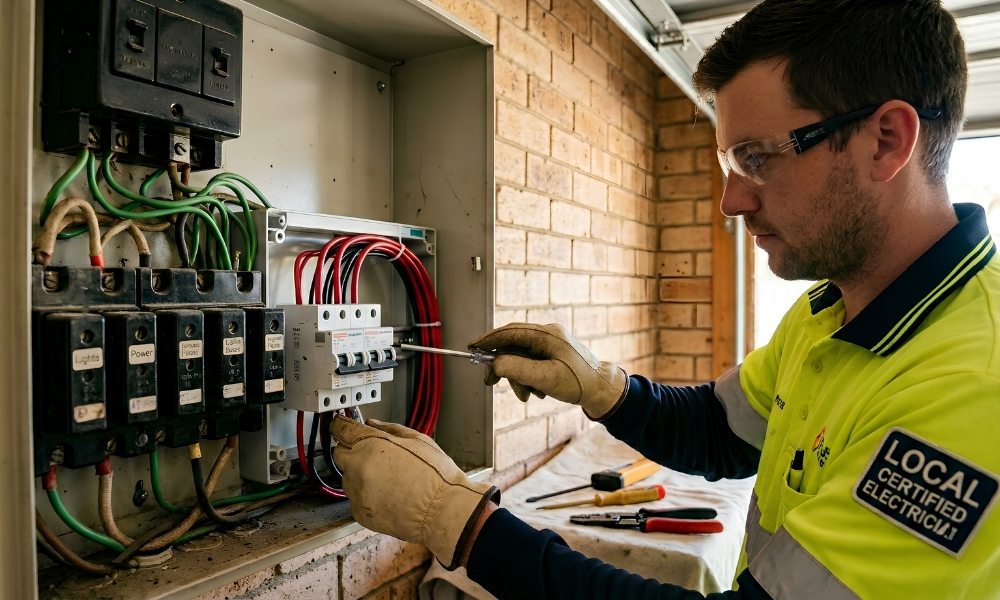
Open the little grey door on the side of an older Perth home and there is a good chance you will find a switchboard that has not changed since the day it was installed. A panel of ceramic fuses, a few thick wires, maybe a hand written label that has faded to nothing. It works, so nobody thinks about it. Then one summer afternoon the air conditioner, the oven and the kettle all run at once, and the whole house goes dark.
Most of the time, an old switchboard is not a problem until the day it becomes one. This guide explains what is actually inside older boards, why they struggle with modern households, what the rules say about safety switches in Western Australia, and how to plan an upgrade without being caught out by the cost or the process.
The Short Answer
If your home was built before the 1990s and the switchboard has never been replaced, it is worth having it inspected by a licensed electrician. Older boards often use ceramic or rewireable fuses, lack safety switches on every circuit, and were designed for a household with far fewer appliances than you have today. Replacing the board with a modern one fitted with circuit breakers and safety switches reduces the risk of electric shock and electrical fires, and it prepares the home for air conditioning, solar and electric vehicle charging.
Upgrades are normally done by a licensed electrical contractor, take a day or less in most homes and involve a short planned power outage. The cost depends on the size of the board, the condition of the wiring and whether the supply needs to be upgraded at the same time.
What an Old Switchboard Actually Looks Like
Not every old board looks alarming. Some are tidy and well maintained, which is part of why people leave them alone. Here is what you may find in an older Perth home:
- Ceramic or porcelain fuse holders. These contain fuse wire that melts when a circuit is overloaded. They have to be rewired by hand after a fault, and it is common to see the wrong gauge of wire used.
- A timber or fibrous backing board. Many older boards are mounted on a dark panel. In homes built before the early 1990s, some of these panels contain asbestos.
- No safety switches, or only one. A single safety switch protecting only part of the house is common.
- Cloth or rubber insulated wiring. This insulation becomes brittle with age and can crack, exposing live conductors.
- Mixed generations of additions. Years of small changes can leave a tangle of extra circuits, loose connections and unlabelled breakers.
None of these automatically means the board must be replaced today, but together they describe a system that was never designed for modern living.
Why Older Switchboards Struggle in Modern Homes
A switchboard built in the 1960s or 1970s was designed around a few lights, a kettle, a refrigerator and perhaps a washing machine. A typical home today has ducted or split system air conditioning, a dishwasher, a large television setup, multiple chargers, a home office and sometimes a pool pump or a second fridge. The total load can be several times higher than the original design assumed.
When the load is too high for the board and the wiring behind it, three things can happen. Fuses blow or breakers trip repeatedly, which is the obvious sign. Connections run hot, which is the quiet sign. Or protection fails to operate when it should, which is the dangerous one. Old fuses and loose terminals can heat up for months without anyone noticing until a fault appears.
Signs You Need a Switchboard Upgrade Perth Homeowners Often Miss
Some signs are hard to ignore. Others are easy to explain away. Pay attention to the following:
- Fuses blowing or breakers tripping regularly, particularly in summer when the air conditioner is running
- Lights flickering or dimming when a large appliance starts
- A burning smell, discolouration or scorch marks around the board or a power point
- A warm or buzzing switchboard that you can feel or hear
- Crackling, humming or sparks when switching a circuit on or off
- No safety switches, or safety switches that do not trip when tested
- A rewireable fuse board that still has fuse wire or ceramic cartridges
- Plans to add solar, a battery, an electric vehicle charger or a major appliance
- A renovation, extension or new air conditioning system adding load to existing circuits
- A home inspection or insurance query flagging the switchboard
Several of these signs are safety issues in their own right. A burning smell or scorch marks, for example, call for an electrician straight away.
Safety Switches: What the Rules Say in Western Australia
Safety switches, also called residual current devices or RCDs, are among the most important protections in a home. They detect a leak of current, for example through a person or a damaged appliance, and cut the power in a fraction of a second. That speed can be the difference between a tingle and a fatality.
In Western Australia, the rules require RCDs to protect all circuits supplying power points and lights in the following situations:
- When a home is sold. Before a title transfers, the home must have RCDs fitted, with a minimum of two.
- In rental properties. Landlords must have RCDs installed in line with the regulations.
- In short stay accommodation. RCDs must be installed at the switchboard before guests arrive.
State guidance also recommends testing your safety switches every three months by pressing the test button. A working switch should flip off instantly. If it does not, it must be replaced straight away by a licensed electrical contractor. Because most old boards lack proper RCD coverage, an upgrade is often the simplest way to bring a property up to standard before a sale or a new tenancy.
Asbestos and Old Switchboards
This part is often overlooked. Many older switchboards and meter boxes were mounted on backing panels made from asbestos containing material. Panels from before the early 1990s are the main concern, and they are usually dark brown or black with a rough, fibrous or wood like surface.
Asbestos in a sealed, undisturbed board is generally not a hazard. The risk arises when someone drills, cuts or sands the panel, which can release fibres. That is why you should never attempt to modify an old board yourself, and why a licensed electrician should assess the panel before work begins. If asbestos is suspected, the safe approach is to leave the panel undisturbed and arrange for proper handling and removal under the relevant rules.
What Happens During a Switchboard Upgrade
Knowing the process makes it far less stressful. A typical upgrade follows a clear sequence:
- Inspection and quote. The electrician examines the existing board, checks the condition of the wiring and discusses your needs, including any plans for solar, air conditioning or EV charging.
- Planning the outage. Power will be off for several hours, so work is scheduled at a time that suits you. If you rely on medical equipment or work from home, tell the electrician in advance.
- Isolation and removal. The supply is isolated, and the old board is carefully removed.
- Installing the new board. A modern board is mounted, with circuit breakers, safety switches and a clear layout. Circuits are reconnected and labelled.
- Testing. Every circuit is tested, and the safety switches are checked to confirm they trip correctly.
- Certification and handover. You receive documentation of the work, and the electrician explains how to test the safety switches and reset breakers.
In most homes the job is done within a day. More complex properties, with extra circuits, damaged wiring or a supply upgrade, may take longer.
When a Switchboard Upgrade Involves More Than the Board
Sometimes the board is only part of the story. An electrician may find that the main supply cable, the meter box or some of the wiring behind the walls also needs attention. Older homes can have undersized cables, deteriorated insulation or circuits that have been modified over the years. It is better to know this at the start than to discover it halfway through the job. Ask the electrician to explain what they find and which items are essential, which are recommended and which can wait.
How Much Does a Switchboard Upgrade Cost?
Costs vary by home, so be wary of any figure quoted without an inspection. As a general guide, a straightforward replacement in a small to medium home sits in the low thousands of dollars, while larger homes, three phase supply, extra circuits, asbestos handling or additional wiring work can push the price higher.
The main factors that affect cost include:
- The size of the board, meaning the number of circuits and safety switches required
- Single or three phase supply
- Condition of the existing wiring and whether any needs to be replaced
- Access to the board and meter box
- Presence of asbestos containing material
- Additional work, such as new circuits, smoke alarm upgrades, extra power points or preparation for solar and EV charging
- Distribution network requirements, which may apply if the supply needs to be altered
Always ask for a written quote that lists what is included. A clear quote should show the board, the number of circuits, the safety switches, testing and certification, and any allowance for contingencies.
Planning Ahead for Solar, Batteries and EV Chargers
Many Perth homeowners now install solar panels or an electric vehicle charger, and both place new demands on the switchboard. A modern board has the capacity and space for the extra circuits, the isolators and the protection devices these systems require. An old fuse board often does not.
It is far more efficient to upgrade the switchboard before or at the same time as these additions than to retrofit later. Doing it in one visit can reduce call out costs, avoid repeated power outages and ensure the installation meets current standards. If you are planning any of these upgrades, mention it at the quote stage so the board can be sized with future needs in mind.
Upgrading Before You Sell, Rent or Renovate
Timing can save you stress and money. There are three common moments when a switchboard upgrade makes particular sense:
- Before selling. Because RCDs must be fitted before a title transfer, a sale is a natural point to bring the board up to standard. Doing it early avoids last minute delays at settlement.
- Before renting out. Landlords have legal obligations around safety switches, and a modern board helps meet them and reduces liability.
- Before renovating. If you are adding an extension, a new kitchen or air conditioning, upgrading the board first means the new circuits are connected to a safe, properly rated system from day one.
How to Choose an Electrician for the Job
The person doing the work matters as much as the equipment. Look for:
- A current electrical contractor licence. In Western Australia, licence numbers begin with the letters EC, and they can be checked through the state’s online licence search.
- Experience with older homes. Old wiring, asbestos backing and unusual layouts need patience and judgement.
- A clear written quote that lists inclusions and exclusions
- Willingness to explain the work and show you what they find
- Certification and documentation provided at the end of the job
- Local availability. Someone who services your suburb regularly can respond quickly if there is an issue after the work
Be cautious about anyone who offers to do electrical work without a licence, quotes a price over the phone without seeing the board or pressures you to decide on the spot.
Looking After Your New Switchboard
A new board does not need much attention, but a few simple habits keep it working as intended. Test the safety switches every three months by pressing the test button, and make sure each one trips immediately. If one does not, call a licensed electrician rather than resetting it and carrying on.
Keep the area around the board clear so you can reach it quickly in an emergency, and make sure the circuit labels stay legible. If you add a major appliance, an extra air conditioner or a new charger, have an electrician confirm that the circuit and the board can handle the extra load. Finally, keep the certification paperwork somewhere easy to find. Insurers, buyers and property managers may ask for it, and it is useful evidence that the work was done properly.
Common Mistakes Homeowners Make
- Waiting for a fuse to fail before taking an old board seriously
- Assuming a working board is a safe board
- Attempting DIY electrical work, which is both illegal and dangerous
- Ignoring signs such as warmth, buzzing, flickering lights or a burning smell
- Overlooking asbestos in old backing panels
- Forgetting to test safety switches regularly
- Upgrading appliances and adding solar or an EV charger without checking the board can handle the load
- Choosing a quote on price alone without comparing what is included
A Simple Checklist Before You Book
- Check the age of your home and whether the board has ever been replaced
- Look for ceramic fuses, a single safety switch or no safety switches
- Note any warning signs such as tripping, flickering or burning smells
- Think about future plans, including solar, a battery, an EV charger or a renovation
- Ask whether the board and its backing panel may contain asbestos
- Request a written quote from a licensed electrical contractor
- Plan for a short power outage on the day
- Keep the certification paperwork for your records, insurance and future sale
Final Word
An old switchboard is rarely dramatic. It sits quietly in a corner of the house, doing its job until the day it cannot. Replacing it is one of the most practical safety investments an older home can receive, and it often pays for itself in peace of mind, easier approvals for solar or EV charging and a smoother sale or rental process.
Are you looking for a switchboard upgrade Perth homeowners can rely on, with a licensed electrician who services Kelmscott, Byford, Bedfordale, Bull Creek and the surrounding suburbs? Get in touch with our team to arrange an inspection and a clear written quote for your home.
Frequently Asked Questions
1. How do I know if my switchboard is outdated?
Signs include ceramic or rewireable fuses, a single safety switch or none at all, a dark fibrous backing panel, cloth insulated wiring and frequent tripping or blown fuses. If your home was built before the 1990s and the board has never been replaced, a licensed electrician can inspect it and tell you whether it needs attention.
2. Do I need a switchboard upgrade to sell my house in Perth?
You do not necessarily need a full upgrade, but WA rules require safety switches to protect all power point and lighting circuits before a title transfers, with a minimum of two RCDs. On an older board, the simplest way to meet this requirement is often to replace or upgrade the board.
3. How long does a switchboard upgrade take?
Most upgrades in a typical home are completed within a day, with power off for several hours. Homes with extra circuits, damaged wiring, three phase supply or asbestos handling needs can take longer. Your electrician should give you an estimate and plan the outage with you.
4. Is it safe to have asbestos in my old switchboard?
A sealed and undisturbed asbestos containing panel is generally low risk, but drilling, cutting or sanding it can release fibres. Do not touch or modify the board yourself. A licensed electrician can assess the panel and advise on safe handling or removal before any work begins.
5. Can I upgrade my switchboard myself?
No. Electrical work in Western Australia must be carried out by a licensed electrical contractor. DIY work is illegal and dangerous, and it can invalidate insurance and create serious risks for you and future occupants.
