


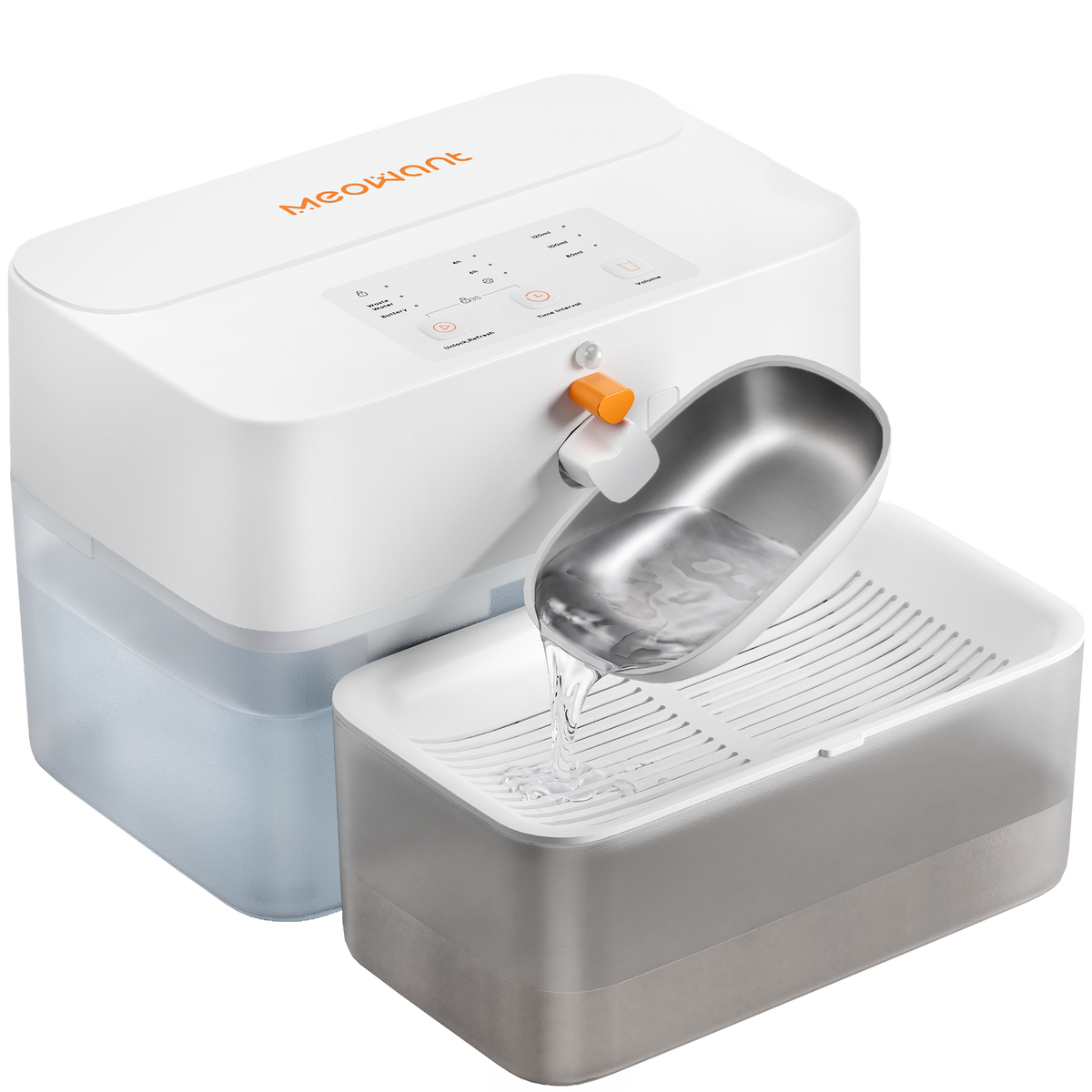
Most hydration advice for cats sounds the same: offer more water, offer it in more places, and make it appealing. The advice is sound, but it skips the part owners actually struggle with — keeping the water appealing day after day. A bowl starts fresh and then collects dust, fur, and whatever the cat dragged in. Within hours it is something the cat may sample and something you would rather not think about.
A pet water fountain addresses that specific problem by keeping water moving and filtered. It is a small appliance, though, and it rewards a little planning. Pump quality, cleaning access, and placement decide whether it becomes a fixture in your routine or another gadget that ends up in a cabinet. This guide walks through the decisions in the order they matter, from why moving water helps to the maintenance habits that keep a fountain running quietly for years.
What Moving Water Does Differently
Cats are drawn to motion. A fountain’s stream catches their attention, and that attention translates into more frequent, smaller drinks throughout the day. This pattern — many small visits rather than one long drink — is closer to how cats would hydrate naturally, and it is easier on a system that evolved to process modest amounts of water at a time.
The filtration side matters just as much. A fountain pulls water through a filter that traps hair, dust, and food particles, then recirculates it. The result is water that stays visually clean and smells neutral, which for a cat with a sensitive nose is the difference between a bowl worth visiting and one that is not. If your cat has been diagnosed with urinary issues or early kidney changes, a fountain is one of the least invasive ways to support the increased intake your vet has probably recommended.
That said, a pet water fountain is not a substitute for veterinary care or for clean water. It is a delivery method. It works because it makes good water easy to access and pleasant to drink, and because it removes the daily friction of refilling a bowl that has already gone stale.
Judging Build Quality Before You Buy
Fountains look similar online, so focus on the parts you will touch and the parts that fail. The pump is the most common point of failure, and it is also the part most owners never think about until it starts rattling. A pump with adjustable flow and a removable impeller is easier to clean and easier to diagnose when it slows down.
Materials and the drinking surface
Stainless steel and food-safe ceramic resist odor and bacterial film better than many plastics, and they do not pick up flavors from cleaning products. Plastic is lighter and cheaper but scratches over time, and those scratches are where biofilm settles. Whichever material you choose, inspect the drinking area for narrow channels and tight corners — smooth, open surfaces are far easier to keep clean.
Consider how your cat drinks. Some lap from a flat stream, some dip a paw, and flat-faced breeds often do best with a wide, shallow basin and a low spout. A fountain with a high, narrow outlet can be awkward for a cat that needs room for their muzzle. If you can, watch the fountain running before you commit; the shape of the water makes a difference.
Noise and the room it lives in
Noise complaints dominate negative reviews, and they are usually caused by a pump that is too strong for the room or a reservoir that is running low. A fountain in a kitchen can hum pleasantly; the same fountain beside a bedroom door can be a nightly irritation. Look for a pump with a low-flow setting and reviews that specifically mention quiet operation, not just the absence of obvious splashing.
Placement and the Habits That Follow
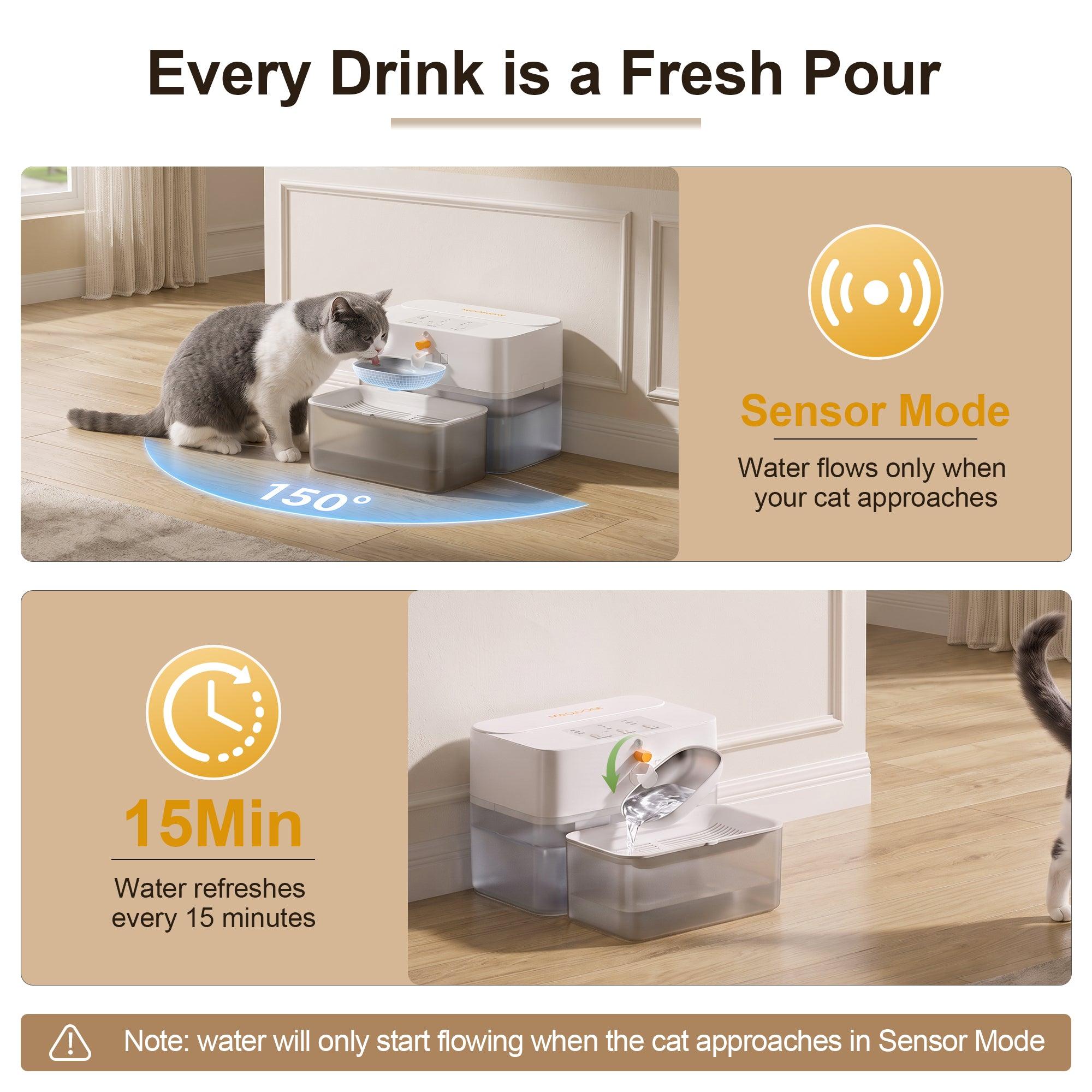
Where the fountain sits shapes how often it is used. Cats generally prefer to drink away from their food and well away from the litter box, so a quiet corner in a living area or hallway often works better than a spot beside the kibble. Keep it on a stable, water-resistant surface and route the cord where a cat cannot pull it. If the fountain is in a high-traffic path, expect more paw-dipping and more splashes.
Offer a still bowl somewhere else as a backup. Some cats will use a fountain readily and still want a conventional option at night, and having both costs little. During the first week, track the water level. If it drops noticeably faster than your old bowl did, the fountain is doing its job. If it barely moves, watch where your cat investigates and consider moving the unit or adjusting the flow.
Introduce the fountain without drama. Set it up, let it run where the cat can hear it, and leave it alone. Do not hold the cat up to the stream. Most cats investigate on their own within a few days; a few need a couple of weeks. Forcing the issue is the fastest way to make a cat avoid the room.
Keeping It Clean Without the Slime
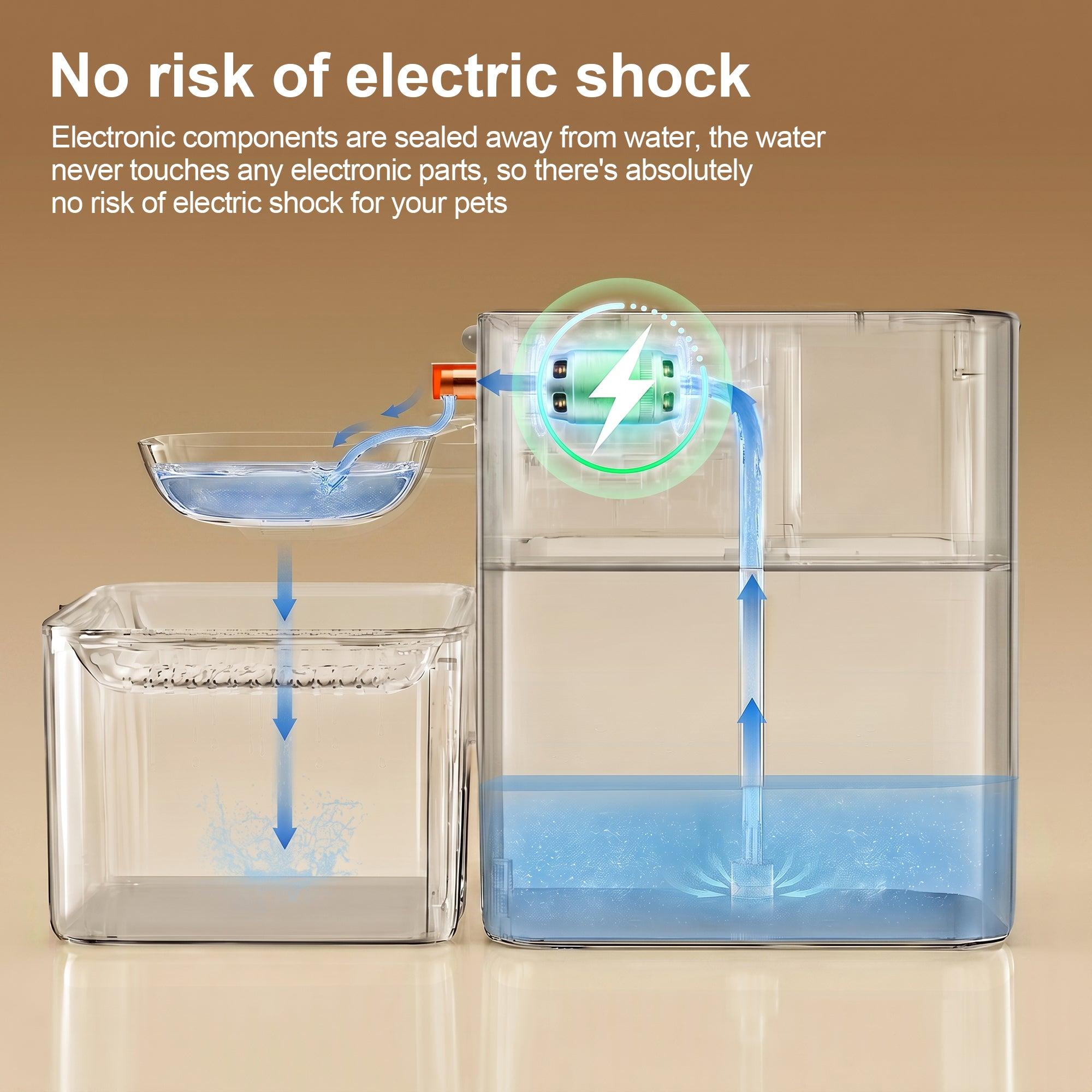
Every fountain develops biofilm if it is ignored, and the pump is where it starts. Warm, slow-moving water in a dark housing is an ideal environment for bacterial film, which is why weekly disassembly is not optional. Plan on rinsing and refilling every day or two, a full scrub weekly, and filter changes on the manufacturer’s schedule. In multi-cat homes or warm weather, shorten those intervals.
When you clean, take the pump apart. Remove the impeller and scrub the housing with a small brush; that is where the film hides and where flow drops as debris collects. Use a mild pet-safe cleaner rather than bleach, and rinse thoroughly before reassembly. A clean pump runs quieter and lasts longer, which matters because pump replacement is the main long-term cost of fountain ownership.
Meowant builds its fountains to be taken apart by ordinary owners, with simple assemblies and accessible filters, because the design that survives is the one that is easy to maintain. Look for that same quality — few tools, few narrow passages, readily available parts — in any fountain you consider.
Mistakes That Shorten a Fountain’s Life
The most common mistake is letting the reservoir run dry. A pump that runs without water overheats and wears out quickly, so top up before the level reaches the intake. The second is skipping filter changes; a clogged filter slows flow, which makes the pump work harder and the water less appealing. The third is using the wrong cleaning agent or leaving a cleaning solution to sit in the basin, which can damage seals and leave residue.
Finally, resist the urge to overfill or underfill. Both change how the fountain sounds and how well it circulates. Follow the marked fill line, and if the stream starts sputtering, check the water level before assuming the pump is failing.
What a Fountain Will Not Fix
A fountain improves access to appealing water, but it does not treat illness, and it does not replace a vet’s advice. If your cat is drinking far more than usual, urinating outside the box, or losing weight, those are medical signals that deserve attention rather than a new appliance. Similarly, a cat who avoids water entirely may have a mouth or dental problem that makes drinking painful. Watch the behavior, not just the water level.
It also will not make a cat drink if the cat simply prefers a bowl. Some cats are indifferent to moving water, and a quiet ceramic bowl changed twice a day may suit them better. Offering both is the low-risk approach: keep the fountain as the primary source and a still bowl as the backup, and let the cat decide. The goal is hydration, not loyalty to a device.
Budget for the long run, too. Filters and occasional pump replacement are part of ownership, and a fountain that runs on unavailable parts is a temporary fixture. Factor those costs in before buying, along with the time a weekly deep clean takes. When the numbers and the routine both work, a fountain is a genuinely low-effort way to keep water in front of a cat who would otherwise ignore it.
Hydration That Stays Easy
A fountain is worth owning when it makes water more appealing and cleaning less of a chore. It is worth keeping when the pump is quiet, the parts come apart easily, and the cat actually uses it. Those three outcomes depend far more on choosing a well-built unit and maintaining it than on any single feature.
Pick a fountain with a quiet, serviceable pump, a drinking surface your cat can use comfortably, and filters you can replace without hunting. Place it thoughtfully, keep a backup bowl, and build a cleaning routine you can keep through busy weeks. Do that, and the fountain does what it is supposed to do: it keeps fresh water in front of your cat, quietly and continuously, without asking much of you.
