


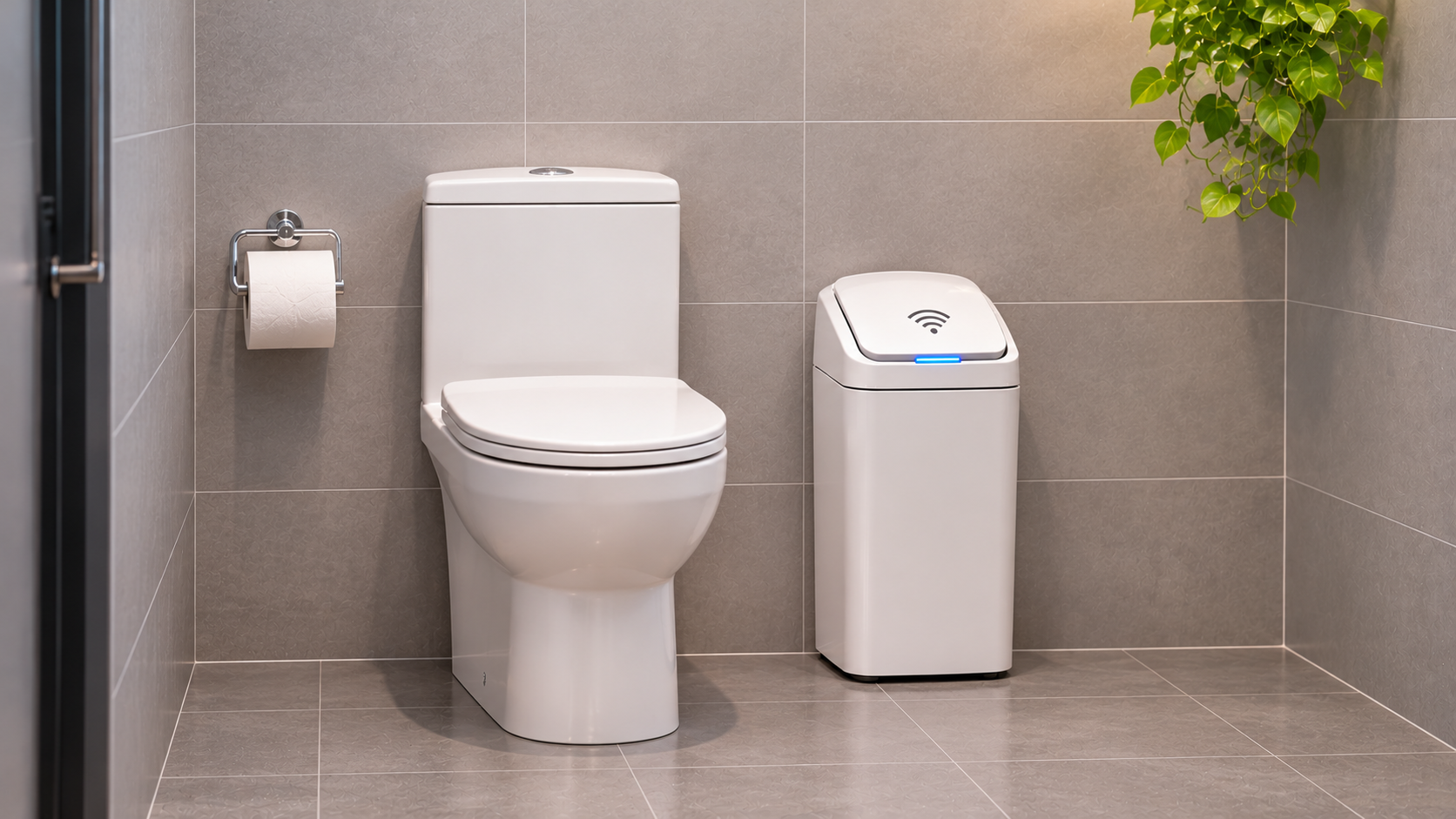
Sanitary bins are the kind of thing you only notice when they go wrong. When a service is working well, washrooms stay clean, discreet and compliant, and nobody gives it a second thought. When it isn’t, you get overflowing units, complaints and a quiet compliance risk sitting in the corner of every bathroom. If you’re responsible for a workplace or commercial building, choosing the right sanitary bin service matters more than it first appears. Here is how to think about it.
The real cost of getting sanitary waste wrong
A sanitary bin is a small thing with an outsized impact. Get the service wrong and the problems show up quickly:
- Overflowing or unpleasant units that damage how clean the whole building feels, and how people judge your business.
- Hygiene risks, because a full or poorly maintained bin is an unpleasant, high-contact point in the washroom.
- Compliance exposure. In many places, employers have a legal duty to keep workplace facilities sanitary. In the United States, for example, OSHA’s workplace sanitation standard requires waste receptacles that do not leak, can be cleaned, have tight-fitting covers where needed, and are emptied often enough to keep the workplace sanitary. You can read the standard on OSHA’s sanitation page. Most countries have their own equivalent duties.
- Wasted money, when you pay for rigid servicing visits that do not match how your washrooms are actually used.
The point is simple. Sanitary waste is not just a cleanliness issue. It touches reputation, hygiene, compliance and cost all at once.
What good sanitary bin servicing actually looks like
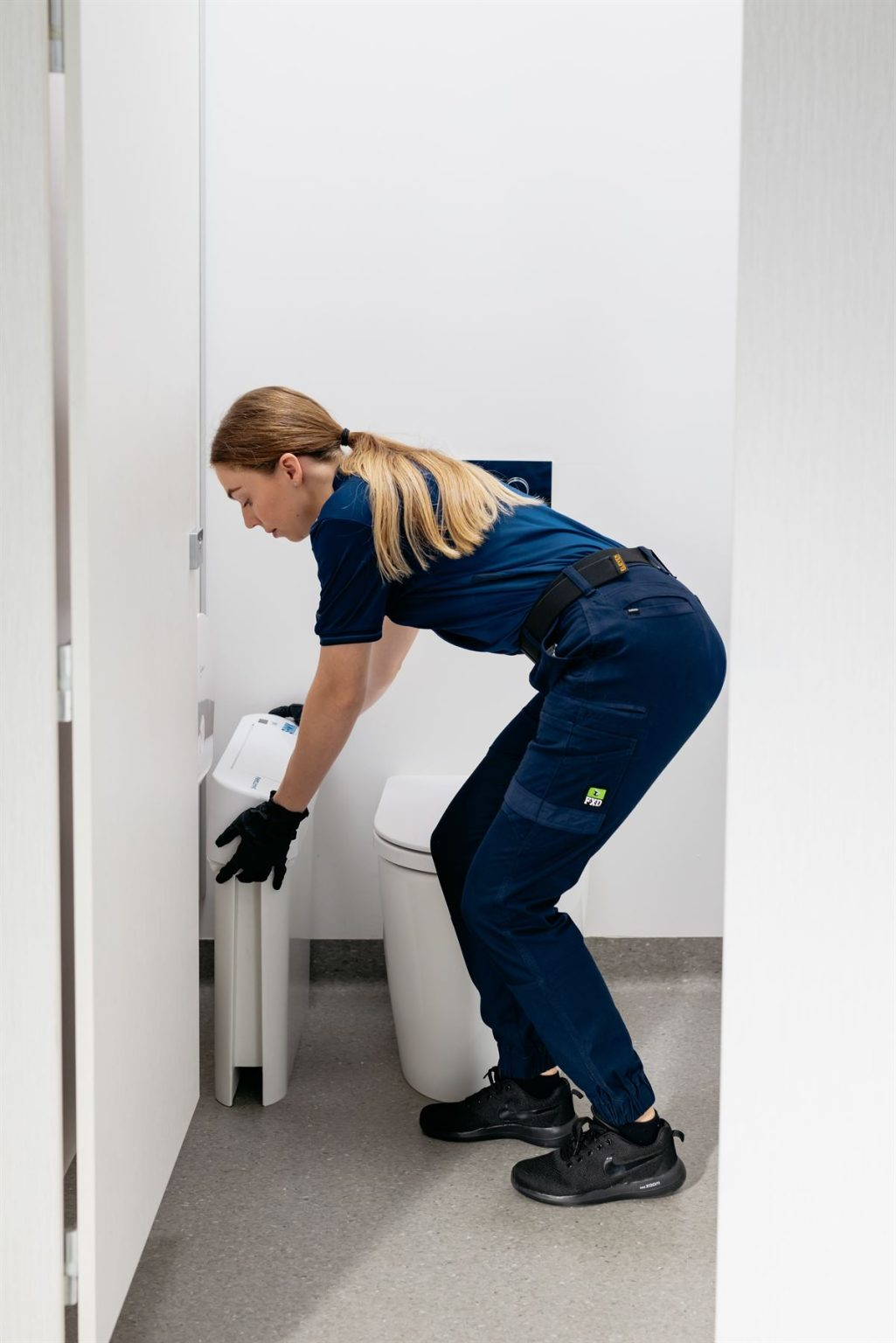
Not all services are equal. When you compare providers, these are the things that separate a reliable service from a box-ticking one.
Touch-free units. The best modern bins use a sensor to open the lid, so users never have to touch the unit. That is better for hygiene and far more pleasant for the people using your washrooms.
Servicing matched to real demand. Traditional contracts empty every bin on the same fixed cycle, whether it needs it or not. Smarter services use units that monitor their own fill level, so busy washrooms are serviced more often and quiet ones less. You stop paying for visits you do not need, and you stop running out of capacity in your busiest rooms.
Trained, uniformed technicians. Swapping and sanitising units is a job that should be done properly, by identifiable staff, to a consistent standard.
Clear service records. A good provider logs every visit and can show you live fill levels and the next booked service. That paper trail is gold when you need to demonstrate the washrooms are being maintained.
The right units for the site. Standard sanitary units are only part of the picture. Parents’ rooms, retail centres and community facilities also need larger-capacity nappy disposal units, so a good provider offers both.
Proper insurance and licensing. Check that the provider carries public liability cover and the relevant workplace and labour-hire credentials. It protects you as well as them.
Choosing a service you can forget about (in a good way)
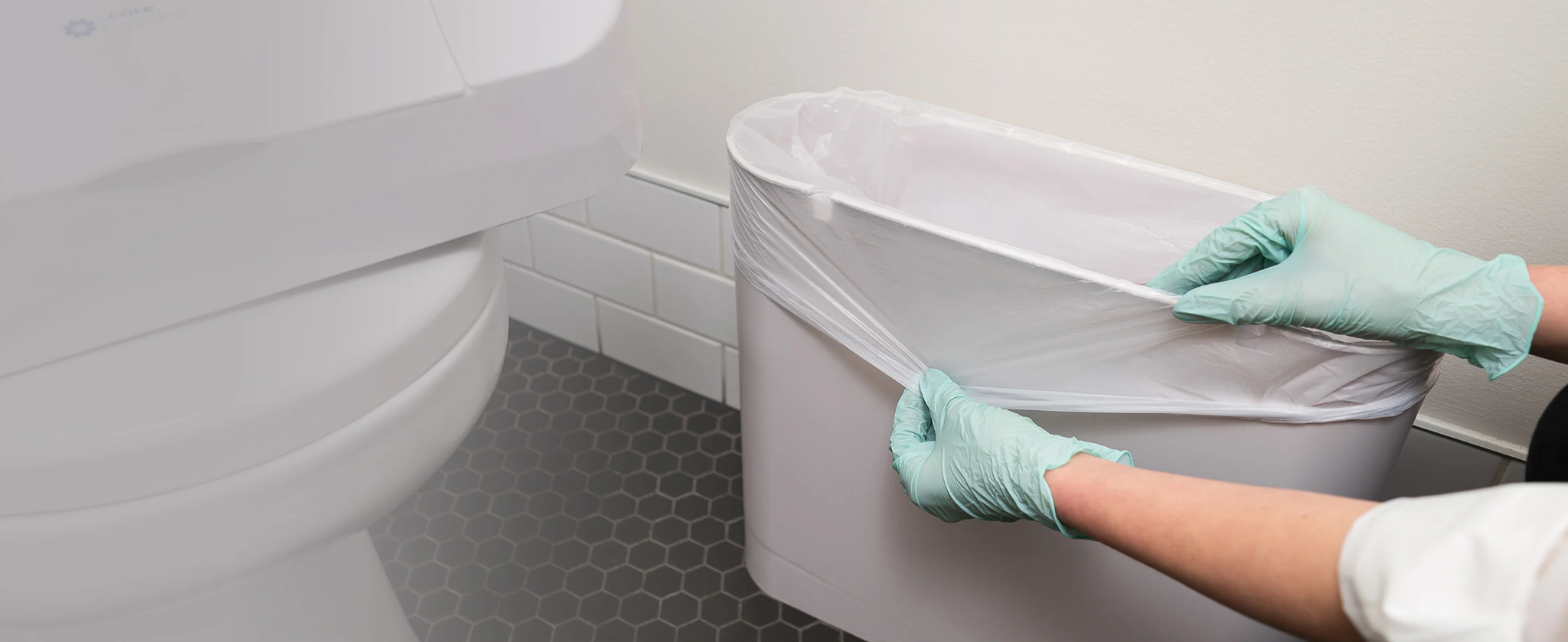
The goal of a sanitary bin service is simple: you should be able to stop thinking about it. The right provider handles the units, the servicing and the records so reliably that washroom hygiene just quietly happens in the background.
When you are weighing up options, favour a service that combines touch-free units, usage-based servicing, trained technicians and clear reporting, and that can scale across all your washrooms and sites. That is the combination that keeps washrooms clean, keeps you compliant, and takes the whole headache off your desk.
Shmik Hygiene offers exactly this kind of managed sanitary bin service, with smart, touch-free units and servicing matched to how your washrooms are actually used. To get a tailored quote for your site, click here.
A sanitary bin service is easy to overlook until it fails, and by then it has already cost you in reputation, hygiene or compliance. Choose a provider that gives you touch-free units, demand-based servicing, trained technicians and a clear record of every visit, and the problem simply disappears from your to-do list. If overflowing bins or rigid servicing schedules sound familiar, it is worth seeing what a smarter sanitary bin service looks like.
