


Understanding Crypto-Backed Lending
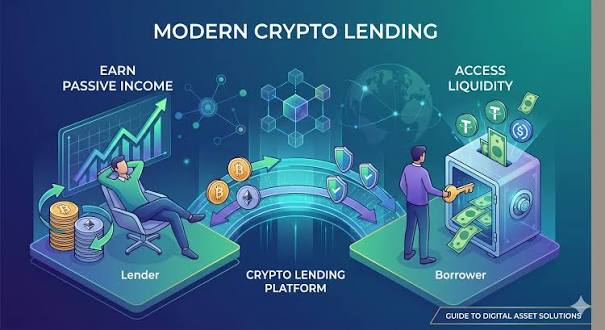
Cryptocurrency investors often face a challenge when they need liquidity but do not want to sell their digital assets. Selling Ethereum (ETH) provides immediate access to funds, but it also means losing exposure to any potential future price appreciation. Crypto-backed lending offers an alternative by allowing users to borrow stablecoins against their cryptocurrency holdings.
Through this approach, borrowers deposit eligible digital assets as collateral and receive access to stablecoins such as USD Coin (USDC). They can use the borrowed funds while keeping their original cryptocurrency position, provided they meet the platform’s collateral and repayment requirements.
The growing crypto lending ecosystem demonstrates how blockchain technology can support flexible borrowing arrangements. Wallet-based platforms such as XQ Finance illustrate how users can access ETH-backed USDC credit lines through Base without immediately selling their Ethereum holdings.
How ETH-Backed USDC Credit Lines Work
An ETH-backed credit line allows cryptocurrency holders to use Ethereum as collateral for borrowing USDC. Instead of exchanging their ETH for stablecoins, users deposit supported assets into a lending arrangement and receive an approved borrowing limit.
The process generally involves connecting a compatible cryptocurrency wallet, selecting the amount of ETH to provide as collateral, reviewing the borrowing terms, and authorizing the required blockchain transactions.
Once the credit line is established, borrowers can access USDC within their approved limit. They do not necessarily need to use the entire amount immediately.
For example, someone with a 10,000 USDC credit limit might initially borrow only 3,000 USDC. The remaining 7,000 USDC can stay available, subject to the platform’s collateral requirements, liquidity, and other restrictions.
This structure provides flexibility for investors who need temporary liquidity without selling their cryptocurrency holdings.
Understanding Collateral Requirements and LTV
Collateral is an essential part of crypto-backed lending because it secures the borrowed amount. Lending platforms evaluate the market value of deposited ETH and determine the borrowing limit using a loan-to-value (LTV) ratio.
The LTV formula is:
LTV = Outstanding Debt ÷ Collateral Value × 100
For example, if someone deposits ETH worth $10,000 and borrows 4,000 USDC, the initial LTV ratio is 40%.
A lower LTV generally provides more protection against cryptocurrency price fluctuations. However, if Ethereum loses market value while the outstanding debt remains unchanged, the LTV ratio increases.
Important collateral considerations include:
- Current Ethereum market value.
- Maximum opening LTV.
- Liquidation thresholds.
- Outstanding principal and interest.
- Additional platform fees.
- Market volatility and available liquidity.
XQ Finance’s documented lending model supports eligible ETH collateral on Ethereum and Base, including native ETH and wrapped ETH on Base. Its credit-line calculations use price oracle information to evaluate collateral value and borrowing capacity.
Borrowers should always review the final collateral requirements before authorizing a transaction.
How USDC Credit Lines Provide Borrowing Flexibility
USDC credit lines differ from conventional one-time loans because they can provide reusable borrowing capacity.
Instead of receiving a fixed amount that must be managed as a separate loan, users can establish a credit limit and withdraw stablecoins whenever needed.
For instance, a borrower with an approved limit of 8,000 USDC may use 2,000 USDC initially. If they repay the principal, the corresponding amount can become available again.
This arrangement can be useful for business expenses, temporary cash-flow requirements, and other situations where liquidity needs change over time.
An important distinction is that an approved credit limit is not automatically the same as outstanding debt. Interest generally applies to the amount actually borrowed according to the applicable product terms.
Interest Calculation and the 14-Day Grace Period
Interest rates are among the most important factors to consider when comparing crypto-backed lending platforms.
A typical simple-interest calculation uses the borrowed principal, annual interest rate, and borrowing period.
Interest = Principal × Annual Interest Rate × Number of Days ÷ 365
For example, borrowing 5,000 USDC at an illustrative annual interest rate of 12% for 30 days would generate approximately 49.32 USDC in interest.
However, some lending platforms provide promotional interest conditions or repayment grace periods.
XQ Finance advertises 0% interest when borrowers repay the qualifying borrowed amount within its 14-day grace period. It also explains that unused credit does not generate interest under its documented model.
This can make short-term borrowing more attractive for users who have a clear repayment plan.
However, borrowers should remember that an interest-free period does not necessarily eliminate origination fees, blockchain gas costs, or other applicable charges. They should review the current product terms before using any credit facility.
Repayment Terms and Managing Outstanding Debt
Repayment conditions determine how borrowers settle their obligations and recover access to their collateral.
Some lending platforms provide fixed repayment schedules, while revolving credit arrangements allow users to repay borrowed amounts and potentially reuse the restored credit.
Before opening a credit line, users should understand:
- Whether partial repayments are permitted.
- When interest begins accruing.
- How the grace period works.
- Whether minimum payments are required.
- What happens when repayment deadlines are missed.
- When collateral becomes available for withdrawal.
Under XQ Finance’s documented repayment structure, payments are allocated first toward penalties, accrued interest, and unpaid fees, followed by principal. Only the amount applied to principal restores the corresponding available credit.
Borrowers should therefore monitor their outstanding balance and avoid relying on uncertain future cryptocurrency gains to meet repayment obligations.
Blockchain Fees and the Advantages of Base
Blockchain transactions require network fees, commonly known as gas fees. These costs vary depending on network congestion, transaction complexity, and the blockchain being used.
Ethereum mainnet transactions can become expensive during periods of high activity. Base, an Ethereum Layer 2 network, is designed to offer lower transaction costs while maintaining connections to the Ethereum ecosystem.
XQ Finance uses Base for its planned USDC credit-line operations. This allows supported users to access and repay USDC through Base-based smart contracts.
Depending on the borrowing arrangement, users may encounter costs associated with:
- Depositing ETH collateral.
- Opening a credit line.
- Transferring borrowed USDC.
- Making repayment transactions.
- Closing the credit line.
- Withdrawing collateral.
- Bridging assets between networks.
Users providing collateral through Ethereum may also encounter additional cross-network processing costs. Reviewing these expenses before borrowing helps provide a more realistic understanding of the total cost.
Key Risks of Crypto-Backed Lending
Although borrowing against ETH offers flexibility, it involves financial and technical risks that should not be ignored.
Market volatility: Ethereum prices can change significantly within short periods. A sudden decline may increase the LTV ratio and put collateral at risk.
Liquidation risk: If collateral value falls below the required threshold, the lending platform may restrict borrowing or liquidate some or all of the deposited assets.
Smart contract vulnerabilities: Blockchain lending services rely on smart contracts. Technical vulnerabilities, coding errors, or unexpected contract behavior can create financial losses.
Stablecoin risks: USDC is designed to maintain a value close to one US dollar, but stablecoins still involve issuer, reserve, liquidity, and regulatory risks.
Repayment risks: Failure to meet repayment requirements may result in additional interest, penalties, or liquidation.
Network risks: Blockchain congestion, failed transactions, oracle disruptions, and bridge-related problems may affect borrowing and repayment activities.
Importantly, even when a platform advertises 0% interest during a grace period, collateral remains exposed to market movements. Borrowers must continue monitoring their LTV and repayment obligations.
Choosing a Suitable Crypto Lending Platform
Selecting a lending platform requires more than comparing advertised interest rates. Investors should evaluate the complete borrowing process, including collateral requirements, smart contract architecture, liquidity availability, repayment flexibility, and security measures.
Wallet-based lending services can provide a convenient experience by allowing users to authorize transactions through their own compatible wallets. However, non-custodial access does not eliminate smart contract or liquidation risks.
It is also important to verify whether a platform is fully operational or still under development. XQ Finance’s official documentation currently describes its product as under development, so prospective borrowers should confirm public availability and review the latest contractual terms before depositing assets.
Conclusion
Crypto-backed lending provides Ethereum holders with another way to access liquidity without immediately selling their digital assets. Through ETH-backed USDC credit lines, borrowers can use stablecoins while maintaining exposure to their cryptocurrency holdings.
The expanding crypto lending ecosystem illustrates how blockchain infrastructure can support reusable credit limits, wallet-based borrowing, and more flexible repayment arrangements. XQ Finance provides an example through its documented ETH-backed USDC credit-line model on Base, including an advertised 14-day grace period with 0% interest when qualifying borrowed amounts are repaid within that period.
Nevertheless, responsible borrowing requires careful consideration of collateral values, interest calculations, repayment conditions, blockchain fees, and liquidation risks. Understanding these factors helps cryptocurrency holders make informed financial decisions while using digital assets as collateral.