


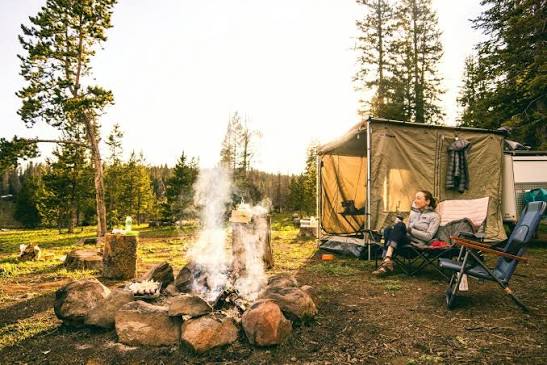
Walk into any outdoor store and camping looks like an expensive hobby. Racks of ultralight tents, titanium cookware and jackets that cost more than a weekend away can convince a beginner that they need a thousand dollars of gear before they are allowed to sleep outside. They do not. Camping was cheap long before it was a retail category, and the people who enjoy it most tend to own less than you would expect. This guide sorts gear into three honest buckets: the handful of things worth owning from day one, the things you should borrow or improvise until you know you love this, and the things you can skip entirely. Along the way it covers where to camp cheaply and how to keep the first few trips safe.
Start With the Trip, Not the Shopping List
The cheapest camping is the simplest. For your first trips, choose a drive-in campground within a couple of hours of home, in mild weather, for one or two nights. That single decision removes most of the gear pressure. You do not need a featherweight tent when it rides in the trunk. You do not need a 0°F sleeping bag in June. You do not need a water filter when there is a spigot fifty feet away. Match the gear to the trip you are actually taking, not the expedition you might take someday.
Worth Owning: The Short List
A few items are personal, safety-related or so cheap that borrowing makes no sense. Buy these, but buy sensibly.
- A sleeping pad. This is the item beginners underestimate most. The ground pulls heat from your body all night, and a thin foam pad costs little while making the difference between sleep and misery. A closed-cell foam pad is nearly indestructible and works for years.
- A headlamp. A basic model with a red-light mode and a set of spare batteries. Hands-free light matters when you are cooking, setting up late or walking to the restroom at 2 a.m.
- A first aid kit. Build your own in a zip bag: adhesive bandages, blister pads, antiseptic wipes, tweezers, pain reliever, any personal medication and a small roll of athletic tape. It costs a fraction of a pre-packed kit.
- A refillable water bottle or two. You almost certainly already own these.
- Wool or synthetic socks. Cotton socks hold sweat and cause blisters. One or two pairs of proper socks are a cheap upgrade that pays off on every trip.
A lighter, a small knife, a trash bag and sunscreen round out the essentials. Before you spend anything, go through your closets and kitchen drawers with a packing list in hand. The beginner camping tips and gear checklists published for new campers are useful here precisely because they show how much of the “gear” is ordinary household stuff.
Borrow, Rent or Improvise
The big-ticket items are the ones to borrow. Ask friends, family and coworkers; a surprising number of people own a tent they used twice. Local buy-nothing groups, community gear libraries and some university outdoor programs lend equipment for little or nothing. Many outdoor retailers and local outfitters rent tents, sleeping bags and stoves by the weekend, which lets you test a style of gear before committing.
The tent is the obvious candidate. A borrowed three-person dome tent is more than enough for two people and their bags on a car-camping trip. If you must buy, a used tent from a thrift store or an online marketplace is fine as long as you set it up in the yard first and check the poles, zippers and seams. Re-seal the seams with a tube of seam sealer and it will shed rain for years.
Sleeping bags are worth borrowing for the first season. If you have no bag at all, two household blankets and a fleece layer are enough for a mild summer night at low elevation, as long as you have that foam pad underneath.
For cooking, you do not need a camp stove to start. Most established campgrounds have a fire ring with a grate, and a cast-iron skillet or an old saucepan from your kitchen works fine over coals. Where fire restrictions are in effect, which is common in dry western states during summer, a basic single-burner canister stove is the one piece of kitchen gear worth buying. Bring your regular kitchen utensils in a tote, use a plastic bin with a lid as a pantry that also keeps rodents out, and pack food in a cooler you already own or can borrow.
Skip It Entirely
Here is the part that saves the most money. The following are things beginners buy and then rarely use.
A camp kitchen table with a sink. Campgrounds have picnic tables. A specialized camping coffee maker; a simple pour-over cone or a small French press you already own does the job. A set of matching camp dishes; bring plates from home or a couple of durable bowls. A giant cabin tent with rooms; it is heavy, slow to pitch and leaks at every seam. A camp shower, a hammock stand, a portable fan, folding storage cabinets and most “camping” branded versions of ordinary items. A fancy cooler that costs as much as a tent; a basic hard cooler with a frozen gallon jug of water inside it keeps food cold for a weekend.
Also skip anything marketed as a tent heater. Beyond the cost, fuel-burning heaters, stoves and lanterns should never run inside a tent because of carbon monoxide. The budget answer to a cold night is a better pad, a warm hat, a dry base layer and a hot water bottle in the foot of your bag, which costs almost nothing and is far safer.
Cheap Places to Camp
Where you camp affects the budget as much as what you carry. National forest and Bureau of Land Management land across much of the country allows dispersed camping at no cost, usually with a fourteen-day limit, though you give up water, toilets and trash service. For a beginner, developed national forest campgrounds are a nice middle ground: modest nightly fees, a fire ring, a picnic table and a vault toilet, without the higher prices of private resorts.
State parks often offer lower rates for residents, midweek stays or walk-in tent sites, and county parks are the overlooked cheap option near a city. Weeknights are consistently cheaper and quieter than weekends.
Wherever you go, check the rules before you arrive. Fire restrictions, firewood policies, quiet hours and food storage requirements differ from one place to the next. In bear country, use the provided food lockers or keep everything scented locked in your vehicle. Buy firewood near the campground rather than hauling it from home, since moving firewood spreads tree-killing pests, and only burn in established rings.
Eat Well for Less
Food is where many first-timers quietly overspend, buying freeze-dried pouches that cost several times what the same calories cost from a grocery store. For car camping, cook what you cook at home. One-pot meals like chili, pasta with jarred sauce, rice and beans or a vegetable stir-fry are cheap, filling and easy to clean up. Prep at home: chop vegetables, pre-mix pancake batter in a bottle, marinate protein in a zip bag and freeze it so it doubles as an ice pack.
Breakfast can be oatmeal and fruit, lunch sandwiches assembled at the picnic table. Plan every meal before you shop, bring only what you will eat, and you will come home with an empty cooler and a nearly empty trash bag. Packing out everything you bring, including food scraps, is the core of Leave No Trace, and it is free.
Pack It Up
A budget first trip looks like this: a borrowed tent at a national forest campground on a weeknight, a borrowed sleeping bag on a new foam pad, dinner cooked in your own skillet over the fire ring, and a headlamp you will use for a decade. Spend on the pad, the light and the first aid kit. Borrow the tent and the bag. Skip the gadgets. Keep the first trips close to home and in good weather so a mistake is an inconvenience rather than an emergency.
After two or three nights out you will know exactly which borrowed item you want to own and which “essential” you never touched. That knowledge is worth more than any shopping list, and it costs nothing but a weekend. When you are ready to plan the next trip, the budget camping and gear guides on Camping.tips dig deeper into campsite selection, bug protection and camp cooking, all written by people who would rather see you outside than in the checkout line.
