


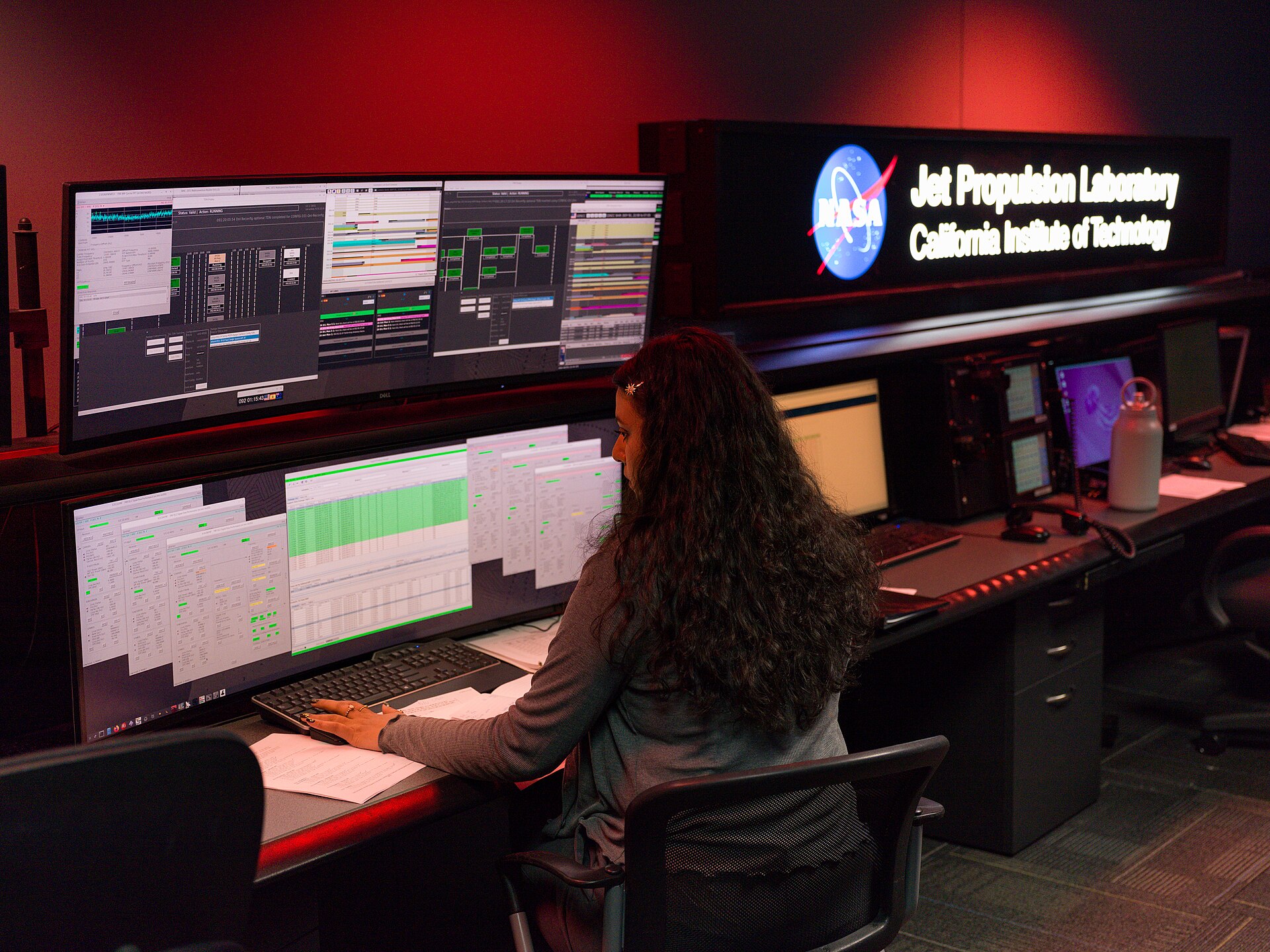
[‘Microsoft has built a security agent whose job is to watch other AI agents, detecting risky behaviour in real time within human-defined permission boundaries. It is a sign that enterprise AI has entered its governance phase, where control matters as much as capability.’]
Who Watches the Agents?
Microsoft has introduced a security agent designed to watch other AI agents, monitoring their behaviour in real time and detecting risky actions inside permission boundaries defined by humans. As companies deploy fleets of autonomous software agents to handle support, coding, research and operations, the question of who supervises the supervisors has moved from philosophy to product design.
Microsoft’s security portfolio is described on Microsoft’s security site, while baseline guidance for defenders is published by the U.S. Cybersecurity and Infrastructure Security Agency. The new agent sits in that landscape as a specialist: security tooling built for a workforce that is increasingly not human.
Why AI Agents Create a New Security Problem
Traditional software does what it is told, within bugs. AI agents interpret instructions, choose tools and improvise sequences, which makes them useful and makes their failure modes harder to predict. An agent with legitimate access to email, files and code can be manipulated through the content it reads, tricked into leaking data or persuaded to take actions its owners never intended.
Monitoring such systems requires watching behaviour rather than signatures. A guard agent that understands what normal task execution looks like can flag anomalies, an agent suddenly reading unrelated files, contacting unusual services, or attempting to widen its own permissions, in time for humans or automated rules to intervene before damage is done.
Permission Boundaries as the Control Point
Microsoft’s design emphasises human-defined permission boundaries: the guard does not decide what an agent should be allowed to do, but enforces limits people set in advance. That separation matters for accountability. When an agent is stopped, the organisation can point to a policy a human approved, rather than to the inscrutable judgement of a second model acting on its own authority.
Boundaries also make deployment scalable. Different agents can be granted different scopes, a research agent read-only access to documents, a support agent narrow ticketing rights, with the guard applying each policy consistently. Readers interested in how this technology develops can follow technology reporting on lapzoo.com for further analysis.
The Recursive Risk Nobody Should Ignore
A security agent that watches AI agents is itself an AI agent, which invites an obvious question about infinite regress. In practice, guard systems are kept deliberately narrower than the agents they monitor: fewer tools, no open-ended tasks, and outputs that are alerts and blocks rather than autonomous action. Simplicity is the security feature, because a watcher with limited powers is easier to audit than the systems it oversees.
Even so, organisations will need to test their guards as adversaries would, feeding monitored agents poisoned instructions and checking whether detection fires. Security products for AI will earn trust the way all security products do, by surviving hostile evaluation rather than by launch announcements, and buyers should budget for that evaluation from the start.
What It Signals for Enterprise AI
The launch signals that enterprise AI is entering its governance phase. Early adoption was driven by capability demonstrations; the next phase will be decided by controls, audit trails and incident response, the unglamorous machinery that lets risk-averse organisations deploy powerful tools without betting the company on their good behaviour.
Microsoft is positioning itself to sell both the agents and the guardrails, a familiar platform strategy. Whether its watcher becomes the standard will depend on interoperability as much as detection quality, because most enterprises will run agents from several vendors and need one coherent view of what all of them are doing, all of the time.
Background: The Governance Phase of the AI Boom
Every enterprise technology wave follows a similar arc. First comes experimentation, driven by enthusiasts and tolerated by leadership; then a costly incident or a regulatory question forces the controls conversation; finally the technology becomes infrastructure, at which point auditability matters more than novelty. Personal computing, cloud services and mobile devices all travelled that road, and AI agents are now visibly entering the second stage.
That timing explains the shape of Microsoft’s announcement. A watcher product presupposes customers who already run agents in production and have begun to worry, concretely, about what those agents might do at 3 a.m. with production credentials. Vendors who can answer that worry with logs, boundaries and a kill switch will shape how far autonomy spreads inside large organisations. The ceiling on enterprise AI may be set less by what models can do than by what governance can credibly supervise.
The Bottom Line
Microsoft’s watcher agent is best read as an admission from inside the industry: autonomous systems are being deployed faster than traditional security can supervise them, and the gap itself is now a product category. Organisations adopting agents without equivalent oversight are accumulating a risk they cannot currently see, let alone measure.
The sensible response for buyers is neither alarm nor complacency. Inventory the agents already running, define their permission boundaries explicitly, demand behaviour logs, and evaluate guard tools under hostile testing. Autonomy will keep expanding because its economics are compelling; the organisations that benefit safely will be those that built the supervision before they needed it.
Regulators, for their part, are likely to welcome tooling that produces evidence. When something goes wrong with an autonomous system, the first official question is always what the logs show, and organisations that can answer it will find every subsequent conversation easier.
