


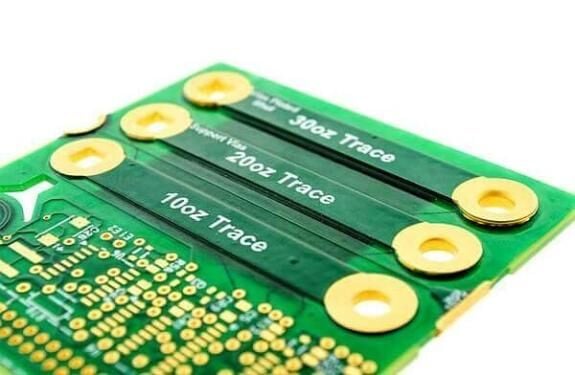
Electric vehicle architectures continue pushing power delivery systems into far more demanding operating conditions. Battery management modules, traction inverters, onboard chargers, alongside high-voltage distribution networks now handle elevated current loads within increasingly compact electronic environments where thermal instability can affect long-term reliability quickly.
Across advanced EV platforms, heavy-copper board structures have become critical for maintaining electrical and thermal balance under sustained load conditions. Engineering teams involved in PCB Design for automotive power electronics frequently evaluate copper thickness, thermal dissipation pathways, current-carrying capability, alongside manufacturability because standard board structures often struggle under high-current density environments.
EV Power Electronics Continue to Increase Current Demands
Modern EV platforms rely heavily on power-dense semiconductor architectures. Silicon carbide devices, high-efficiency MOSFET modules, plus advanced power converters now operate under switching conditions that generate substantial thermal and electrical stress across PCB structures during continuous vehicle operation.
Within traction systems, electrical current frequently passes through compact routing regions where thermal buildup develops rapidly. High-current paths, insufficient copper balancing, alongside inadequate heat spreading can therefore reduce reliability across powertrain electronics operating under demanding drive conditions.
A minor thermal imbalance becomes a long-term reliability problem. Localized heating inside copper traces may gradually affect solder joint integrity, dielectric performance, plus component lifespan when current density exceeds the board’s ability to dissipate energy efficiently during extended operating cycles.
Copper Thickness Directly Affects Thermal Stability
Heavy-copper PCBs are specifically engineered to support elevated current transfer while maintaining structural and thermal consistency. Increased copper weight improves current-handling capability, but it also introduces additional manufacturing complexity involving etching precision, spacing control, and thermal expansion management.
Alongside electrical conductivity, copper thickness influences how heat spreads throughout the board structure. Wider thermal distribution reduces hotspot concentration across power devices, particularly within inverter modules and battery control systems operating continuously under fluctuating load conditions.
Layout Optimization Becomes Critical Under High Current Density
Thermal control depends heavily on routing strategy. Current path geometry, via distribution, copper balancing, alongside component placement collectively determine whether heavy-copper boards maintain operational stability during aggressive switching activity.
Trace Width and Current Distribution
High-current traces require carefully balanced routing dimensions to prevent uneven thermal concentration. Narrow copper paths operating under elevated amperage can increase resistive heating quickly, especially within densely packed automotive power electronics.
Thermal Via Placement
Thermal vias support vertical heat transfer between PCB layers during continuous operation. Proper via density and placement help distribute heat away from power devices while improving overall board temperature stability under sustained electrical loading.
Copper Balancing Across Layers
Uneven copper distribution may create manufacturing distortion during lamination and thermal cycling processes. Balanced copper placement across internal and external layers generally improves dimensional consistency within complex heavy-copper board structures.
Isolation and Clearance Control
High-voltage EV systems require precise isolation management between conductive regions. Controlled spacing, insulation strategy, plus routing separation help maintain electrical safety across power-dense automotive environments.
Material Selection Influences Long-Term Reliability
Heavy-copper boards experience repeated thermal cycling throughout EV operating life. Materials therefore require greater thermal endurance compared to conventional low-power electronic applications where electrical stress remains significantly lower.
What happens when substrate expansion rates fail to align with repeated current-driven thermal cycling across power stages? Mechanical fatigue develops gradually. Over time, delamination risk, solder cracking, alongside dielectric degradation may affect operational stability within high-load automotive systems.
High-Tg Substrate Materials
High glass-transition-temperature materials generally provide better dimensional stability under elevated thermal conditions. These substrates help support structural reliability during repeated EV power cycling environments.
Low Thermal Resistance Structures
Thermally optimized dielectric materials improve heat dissipation efficiency between copper layers and mounted power devices operating under continuous current demand.
Mechanical Reinforcement Stability
Heavy copper increases board mass and thermal stress simultaneously. Reinforced structural design supports better resistance against vibration, thermal fatigue, plus long-duration automotive operating conditions.
Surface Finish Compatibility
Surface finishes influence solderability, oxidation resistance, and assembly consistency during manufacturing. Finish selection therefore affects both electrical performance and production reliability.
- Balanced copper structures improve thermal consistency during high-current operation.
- Controlled routing reduces localized heating across compact power electronics.
- Thermally stable materials support longer operational lifespan under EV load conditions.
Manufacturing Complexity Increases With Copper Weight
Heavy-copper fabrication introduces additional process challenges compared to standard multilayer PCB manufacturing. Etching thicker copper requires tighter process control because uneven removal rates can alter impedance behavior, spacing tolerances, alongside structural consistency. During complex automotive electronics programs, a specialized PCB layout service may also support routing optimization, manufacturability alignment, and thermal distribution analysis across high-current EV architectures where board density continues increasing.
Drilling precision also becomes more demanding when boards contain thicker conductive layers combined with dense via structures. Fabrication teams frequently evaluate aspect ratio limits, plating uniformity, plus layer registration accuracy before transitioning heavy-copper EV boards into production environments.
Simulation and Validation Remain Essential in EV PCB Engineering
Power electronics development increasingly depends on simulation-driven validation before physical prototyping begins. Thermal modeling, current-density analysis, plus signal integrity evaluation help engineering teams identify design limitations before manufacturing cycles introduce additional cost and delay.
Alongside simulation workflows, validation testing remains critical throughout EV electronics qualification. Thermal shock analysis, power cycling validation, plus vibration testing frequently determine whether heavy-copper assemblies maintain reliability under demanding automotive operating environments.
- Thermal simulation helps identify hotspot concentration before fabrication.
- Power cycling validation supports long-term reliability assessment.
- Electrical testing improves confidence across high-current automotive applications.
Integration Between Semiconductor and PCB Engineering Is Expanding
Power semiconductor advancement continues reshaping EV board requirements. Wide-bandgap devices now switch faster, operate hotter, plus deliver higher efficiency compared to previous silicon-based architectures, creating additional pressure on PCB thermal management strategy.
Because of that, semiconductor packaging teams and board engineering groups increasingly work within coordinated development cycles. Signal integrity evaluation, package-to-board interaction analysis, plus thermal interface optimization now influence how EV power electronics are designed from early development stages.
Final Thoughts
What allows EV power electronics to survive continuous high-current operation without compromising thermal stability or long-term reliability? Heavy-copper engineering, controlled thermal management, plus precision manufacturing usually determine whether advanced automotive systems remain operational under aggressive electrical load conditions. Tessolve supports semiconductor engineering, embedded systems development, silicon validation, PCB engineering, testing, alongside product realization services for complex electronics applications across automotive and high-performance computing environments.
Organizations evaluating collaboration with a top semiconductor company often prioritize integrated engineering capability, validation expertise, and scalable hardware development support for next-generation EV platforms.