


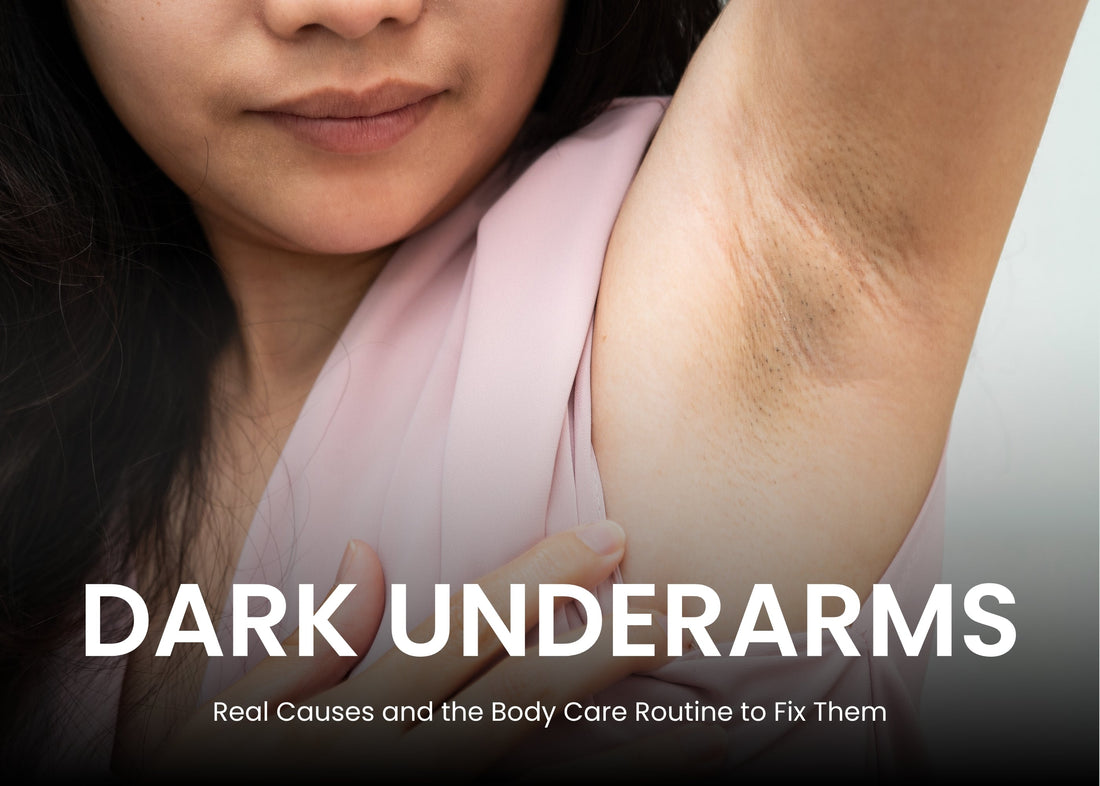
Underarm pigmentation is a common skincare concern that can affect people with different skin types and tones. The area may gradually become darker, develop uneven coloration, or appear more noticeable after shaving or other forms of irritation.
While underarm pigmentation is often considered a cosmetic concern, its causes can vary. Friction, hair removal, product irritation, sweating, and certain skin conditions can all play a role.
Understanding the potential causes can make it easier to create a gentle routine that supports the appearance and comfort of the skin.
Why Do Underarms Become Darker?
The skin around the underarms is exposed to several factors that can contribute to irritation and pigmentation.
One common factor is friction. The skin may rub against itself or clothing throughout the day, particularly during physical activity.
Hair removal can also contribute. Repeated shaving or waxing may cause irritation, especially when the skin is sensitive or the technique is too aggressive.
Other possible contributors include:
- Deodorant or fragrance irritation
- Excessive sweating
- Tight clothing
- Repeated shaving
- Post-inflammatory pigmentation
- Hormonal changes
- Certain skin conditions
Because pigmentation can have different causes, there is no single approach that works for everyone.
The Connection Between Irritation and Pigmentation
When skin becomes irritated or inflamed, the body can respond by increasing melanin production.
This can result in darker-looking areas after the original irritation has settled.
For example, repeated razor irritation may leave the underarm skin looking darker over time.
The same can happen when a product causes a reaction that is repeatedly triggered.
For this reason, a brightening routine should not simply focus on treating pigmentation. It should also minimize the factors that may be causing ongoing irritation.
Start With Gentle Cleansing
The first step in an underarm routine is keeping the area clean without stripping the skin.
A gentle cleanser is usually preferable to harsh scrubbing products.
There is generally no need to aggressively scrub the underarms to make them appear brighter. Excessive friction can irritate the skin and potentially worsen uneven tone.
After cleansing, gently pat the area dry rather than rubbing it vigorously.
Evaluate Your Deodorant
Deodorants and antiperspirants are useful for managing body odor and perspiration, but certain formulations may irritate sensitive skin.
If you notice redness, burning, itching, or dryness after using a particular product, consider whether the formulation may be contributing to the problem.
Fragrances and other ingredients can cause irritation in some individuals.
A underarm pigmentation treatment can be considered as part of a broader routine, but it is still important to identify and reduce potential sources of irritation.
Be Careful With Shaving
Shaving is one of the most common hair-removal methods, but repeated shaving can sometimes cause irritation.
Using a dull razor, applying too much pressure, shaving without sufficient lubrication, or repeatedly passing over the same area can increase irritation.
A few practical habits can help:
- Use a clean, sharp razor
- Avoid excessive pressure
- Use suitable shaving lubrication
- Avoid repeatedly shaving irritated skin
- Moisturize the area afterward if appropriate
If shaving consistently causes bumps or irritation, alternative hair-removal methods may be worth discussing with a professional.
Avoid Aggressive Scrubbing
Dark underarm skin may tempt people to use strong scrubs or abrasive tools.
This is usually not the best approach.
The underarm area can be sensitive, and repeated physical exfoliation can damage the skin barrier.
Instead of trying to remove pigmentation through aggressive scrubbing, focus on reducing irritation and using products designed for the area according to their instructions.
Consider Targeted Skincare
Once potential sources of irritation have been addressed, a targeted product can be introduced.
Some underarm products are formulated with ingredients intended to support a more even-looking skin tone.
A targeted underarm brightening spray may offer a convenient format for incorporating such care into a routine.
As with any active skincare product, it is important to check the ingredient list, follow the manufacturer’s instructions, and consider your skin’s sensitivity.
Introduce New Products Gradually
Underarm skin may react differently from facial skin.
If you are introducing a new product, consider applying it gradually and monitoring how your skin responds.
A patch test may be useful depending on the product.
Stop using a product if it causes significant irritation, persistent redness, burning, swelling, or discomfort.
People with a history of sensitive skin or recurring reactions may want to seek professional advice before introducing active treatments.
Clothing Can Affect Underarm Skin
Clothing can also contribute to friction.
Tight garments may repeatedly rub against the underarms, particularly during movement.
Choosing breathable fabrics and comfortable clothing can help reduce unnecessary friction.
This can be especially useful during exercise or hot weather, when sweat and repeated movement can increase irritation.
Keep Sweat Under Control
Sweating itself is normal and serves an important role in regulating body temperature.
However, prolonged moisture combined with friction can make the underarm area uncomfortable.
Changing out of sweaty clothing after exercise and gently cleansing the area can help maintain comfort.
People with excessive sweating may benefit from discussing suitable options with a healthcare professional if it significantly affects their daily life.
Give the Routine Time
Pigmentation does not usually change overnight.
If discoloration developed gradually, it may also take time to become less noticeable.
Constantly switching products can make it difficult to determine what works and can increase the likelihood of irritation.
Instead, introduce products carefully and follow the recommended usage instructions consistently.
Taking occasional photographs in similar lighting can also help you assess gradual changes more objectively.
Don’t Focus Only on Brightening
An effective underarm routine should focus on skin health rather than color alone.
A routine that repeatedly irritates the skin in an attempt to make it brighter may ultimately be counterproductive.
A better approach is to combine:
- Gentle cleansing
- Reduced friction
- Careful hair removal
- Suitable deodorant choices
- Appropriate moisturization
- Targeted skincare when needed
This creates a foundation for healthier-looking skin while reducing potential triggers.
When Should You Consult a Dermatologist?
Some forms of underarm darkening may be linked to underlying skin conditions.
If the skin becomes thickened, extremely itchy, painful, inflamed, or develops a sudden change in appearance, professional evaluation is recommended.
A dermatologist can help determine whether the pigmentation is related to irritation, post-inflammatory changes, or another condition.
Professional guidance can also be helpful if pigmentation persists despite a gentle skincare routine.
Final Thoughts
Underarm pigmentation can have several possible causes, and irritation is an important factor to consider.
Rather than relying on aggressive scrubbing or constantly changing products, a gentle routine can focus on reducing friction, managing hair removal, choosing suitable personal-care products, and maintaining the skin barrier.
A targeted product such as an underarm brightening spray can be incorporated when appropriate and used according to its instructions.
Ultimately, consistency and patience are more useful than aggressive treatment. If pigmentation is persistent, unusual, or accompanied by other symptoms, a dermatologist can help identify the underlying cause and recommend an appropriate approach.
